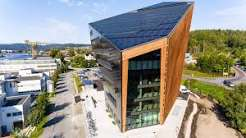
A broad shift toward sustainable architecture and passive building design is gaining traction across residential and commercial construction markets, as governments, property owners and builders respond to energy costs, climate policies and stricter building standards. Off grid solar systems, smart heat pumps, efficient insulation and circular construction materials are increasingly becoming part of the conversation around how homes and commercial buildings should be designed, renovated and operated.
For homeowners, the change can be seen in practical decisions such as adding rooftop solar, replacing conventional heating equipment or improving insulation. For architects and developers, the shift is much larger. It is changing the way buildings are positioned, ventilated, heated, cooled and constructed, with greater attention being paid to energy demand before mechanical systems are even installed.
Passive Design Moves From Niche Concept to Mainstream Building Strategy
Passive design focuses on reducing a building’s energy requirements through its physical design rather than relying entirely on powered equipment. Orientation, shading, insulation, window placement, ventilation, thermal mass and building materials can all influence how much energy a property requires throughout the year.
The concept is becoming increasingly relevant as governments introduce stronger energy performance requirements for buildings. The International Energy Agency estimates that buildings account for around 30 percent of global energy demand, making efficiency improvements in homes, offices and public facilities an important part of broader energy policy.
The IEA has also identified building retrofits, improved building codes and electrification of heating as important measures for improving energy efficiency. In advanced economies, space and water heating represent a particularly large share of household energy use, while emerging economies face rapidly increasing demand for cooling as populations, incomes and temperatures rise.
This makes passive architecture useful across very different climates. A well designed building in a cold region may retain heat more effectively, while a property in a hot climate can reduce cooling requirements through shade, ventilation and appropriate building materials.
Off Grid Solar Is Becoming Part of the Home Improvement Conversation
Solar power is increasingly being considered not only as a utility scale technology but also as a household and small business investment. Rooftop photovoltaic panels, batteries and compact solar power kits can provide electricity independently or alongside the traditional grid.
Recent reporting has highlighted growing interest in rooftop solar as households and small businesses seek greater energy security and protection from high electricity costs. The International Energy Agency has projected that approximately 150 million buildings could have rooftop solar systems by the end of 2026.
For homeowners, the appeal is straightforward. Solar can reduce dependence on grid electricity during daylight hours, while battery storage can extend the usefulness of solar generation after sunset. In areas where power interruptions are common, a properly designed system can also provide an additional layer of resilience.
Yet the growing popularity of off grid systems does not mean every property should immediately disconnect from the grid. System size, battery capacity, local weather, electricity prices, household consumption and installation costs all influence whether a solar system makes financial and practical sense.
Solar Design Is Becoming Part of Architecture
The relationship between solar technology and architecture is also changing. Rather than treating panels as an addition placed on a finished building, architects can consider solar exposure during the initial design stage.
Roof orientation, shading from nearby buildings, window placement and battery storage space can influence the eventual performance of a property. This approach connects renewable energy with passive design rather than treating them as separate projects.
For commercial properties, the calculation can be even more significant. Offices, warehouses, retail buildings and schools often have substantial daytime electricity requirements, creating a natural opportunity to consume solar generation close to the time it is produced.
Heat Pumps Are Expanding the Definition of Sustainable Heating
Heat pumps are another major component of the building efficiency transition. Unlike conventional systems that generate heat through combustion, heat pumps transfer heat from one location to another using electricity.
The technology can provide heating and, in many systems, cooling as well. That makes heat pumps particularly relevant in regions where buildings need temperature control throughout the year.
The IEA’s 2026 Heat Pump Monitor found that heat pumps helped avoid an estimated 53 billion cubic metres of natural gas consumption for building heating across Europe, Japan and China in 2025. The agency also reported that heat pumps supplied about 12 percent of global building space heating needs in 2024.
Adoption is not uniform, however. Upfront equipment and installation costs can be significant, while shortages of qualified installers and inconsistent policy support remain obstacles in several markets. The IEA has also highlighted the importance of stable regulations, trained technicians and financing mechanisms in supporting wider deployment.
Smart Heating Connects Buildings With the Energy Grid
The next phase of heat pump adoption is increasingly connected to digital controls and energy management. Smart systems can adjust heating and cooling based on indoor temperatures, weather conditions, electricity prices and household demand.
When combined with solar generation and battery storage, these systems can create a more coordinated energy setup. A building might generate electricity during sunny hours, use part of that power immediately and direct surplus energy toward storage or thermal systems.
This creates a broader concept of the building as an active participant in the energy system. Instead of simply consuming electricity, a well designed property can adjust when and how it uses energy in response to available supply.
Circular Building Materials Gain Attention
The sustainable construction movement is also moving beyond operational energy. Architects and developers are paying greater attention to what happens to building materials before construction and after a building reaches the end of its useful life.
Circular construction seeks to keep materials in productive use for longer through reuse, repair, refurbishment and recycling. Reclaimed timber, recycled metals, reused bricks and materials designed for disassembly can reduce reliance on newly extracted resources.
This approach changes a basic assumption in construction. Instead of viewing a building as a permanent combination of materials that will eventually become waste, designers can consider how components might be removed and reused when the property is renovated or demolished.
Material Choices Can Influence More Than Carbon
Sustainable materials can also affect indoor comfort, durability and maintenance. Insulation can reduce energy demand while improving temperature stability. Properly selected windows can reduce unwanted heat gain. Natural ventilation strategies can reduce mechanical cooling requirements when climate conditions allow.
The result is a more integrated approach in which energy performance, occupant comfort and material efficiency are considered together rather than as isolated objectives.
Building Regulations Are Helping Drive the Market
Government policy is becoming an important force behind sustainable building adoption. Energy performance standards, building codes, solar requirements, efficiency incentives and restrictions on inefficient heating technologies can all influence construction decisions.
The IEA says policy can accelerate heat pump adoption through minimum energy performance standards, targeted financial incentives and measures that reduce the cost gap between electricity and fossil fuel heating.
Pakistan provides one example of how building regulation is moving in this direction. The country’s Green Building Code is designed to address energy efficiency, renewable energy integration, water conservation and sustainable materials. Pakistan’s national policy framework has also introduced stronger requirements around green construction and environmental performance.
The International Energy Agency provides detailed research on building efficiency, heat pumps and renewable energy policies across different markets, offering a useful reference for governments, businesses and property owners evaluating these changes.
The Economics Behind Sustainable Home Improvement
Environmental concerns are only one part of the equation for homeowners. Energy bills, equipment replacement cycles and property resilience can be equally important.
A household replacing an old heating system may compare a conventional replacement with a heat pump. A homeowner renovating a roof may consider whether solar panels should be installed at the same time. Someone replacing windows may choose products that improve insulation rather than simply selecting the cheapest available option.
These decisions can have different financial outcomes depending on location. Electricity prices, fuel costs, available incentives, climate, building quality and financing conditions can all affect the payback period.
For that reason, sustainable renovation is increasingly being approached as a long term property investment rather than a collection of isolated purchases.
Commercial Buildings Face Similar Pressure
Commercial property owners have additional reasons to improve energy performance. Offices, shopping centres, hotels, warehouses and industrial facilities can consume substantial amounts of electricity and heating energy.
Reducing that demand can lower operating costs while helping businesses comply with energy performance requirements. Building efficiency can also become relevant to investors and tenants who increasingly evaluate operating expenses and environmental performance when choosing commercial properties.
Large buildings can combine several technologies at once. Solar generation can supply electricity, heat pumps can replace fossil fuel heating, smart controls can coordinate energy use and efficient building envelopes can reduce heating and cooling requirements.
Affordability Remains a Major Challenge
The sustainable architecture market is expanding, but adoption is not equally accessible to every household. High upfront costs remain one of the biggest barriers to technologies such as heat pumps, solar batteries and major insulation upgrades.
Older buildings can also present technical challenges. Retrofitting a poorly insulated property may require structural work before renewable energy equipment can deliver its full potential. Apartment residents may face additional limitations because they may not control the roof, heating system or exterior of the building.
Financing therefore matters alongside technology. Governments, lenders and utilities can influence adoption through rebates, low interest financing, energy performance programmes and other mechanisms that spread the initial cost over time.
The Next Stage of Sustainable Architecture
The emerging building model is increasingly defined by several technologies working together rather than by one isolated green feature. Solar panels can generate electricity, batteries can store it, heat pumps can use electricity efficiently for temperature control and passive design can reduce the amount of energy the building needs in the first place.
Meanwhile, circular materials can address the environmental impact of construction itself. This creates a more complete approach to sustainable architecture, covering energy production, energy consumption, material use and long term building performance.
We are also seeing a gradual change in how sustainability is discussed. The focus is moving away from simply adding environmentally friendly products to buildings and toward designing properties that require fewer resources throughout their entire life cycle.
What the Sustainable Building Shift Means for Property Owners
For people planning a renovation or new construction project, the strongest lesson is that individual technologies should be evaluated as part of a complete building strategy.
- Improve insulation and reduce unnecessary energy demand before increasing energy supply.
- Assess solar potential based on roof orientation, shading and actual electricity consumption.
- Compare heat pump performance with local climate, electricity prices and installation requirements.
- Consider durable, reusable or recycled materials when selecting construction products.
- Check local building codes and available incentives before starting major work.
The World Bank’s Building Green resources also provide country level information on building energy codes and efficiency standards, helping property professionals compare regulatory approaches across markets.
A Building Market Being Reshaped From the Inside Out
The sustainable architecture movement is gaining traction because several pressures are converging at once. Energy costs are influencing household decisions, governments are tightening building requirements, renewable technologies are becoming more familiar and property owners are paying closer attention to long term operating expenses.
The result is a gradual change in the physical environment around us. Roofs are becoming sources of electricity. Heating systems are becoming more efficient and digitally controlled. Building envelopes are receiving greater attention. Materials are increasingly being considered for their full life cycle rather than their appearance or initial price alone.
That shift will not happen at the same speed everywhere. Climate, income, infrastructure, regulation and access to financing will continue to determine how quickly different markets adopt sustainable building practices. But the direction is increasingly clear. Architecture is becoming more closely connected with energy systems, resource efficiency and long term resilience, making sustainable design an increasingly central part of how homes and commercial buildings are planned for the years ahead.