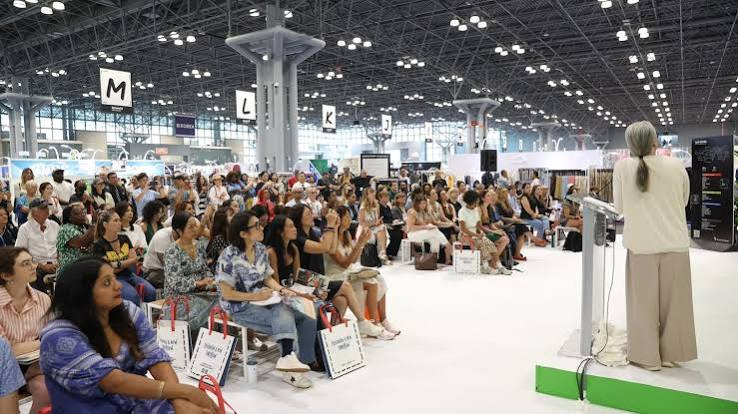
Fashion weeks across major European and Asian markets are increasingly showing that sustainability and technology are no longer side themes in the clothing industry. As designers present new collections in Milan and other fashion capitals, recycled textiles, deadstock fabrics, traceable supply chains, digital design tools and artificial intelligence powered fitting experiences are becoming part of the central fashion conversation.
The September 2026 fashion calendar offers a particularly visible snapshot of that change. Milan is hosting major fashion events alongside Green Fashion Week, while textile and innovation gatherings across Europe are focusing on circular production, advanced materials, artificial intelligence and digital product development. The result is a fashion industry experimenting with how clothes are designed, produced, fitted, sold and eventually kept in use.
Milan Places Technology and Sustainability in the Fashion Spotlight
Milan Fashion Week’s Spring Summer 2027 programme is running from September 22 through September 28, bringing together dozens of shows and presentations from established houses and emerging designers. Alongside the traditional runway calendar, the city is also hosting events that place technology, sustainability and new approaches to fashion production at the center of attention.
Green Fashion Week Milano is running from September 22 through September 28 with a format that combines physical and digital experiences. The event describes its programme as a meeting point for fashion, technology, innovation and environmental responsibility, reflecting a wider effort to connect sustainable design with new digital experiences.
The Milan Fashion Week schedule and coverage shows how strongly the traditional fashion calendar continues to intersect with technology, craftsmanship and changing consumer expectations.
Circular Textiles Move Beyond the Idea of Recycling
One of the clearest changes across the fashion sector is the growing focus on circular textiles. The idea is broader than simply turning an old garment into a new piece of fabric. Circular fashion considers how materials are sourced, manufactured, worn, repaired, reused and eventually recovered.
That approach is increasingly visible in European fashion and textile events. The ECOSYSTEX Conference taking place in Antwerp from September 22 through September 24 is bringing together textile researchers, innovators, industry participants and policymakers to discuss circular textiles beyond recycling. The network behind the event includes more than 90 European Union funded projects focused on textile sustainability, circularity and related skills.
This shift matters because recycling alone cannot solve every problem associated with clothing production. A garment that lasts longer may avoid the need for another garment to be produced. A design that can be repaired can remain useful for years. A material that can be separated more easily at the end of a product’s life may have greater value in a future manufacturing cycle.
Deadstock Fabrics Find New Life on the Runway
Designers are also finding creative ways to use materials that already exist. Deadstock fabrics, surplus textiles and reclaimed materials are increasingly being incorporated into collections rather than treated simply as leftover inventory.
At Dubai Fashion Week earlier in 2026, designer Shivin Singh’s Absent Findings presented a collection using a large proportion of deadstock fabrics sourced from different locations. The approach demonstrates how material limitations can become part of the design process rather than something hidden from the audience.
The same principle has appeared in Milan through collaborations using recycled textile fibers. Earlier this year, Avavav presented garments made with fabrics containing recycled textile fibers and renewable wood based material through a collaboration with OnceMore. These examples point toward a broader design philosophy in which the history of a material can become part of the story of a garment.
Low Impact Supply Chains Are Becoming a Design Issue
Fashion sustainability is increasingly moving upstream. Instead of focusing only on the finished garment, brands are examining where fibers originate, how textiles are dyed, how much water and energy manufacturing requires and whether suppliers can provide reliable information about production.
This is partly driven by consumer expectations, but regulation is also becoming more significant. European fashion businesses are facing growing pressure around transparency, product information and circularity. Digital Product Passports are among the tools being developed to provide more detailed information about products and materials throughout their life cycles.
Première Vision Paris’s September programme illustrates the scale of this shift. Its 2026 offering includes hundreds of exhibitors across fabrics, materials, manufacturing and fashion services, with dedicated attention to biomaterials, circularity, traceability, textile recycling and digital product development.
The European Union Textiles Ecosystem Platform is also tracking a growing number of events focused on circular textiles, sustainable competitiveness, digitalisation and new textile technologies across Europe.
Artificial Intelligence Is Changing How Fashion Is Designed
Artificial intelligence is becoming another important part of the fashion industry’s transition. Its role extends from forecasting and supply chain management to design development, digital sampling, personalization and virtual fitting.
Fashion technology companies are developing systems that allow shoppers to see how garments may appear on a digital representation of themselves before purchasing. The goal is not simply visual novelty. Better fitting information could help reduce purchases that are later returned because of size or appearance concerns.
Research published in 2026 on augmented reality based virtual fitting found that such systems could reduce material waste and influence more environmentally conscious purchasing decisions under experimental conditions. The findings suggest that virtual fitting could eventually have implications beyond convenience, although real world results will depend on how consumers and retailers actually use the technology.
Virtual Fitting Brings Personalization Into the Shopping Experience
Traditional fashion retail asks customers to imagine how a garment will look and feel from a product photograph, mannequin or physical fitting room. AI assisted virtual fitting attempts to shorten that gap by creating a digital representation of how an item may appear on an individual.
The technology can use body measurements, photographs or other digital information to create a virtual try on experience. Some systems can also simulate different garments, colors and styles without requiring the shopper to physically change clothes.
For shoppers, the appeal is obvious. Someone purchasing clothing online can gain additional information before placing an order. For retailers, the technology may offer another way to personalize recommendations and reduce uncertainty around online purchases.
Fashion Shows Are Becoming More Interactive
Artificial intelligence is also changing the fashion show itself. During London Fashion Week in September 2026, H and M worked with photographer Nick Knight and SHOWstudio on an interactive presentation that used artificial intelligence to turn traditional imagery into changing fashion visuals.
Viewers could influence the presentation through movement, creating a fashion experience that combined physical models, photography, digital imagery and real time interaction. The project illustrates how artificial intelligence can be used as a creative tool while keeping human designers, photographers and models involved in the process.
This distinction is becoming increasingly important as the fashion industry debates how much creative work should be automated. Many current applications are being positioned as tools that support designers and production teams rather than complete replacements for human creativity.
Asian Textile Markets Are Joining the Same Conversation
The sustainability movement is not limited to European fashion capitals. Major Asian textile markets are also focusing on circular materials, digital manufacturing and lower impact production.
At Intertextile Shanghai Apparel Fabrics, industry participants have been highlighting circular economy solutions, water saving finishing methods, lower impact dyeing and digital technologies designed to improve manufacturing and supply chain management. The event has also featured work involving next generation textile solutions and data driven production.
This matters because Asia remains central to global apparel manufacturing. Changes in textile production can therefore have consequences far beyond individual fashion shows. When mills and manufacturers adopt more efficient processes, the effect can potentially reach brands and consumers in multiple international markets.
Luxury Fashion Faces a Different Sustainability Challenge
Luxury fashion occupies a complicated position in the sustainability discussion. Premium garments are often associated with craftsmanship, durability and longer product life, but luxury supply chains can still involve complex sourcing, transportation, material processing and packaging.
The industry’s challenge is therefore not simply to make expensive clothing from recycled materials. Designers must balance aesthetics, performance, craftsmanship, scarcity and longevity with environmental considerations.
That is one reason circular materials are becoming particularly interesting. If recycled or reclaimed fibers can meet the quality expectations of luxury customers, brands may be able to reduce dependence on virgin resources without abandoning the construction standards associated with premium clothing.
Personalization Could Also Change How Many Clothes Are Produced
AI driven customization has another potential consequence. Fashion traditionally depends on forecasting how many garments of a particular style, size and color consumers will want months before those products reach stores.
Errors in forecasting can create excess inventory. Unsold clothing may eventually be discounted, stored, destroyed or otherwise removed from the normal retail cycle.
More personalized production could change that model. If technology can gather reliable information about customer preferences and measurements before manufacturing, brands could potentially produce closer to actual demand. Made to order and small batch production could become easier to manage when digital tools handle parts of the ordering, sizing and design process.
That does not mean artificial intelligence will automatically eliminate fashion waste. Manufacturing still requires materials and energy, and digital systems themselves require computing infrastructure. The environmental outcome depends on how the technology is integrated into the wider supply chain.
What Shoppers Should Look For in Sustainable Fashion
For consumers, the growing number of sustainability claims can make fashion labels difficult to evaluate. A garment described as sustainable may involve recycled fibers while still having other environmental costs.
Shoppers can look beyond broad environmental language and examine specific information about the product. Useful questions include where the material came from, whether recycled content is clearly identified, how durable the garment is, whether repairs are possible and whether the company provides meaningful information about manufacturing.
- Look for specific material information rather than vague sustainability claims.
- Consider garment durability and repair options before purchasing.
- Check whether recycled content is identified clearly and accurately.
- Use virtual fitting tools as additional information rather than treating digital images as perfect predictions.
- Consider buying fewer pieces that can work across several outfits and occasions.
The Fashion Industry Is Moving Toward a More Connected Model
The September 2026 fashion calendar shows an industry increasingly connecting three previously separate conversations: design, technology and sustainability. Circular textiles affect material sourcing. AI affects personalization and production planning. Virtual fitting affects the relationship between customers and garments. Digital product information affects transparency across the supply chain.
These developments are also changing the atmosphere around fashion events. The runway remains a place for spectacle, creativity and cultural expression, but it is increasingly accompanied by conversations about material science, software, traceability and resource use.
A New Fashion Cycle Is Taking Shape
We are seeing the beginnings of a fashion system in which a garment’s story may extend far beyond the runway. Its materials can be traced before production, its design can be developed digitally, its fit can be simulated before purchase and its components can potentially remain in circulation after the first owner no longer wants the garment.
That vision is still developing, and significant obstacles remain. Sustainable materials can cost more, recycling systems are uneven, digital fitting technology is not perfect and supply chain transparency can be difficult across thousands of suppliers.
Yet the direction visible across European and Asian fashion markets is significant. Circular textiles are gaining a larger place in design discussions, while artificial intelligence and virtual fitting are moving from experimental demonstrations toward practical retail and production applications.
The fashion weeks of September 2026 therefore offer more than a preview of upcoming collections. They provide a glimpse of an industry attempting to rethink how clothing is imagined, produced, purchased and kept in use. The most consequential changes may happen away from the spotlight, inside textile mills, design studios, software platforms and supply chains, where decisions about materials and technology ultimately determine how sustainable the next generation of fashion can become.