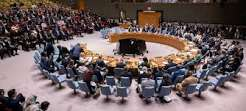
Delegations gathering at the United Nations in New York are placing renewed attention on sovereign equality, international law, Security Council reform and the rules needed to govern an increasingly connected world. The discussions come during the 81st session of the General Assembly, where governments are examining how a multilateral system designed decades ago can respond to modern conflicts, technological change and demands for broader representation. For people watching from outside the diplomatic halls, the debate may sound procedural, but its consequences reach into questions of peace, digital rights, national sovereignty and how international decisions are made.
Security Council Reform Returns to the Center of Debate
The question of reforming the United Nations Security Council remains one of the most persistent issues before the General Assembly. The Council has five permanent members with veto power and ten elected members serving two year terms. Many governments have argued that its composition should better reflect the current distribution of populations, regions and political influence rather than the realities of 1945.
The 81st General Assembly session opened on September 8, 2026, with 193 Member States represented in the Assembly and each state holding one vote. That principle of equal participation is central to the wider discussion about sovereign equality. The United Nations General Assembly describes the Assembly as the organization’s main deliberative, policy making and representative body, giving every Member State a formal place in its work.
The current reform process is not beginning from zero. Member States have conducted intergovernmental negotiations for years, with discussions addressing the size and composition of the Council, regional representation, the veto and the relationship between the Security Council and the General Assembly. The United Nations says the negotiations are intended to produce a Council that is more representative, inclusive, transparent, efficient, effective, democratic and accountable.
Sovereign Equality Remains a Foundational Principle
Sovereign equality is a basic principle of the United Nations Charter. In practical terms, it means that states are legally equal as members of the international system even though they differ enormously in population, territory, economic power and military capability.
That principle creates a difficult tension. Every country has an equal vote in the General Assembly, yet the Security Council gives five permanent members a special institutional position. Governments that support reform often argue that the gap between formal equality and decision making power needs to be addressed. Governments also differ over what a reformed Council should look like, how new seats should be distributed and whether changes to veto arrangements should be included.
The United Nations rule of law framework states that international law applies to states and international organizations and that the principles of the Charter include sovereign equality, territorial integrity, political independence, peaceful settlement of disputes and respect for international obligations. These principles provide the legal foundation for the wider discussion taking place at the Assembly.
Africa’s Representation Is a Major Point of Discussion
Africa has become one of the clearest examples of the representation issue. The continent has 54 United Nations Member States, yet it does not have a permanent seat on the Security Council. African governments have repeatedly called for a greater role in the Council, including permanent representation.
During the opening of the 81st session’s general debate, the President of the General Assembly, Khalilur Rahman, publicly called attention to Africa’s continued underrepresentation. He said the reform process should make the Council more representative and reflect contemporary geopolitical realities, while identifying African representation as a particularly important issue.
The argument is not simply about the number of seats. African countries are involved in many of the international peace and security issues considered by the Council, while African states also contribute personnel to United Nations peacekeeping operations. Supporters of greater representation therefore connect Council reform with the credibility and legitimacy of decisions affecting countries outside the permanent membership.
Negotiations Show Both Areas of Agreement and Disagreement
Recent United Nations documents show that Member States have already identified areas of broad convergence. A June 2026 elements paper from the intergovernmental negotiations states that reform is considered a Member State driven process and that the objective includes creating a Council that is more representative, inclusive, transparent, efficient, effective, democratic and accountable.
Agreement on broad principles does not mean agreement on the final structure. The difficult questions concern how additional seats would be allocated, which regions would receive them, whether permanent members should have veto rights and how the Council should balance regional representation with operational effectiveness.
This is why Security Council reform has remained a lengthy diplomatic process. Any major structural change requires broad political support among Member States and must eventually pass through the procedures established by the United Nations Charter.
Digital Governance Adds a New Dimension
The debate over global governance is no longer limited to military conflict and traditional diplomacy. Digital technology has created questions that cross national boundaries almost instantly. Artificial intelligence, large data systems, digital platforms and cyber technologies can affect citizens in countries far beyond the jurisdiction where a technology company or service provider is based.
The 81st General Assembly leadership has identified digital governance and artificial intelligence as part of its priorities. The agenda includes questions involving digital inequality, surveillance, bias, misuse of technology and the need for international cooperation that includes governments, technical experts and civil society.
The United Nations Global Digital Compact provides a framework for this work. It recognizes that digital cooperation involves many different actors and calls for continued international review of progress, risks and emerging opportunities. The United Nations has scheduled a high level review of the Compact for the 82nd session of the General Assembly, with preparatory consultations beginning during the current session.
Why Digital Rules Are Becoming an International Law Issue
Digital governance creates a complicated legal environment because information can move between jurisdictions in fractions of a second. A person may use a service developed in one country, store information in another and communicate with someone located somewhere else. Artificial intelligence systems can also process information from many regions while making decisions that affect individuals across borders.
This raises questions about privacy, data protection, cybersecurity, artificial intelligence safety and access to technology. Governments must balance national authority with the practical reality that digital systems do not stop at national frontiers.
The challenge is particularly significant for developing countries. Differences in internet access, computing infrastructure, technical expertise and investment can create a widening digital divide. Global digital governance therefore involves not only rules for technology companies, but also questions about whether countries have the resources needed to participate meaningfully in the digital economy.
International Law Is Under Pressure From New Technologies and Global Conflicts
International law depends heavily on states accepting common rules and applying them consistently. When governments disagree about how those rules should operate, international institutions face a difficult credibility test.
The United Nations has repeatedly connected the rule of law with peaceful dispute settlement and respect for the Charter. That framework becomes increasingly relevant when countries face disputes involving territorial claims, sanctions, cyber operations, artificial intelligence or the use of force.
For ordinary people, these legal debates can seem distant until they affect travel, communications, economic security or access to digital services. International rules influence everything from the treatment of refugees to the safety of commercial shipping and the protection of personal information. The credibility of those rules therefore has consequences beyond diplomatic negotiations.
The General Assembly Is Seeking to Restore Trust
The theme of the 81st session is “Restoring Trust, Managing Transformation: A United Nations That Delivers for All.” That theme reflects a wider concern about whether international institutions can keep pace with changes in global power and technology.
At the opening of the session, General Assembly President Khalilur Rahman said restoring trust requires both delivery and reform. His priorities include strengthening multilateral cooperation, advancing digital governance, supporting science and technology and improving the inclusiveness of global governance.
The Pact for the Future also provides an important reference point. Its global governance chapter commits Member States to reforming the Security Council and strengthening the multilateral system. It specifically calls for reform that makes the Council more representative, inclusive, transparent, efficient, effective, democratic and accountable.
What Reform Could Mean for Smaller States
For smaller and middle sized countries, the debate is closely connected to whether international institutions provide meaningful opportunities to influence decisions. Formal equality gives every General Assembly member a vote, but access to powerful institutions, diplomatic resources and international negotiating capacity varies considerably.
A more representative Security Council could alter how different regions participate in international peace and security discussions. Changes to digital governance could similarly influence how smaller economies participate in technology markets and protect their citizens online.
Yet reform also has to address efficiency. A larger institution can provide broader representation while potentially making consensus more difficult. Governments therefore face a balancing exercise between legitimacy and the practical ability to reach decisions during crises.
A Broader Debate About Who Makes Global Rules
The discussions at the United Nations point toward a larger question about the future of international cooperation. The world is dealing with conflicts, artificial intelligence, climate pressures, economic inequality, cybersecurity risks and rapidly changing technology at the same time. Institutions created for an earlier era are being asked to manage problems that are increasingly interconnected.
Security Council reform addresses who has formal authority over international peace and security. Sovereign equality addresses how states relate to one another under international law. Digital governance addresses how rules can remain meaningful when technology crosses borders faster than traditional legal systems can respond.
These issues are connected by a common concern: legitimacy. Governments need to believe that international rules are created through processes they can participate in, while citizens need confidence that those rules are applied fairly and consistently.
The Road Ahead Will Depend on Negotiation
No single meeting at the General Assembly is expected to settle the longstanding questions surrounding Security Council reform or global digital governance. The reform process remains dependent on negotiations among Member States, while digital governance will require continuing cooperation between governments, technology experts, international organizations and civil society.
What is changing is the breadth of the conversation. Sovereign equality is being discussed alongside artificial intelligence and digital cooperation because modern international relations can no longer separate traditional state power from technological power.
We are therefore watching a debate that reaches beyond the architecture of the United Nations itself. The decisions made through these negotiations can influence how governments cooperate, how international law is interpreted and how digital technologies are governed for years to come. The central question is not simply whether institutions should change, but how they can change while preserving the principles of equality, accountability, peaceful cooperation and respect for international law that form the foundation of the multilateral system.