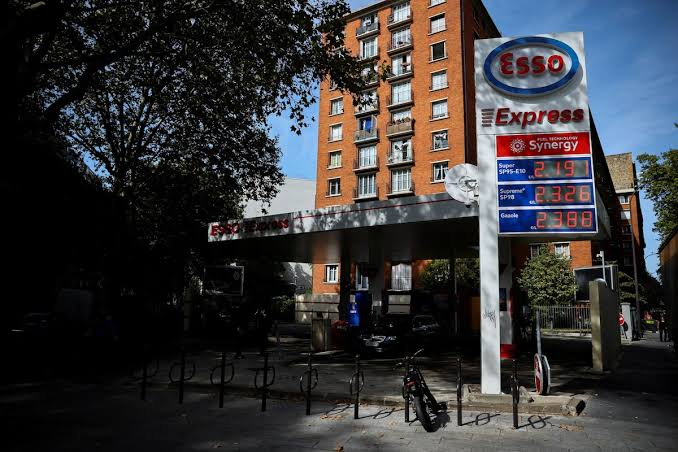
The Trump administration has asked France and Germany to release emergency diesel reserves to help ease pressure on global fuel markets, while warning that Washington could restrict United States diesel exports if European governments do not act. The request, reported on October 1, 2026, places energy security, trade policy, and the cost of fuel at the center of a growing dispute between the United States and its European allies. Reuters reported that three people familiar with the discussions described the potential export restriction, while European governments were considering how to respond. :contentReference[oaicite:0]{index=0}
Washington Puts European Diesel Reserves Under Pressure
The administration’s message to France and Germany comes as fuel prices remain elevated and global supplies of refined petroleum products face disruptions. According to Reuters, the United States has asked the European Union to release as much as 120 million barrels of diesel over the next six months. The request would draw on emergency stocks maintained to protect countries against severe supply interruptions.
For Washington, the issue is closely connected to domestic fuel prices. President Donald Trump has been considering restrictions on United States diesel exports as one possible way to increase supplies available to American consumers. The administration is also examining other measures intended to increase refined fuel availability.
That approach creates a difficult policy calculation. Restricting exports could leave more diesel inside the United States, but it could also reduce supplies available to international buyers. Europe has become an important destination for American refined fuel, making any major change in United States export policy potentially significant for European markets as well.
Why Diesel Has Become a Global Pressure Point
Diesel is not simply a fuel used by private motorists. It powers trucks, agricultural machinery, construction equipment, industrial vehicles, ships, generators, and large parts of the logistics network that move goods between factories, warehouses, ports, and stores.
When diesel becomes scarce or expensive, the effects can spread through the wider economy. Transport companies face higher operating costs, farmers can pay more to run machinery, manufacturers face increased logistics expenses, and businesses may eventually pass part of those costs to consumers.
This is why emergency fuel reserves matter. Governments generally maintain strategic stocks as a buffer against major disruptions. Releasing those supplies can increase availability during a shortage, but every barrel removed from storage also reduces the reserve available if another disruption occurs later.
Europe’s Energy Position Has Changed Since Russia’s Invasion of Ukraine
Europe’s current fuel situation is closely connected to the major restructuring of its energy supply since Russia’s invasion of Ukraine. European countries reduced their dependence on Russian energy and sought alternative sources from the United States, the Middle East, and other international suppliers.
The shift has made imported refined products increasingly important for several European markets. At the same time, disruptions affecting energy flows from the Middle East have added another layer of uncertainty.
US Energy Secretary Chris Wright said Wednesday that the United States had lost some diesel exports from the Middle East and China, although he said some Middle Eastern supplies were being restored. He described the interruptions as a significant factor affecting the availability of refined products. :contentReference[oaicite:1]{index=1}
The combination of reduced Russian energy trade, disrupted Middle Eastern supplies, and changing Chinese exports has left governments watching diesel inventories particularly closely.
France and Germany Hold an Important Position
Washington’s focus on France and Germany reflects their importance within Europe’s emergency fuel system. Reuters reported that United States officials have been frustrated that the two countries have not fully followed through on earlier commitments concerning emergency oil and petroleum reserves.
Germany’s economy ministry did not immediately respond to a Reuters request for comment, while France’s energy ministry declined to comment on the matter. The lack of an immediate public commitment means the precise scale and timing of any reserve release remained uncertain on October 1.
The issue also illustrates the difference between maintaining energy security and using reserves to influence prices. Governments have to consider not only today’s shortage but also the possibility of another disruption tomorrow.
Macron Plans a Broader G7 Discussion
France appears to be approaching the issue through wider international coordination. An official at the Elysee Palace said that French President Emmanuel Macron and Trump did not discuss the diesel reserve issue when they met on the sidelines of the United Nations General Assembly in New York the previous week.
The French official said Macron planned to convene a video conference involving G7 leaders to discuss rising fuel prices and the availability of refined petroleum products. The discussions could include coordination with the International Energy Agency over emergency reserve releases. :contentReference[oaicite:2]{index=2}
A coordinated approach could allow governments to respond to the supply problem without each country acting independently. The challenge is deciding how much fuel should be released, how quickly it should enter the market, and how governments can preserve enough emergency inventory for future disruptions.
The United States Faces Its Own Supply Dilemma
Washington’s consideration of an export restriction reflects the tension between domestic energy priorities and the international role of the United States as a major refined fuel supplier.
American consumers see diesel prices directly through transportation costs and the price of goods that depend on trucking. Farmers and freight operators are particularly exposed because diesel is a major operating expense. A government seeking to reduce those costs has an incentive to increase domestic supply.
However, an export restriction would not operate in isolation. If American refiners send less diesel overseas, international buyers would have fewer barrels available from one of the world’s major suppliers. Other producers could respond by increasing exports, but the speed and scale of that response would depend on available refining capacity, shipping routes, inventories, and crude supplies.
The debate therefore involves more than a simple decision about whether the United States should export diesel. It concerns how a major energy producer manages its domestic needs while remaining part of an interconnected international fuel market.
Industry Groups Have Raised Concerns About Export Restrictions
The prospect of a United States diesel export ban has also drawn criticism from parts of the American energy industry. Industry groups have argued that restricting exports could interfere with refinery operations and potentially reduce incentives to produce refined fuels.
The American Petroleum Institute and other industry organizations have warned that restrictions could create unintended consequences for domestic fuel supplies. Their argument is that refineries operate within an integrated market, and limiting access to international buyers could affect refinery economics and production decisions.
The debate remains unsettled. Supporters of restrictions focus on the possibility that keeping more diesel inside the country could increase domestic availability, while opponents point to potential effects on refinery operations and broader fuel markets.
What a European Reserve Release Could Mean for Fuel Prices
A release of emergency diesel stocks could add physical supply to European markets and potentially ease some short term pressure. The effect on global prices, however, would depend on the size of the release, how quickly the fuel reaches buyers, and whether other supply disruptions continue.
Emergency reserves are most useful when they address a temporary supply gap. If the underlying shortage continues for months, governments may have to consider additional measures involving imports, refinery production, transportation, and demand management.
The proposed European release also needs to be considered against the scale of the request. Reuters reported that the United States has asked the European Union to release 120 million barrels during the next six months. :contentReference[oaicite:3]{index=3}
Such a release would be a major intervention in the refined fuel market, which means governments would have to weigh immediate price relief against the value of retaining emergency stocks.
Global Energy Trade Is Becoming More Politically Sensitive
The dispute arrives at a moment when energy policy is increasingly tied to foreign relations. Fuel flows depend on shipping routes, sanctions, geopolitical conflicts, refinery capacity, trade rules, and decisions made by national governments.
For Europe, the loss of Russian energy supplies changed the structure of its fuel market. For the United States, higher domestic fuel costs have increased pressure to find ways of expanding available supplies. For countries that import refined products, decisions made in Washington, Brussels, Paris, Berlin, Beijing, or major Middle Eastern energy centers can affect prices far beyond their own borders.
This interconnected system explains why a disagreement over diesel reserves in France and Germany can quickly become a wider international trade issue.
What Comes Next for the Diesel Market
The immediate focus will be on whether European governments announce releases from their emergency diesel inventories and whether Washington moves forward with restrictions on United States diesel exports.
Several developments will be particularly important to watch:
- Whether France and Germany announce specific reserve releases
- Whether the European Union coordinates a broader emergency stock response
- Whether the United States imposes or modifies diesel export restrictions
- How quickly Middle Eastern and Chinese refined fuel supplies recover
- Whether global diesel prices respond to additional emergency supplies
- Whether G7 governments coordinate their response through the International Energy Agency
The International Energy Agency remains a central institution in discussions involving emergency oil stocks and coordinated responses to major energy supply disruptions.
A High Stakes Test for Energy Cooperation
The latest dispute shows how closely domestic fuel prices and international energy trade are connected. Washington wants greater fuel availability for American consumers, while European governments must protect their own reserves after years of major changes in energy supply.
The United States and Europe share an interest in stable fuel markets, but they also face different domestic pressures. Releasing emergency diesel can provide additional supply when markets are tight, yet it reduces the protection available against another disruption. Restricting American exports could increase domestic availability, but it could also affect international buyers that depend on United States refined fuel.
We are therefore watching two policy decisions that could influence the same market from opposite directions. European reserve releases could put additional diesel into circulation, while American export restrictions could remove some supply from international trade.
How governments balance those competing pressures will help determine whether the current period of fuel market stress remains a short term disruption or develops into a broader challenge for global energy trade.