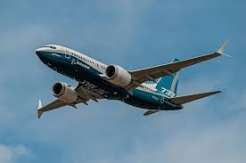
The Federal Aviation Administration has determined that a newly identified software issue affecting certain Boeing 737 MAX aircraft does not pose a direct safety concern, removing a major regulatory obstacle for Boeing as it works toward certification of the 737 MAX 10. The decision follows an intensive review of flight management software linked to automated guidance during a missed approach, a moment when pilots may need to quickly change course after an aircraft cannot land as planned. For airlines, pilots and passengers, the ruling brings relief, but it also places renewed attention on how software changes are tested, communicated and monitored across a global commercial aviation fleet.
FAA Review Clears a Major Regulatory Obstacle
The FAA announced its conclusion after its Corrective Action Review Board examined the software behavior and the circumstances in which it can occur. The agency determined that the issue is apparent to flight crews and manageable, with pilots retaining control of the aircraft.
The finding is significant because the software question had temporarily complicated Boeing’s efforts to complete certification of the 737 MAX 10. The aircraft is the largest member of the current 737 MAX family and has been waiting for final regulatory approval after years of development and testing.
Aviation Week reported on October 3 that the FAA will not require Boeing to update the affected flight management software as a condition for certifying the 737 MAX 10. The decision gives Boeing additional flexibility while work continues on a software update intended to address the underlying issue.
For Boeing, that distinction matters. Regulators have determined that the existing software does not create a safety concern requiring certification to stop, while Boeing can continue developing a permanent correction through the normal engineering and operational process.
What the Software Issue Actually Does
The problem involves automated vertical navigation during a particular missed approach scenario. A missed approach occurs when an aircraft cannot complete its landing and must climb away from the runway before following another procedure.
Under the circumstances identified in the software review, the aircraft’s vertical navigation function can disengage after the flight crew changes the programmed flight path. The aircraft remains controllable, but the change can increase the workload placed on pilots at a demanding stage of flight.
That distinction is central to the FAA’s conclusion. The agency did not determine that the software behavior should simply be ignored. Instead, its review found that the behavior is recognizable to pilots and can be managed using existing flight crew procedures and aircraft controls.
Boeing has been working on updated software and interim guidance for operators. The company is also expected to provide pilots with information explaining the circumstances surrounding the issue and the appropriate response.
A Problem First Identified During WestJet Testing
The issue has a longer history than its public disclosure might suggest. Reuters reported that pilots from Canadian carrier WestJet first identified the anomaly during an entry into service validation flight in 2024. WestJet provided Boeing with supporting information about what the pilots had observed.
The issue involved the aircraft’s flight computer and its automated vertical navigation behavior during a particular missed approach sequence. Subsequent analysis and additional operator feedback gave Boeing and regulators a broader view of the circumstances in which the behavior could occur.
The discovery is a reminder that modern commercial aircraft depend on an enormous amount of software working alongside mechanical systems, sensors, navigation equipment and human decision making. A software behavior does not necessarily mean that an aircraft is unsafe to operate, but even a manageable anomaly can receive significant scrutiny when it occurs during a demanding phase of flight.
Why the 737 MAX 10 Certification Matters
The FAA decision comes at a crucial point for Boeing. The 737 MAX 10 has been in development for years and is intended to serve airlines seeking a high capacity narrow body aircraft for domestic and international routes.
Several major airlines have orders or plans involving the aircraft. Reuters reported that Boeing has roughly 1,500 MAX 10 orders, making certification important not only to Boeing’s production plans but also to airline fleet planning.
Southwest Airlines, United Airlines and Alaska Airlines are among carriers connected to the MAX 10 program. The aircraft is expected to provide airlines with another option for routes where passenger demand requires more capacity than smaller versions of the 737 MAX can provide.
Certification therefore has consequences beyond Boeing’s balance sheet. Airlines plan aircraft deliveries years in advance, and delays can affect fleet replacement schedules, pilot training, airport planning and route development.
The FAA Is Keeping Close Oversight of Boeing
The latest decision should not be interpreted as the end of regulatory scrutiny surrounding Boeing. The FAA has repeatedly stressed that it continues to monitor the company’s engineering, production and safety processes.
In August 2026, the FAA certified the Boeing 737 MAX 7 after an extensive review that included flight controls, system safety assessments, human factors and flight crew alerting. The agency also said its inspectors would remain present at Boeing production facilities and continue monitoring the company’s safety management system.
The FAA’s broader aviation safety resources show the scale of regulatory oversight involved in commercial aircraft certification. Certification is not a single approval based on one test flight. It involves engineering analysis, operational evaluation, testing, documentation and continuing oversight.
Aviation Safety Lessons From the Software Review
For passengers, technical descriptions of flight management software can sound distant from the experience of sitting in an aircraft cabin. Yet the connection is direct. Every automated system is designed to reduce workload while leaving pilots with the ability to intervene when circumstances change.
The latest FAA review highlights the importance of that relationship between automation and human control. The software behavior identified in the 737 MAX does not remove pilot control. Instead, it can require pilots to manage the aircraft differently during a missed approach.
That makes pilot training and clear cockpit information essential. When automation behaves differently from what crews expect, pilots need to recognize the change quickly and understand which controls and procedures remain available.
The FAA’s finding that the issue is manageable reflects that human factors assessment as much as the technical behavior of the software itself.
Why Airlines Still Care About the Software Fix
Even though the FAA has determined that the issue is not a safety concern, airlines still have operational reasons to want the software corrected. Flight crews prefer predictable aircraft behavior, especially when operating complex procedures under time pressure.
A permanent software correction can also simplify fleet management by reducing differences between aircraft versions and minimizing the need for special operational instructions. Airlines must consider training materials, maintenance procedures, simulator programs and software configuration when managing large fleets.
Some operators had already expressed caution about accepting aircraft equipped with the affected software configuration. Aviation Week reported that airlines were working with Boeing and the FAA while the company developed its corrective solution.
A Global Regulatory Question
The FAA decision is particularly relevant because commercial aviation is an international system. An aircraft certified in the United States may soon operate routes across multiple countries and regulatory jurisdictions.
Once the FAA has completed its review, aviation authorities in other countries can examine the findings when considering their own requirements. International regulators may adopt similar conclusions, request additional information or establish operational measures for airlines under their jurisdiction.
That process is one reason regulatory decisions involving widely used aircraft receive attention far beyond the United States. Airlines need consistent and clearly documented safety requirements when aircraft move between different national airspaces.
What Passengers Should Take From the Decision
For passengers, the most relevant point is that the FAA’s formal safety review did not identify the software behavior as a direct safety threat. The agency determined that pilots retain control and that the issue can be managed.
That conclusion should also be viewed within the broader framework of commercial aviation regulation. Airlines operate under extensive requirements covering aircraft certification, maintenance, pilot training, operational procedures and continuing airworthiness.
The history of the 737 MAX also explains why software findings receive unusually close attention. Following the two fatal crashes involving the aircraft in 2018 and 2019, regulators introduced extensive changes to flight control software, cockpit alerts, pilot procedures and certification oversight. The FAA’s public Boeing 737 MAX records document many of those earlier regulatory actions.
Boeing Moves Forward With Certification Plans
The latest FAA finding allows Boeing to move forward without making the new software correction an immediate prerequisite for 737 MAX 10 certification. The company still has work ahead as it develops and validates the software update and communicates procedures to airlines.
For aviation professionals, the episode demonstrates how a relatively narrow software behavior can affect an entire aircraft certification program. For Boeing, it provides a regulatory path forward at a time when the company is working to rebuild confidence in its aircraft development and manufacturing processes.
For pilots, airlines and passengers, the central message is more measured. The FAA has reviewed the identified software behavior and found no direct safety concern, while Boeing continues working on a permanent technical correction. That combination of regulatory scrutiny, engineering work and operational guidance is likely to remain central as the 737 MAX family continues to expand across global airline fleets.