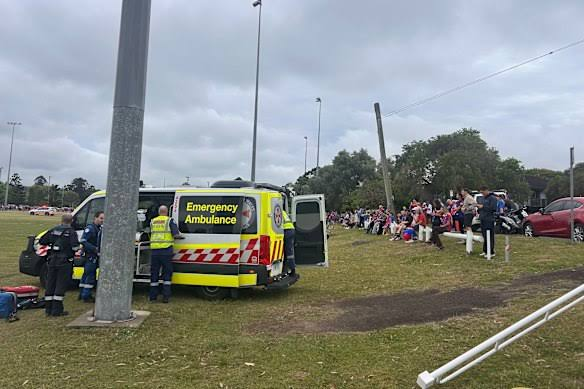
What was meant to be a joyful farewell for the Newcastle Knights before their NRL Grand Final appearance turned into a major emergency on Saturday morning, October 3, 2026. A vehicle struck a crowd of supporters gathered along Newcastle Link Road in Wallsend, injuring 10 people, including several children. The incident brought emergency crews rushing into an area that had been filled with families, team colors and excitement only moments earlier, leaving the Newcastle community facing a painful start to one of its biggest sporting weekends.
How the Newcastle Crowd Was Hit
The crash happened at about 9:30am near the Transfield Drive roundabout as supporters gathered to watch the Newcastle Knights team bus leave the city ahead of Sunday’s NRL Grand Final against the Sydney Roosters. Thousands of supporters had turned out across Newcastle during the week to celebrate the team’s run to the final, making the farewell procession a highly anticipated community event.
According to New South Wales Police and emergency service reports, a car entered the area where supporters were gathered and struck multiple people. The 18 year old driver was arrested at the scene. Police have said the incident is not believed to be connected to terrorism, while the circumstances surrounding the crash remain under investigation. :contentReference[oaicite:0]{index=0}
Newcastle Mayor Gavin Morris said early information indicated the driver had been revving the vehicle before losing control. Authorities have not suggested that the driver intentionally targeted the crowd. That distinction remains significant as investigators work to establish exactly what happened in the seconds before the collision.
Children Among Those Injured
The human cost of the crash quickly became clear as paramedics treated injured supporters and transported patients to John Hunter Hospital. New South Wales authorities reported that 10 people were injured, with a five year old girl and a 67 year old man among those in critical condition. Other injured people, including young children, were reported to be in stable condition. :contentReference[oaicite:1]{index=1}
For families who had arrived expecting a simple sporting farewell, the atmosphere changed within seconds. Supporters who had gathered to wave to players instead found themselves helping injured strangers while police, ambulance crews and air medical teams moved into the area.
Australian Broadcasting Corporation reported that three emergency service helicopters and 15 ambulances responded to the scene. Several patients were transported to hospital, while other people received treatment where the crash occurred. :contentReference[oaicite:2]{index=2}
Emergency Response Disrupted the Team Farewell
The emergency operation also changed the Newcastle Knights’ planned departure. Newcastle Link Road was closed in both directions while police investigated the crash and emergency crews treated victims. The team bus was diverted onto another route, allowing the players to continue their journey toward Sydney while keeping the affected area clear.
New South Wales Police asked members of the public to disperse safely and keep roadways open for emergency vehicles and traffic management crews. The decision meant some supporters who had waited along the original procession route never received the farewell they had expected.
The Newcastle Knights expressed support for those affected, while political and sporting figures also sent messages of sympathy to injured fans and their families. Prime Minister Anthony Albanese described the incident as horrible and said rugby league was supposed to bring people together during a weekend of excitement and pride for Newcastle supporters. :contentReference[oaicite:3]{index=3}
Why Crowd Safety Is Now Under Greater Attention
The crash has also placed renewed attention on how public sporting gatherings are managed outside stadium boundaries. Large fan gatherings often take place on public roads, near intersections, roundabouts and temporary procession routes. Unlike controlled stadium entrances, these areas can contain moving vehicles, pedestrians, temporary barriers and large groups of people within a relatively small space.
For event organizers, the Newcastle incident highlights several practical questions. Authorities may need to examine how vehicles are separated from spectators, whether additional physical barriers are appropriate, how traffic is controlled around fan zones and how quickly emergency vehicles can reach crowded areas when something goes wrong.
Safety planning for large sporting gatherings generally requires cooperation between police, ambulance services, councils, clubs, venue operators and event organizers. The New South Wales Government provides public information on emergency management, road safety and community safety planning across the state.
Key Areas Likely to Receive Attention
- Physical separation between vehicles and pedestrian crowds
- Traffic control around team arrival and departure routes
- Emergency vehicle access through heavily crowded areas
- Placement of temporary barriers and crowd control personnel
- Communication procedures for fans during an emergency
These measures do not remove every risk from public gatherings, but they can help reduce the consequences when a vehicle unexpectedly enters a pedestrian area. The incident may therefore become part of wider discussions about spectator safety at outdoor sporting celebrations across Australia.
A Celebration That Had United Newcastle
The tragedy is particularly painful because of the enthusiasm surrounding the Newcastle Knights’ Grand Final appearance. Supporters had spent days lining streets, attending training sessions and preparing to send their team toward the biggest match of the season. The Knights’ success had created a strong sense of community pride across Newcastle and the wider Hunter region.
That atmosphere makes the sudden change at Newcastle Link Road especially difficult to absorb. A gathering built around cheering players and sharing a sporting moment instead became a scene of emergency treatment and fear.
Yet the response also showed how quickly ordinary people can move into action during a crisis. Witnesses and supporters assisted injured people before and during the arrival of professional emergency crews. Such moments rarely appear in official event planning documents, but community response can become an important part of survival when large incidents occur.
Police Investigation Continues
The 18 year old driver was arrested at the scene and later charged with serious driving offences, according to Australian Broadcasting Corporation reporting. Police investigations are continuing as authorities work to establish the precise sequence of events and determine how the vehicle entered the crowd. :contentReference[oaicite:4]{index=4}
Authorities have also said the incident is not currently believed to be terrorism related. That assessment is significant because large sporting events can attract heightened security concerns, but investigators still need to establish the facts through evidence, witness accounts and other investigative material.
For readers following the case, updates from New South Wales Police remain among the most relevant sources for official information about the investigation and public safety measures.
The Grand Final Weekend Now Carries a Different Weight
The Newcastle Knights will continue into the NRL Grand Final weekend, but the celebration surrounding their appearance has been permanently altered for many supporters. Families connected to the injured are now facing hospital visits rather than a simple day of rugby league celebration, while a community that had been preparing for a major sporting occasion is waiting for news about those hurt.
We often associate sports safety with what happens inside a stadium, including seating, exits, medical teams and crowd movement. The Newcastle crash is a reminder that the moments before a major match can also require careful planning. A team bus leaving a city, fans lining a roadside and vehicles moving through public streets can create a complex environment where ordinary traffic risks suddenly become serious crowd risks.
For Newcastle, the immediate priority remains the recovery of those injured and support for their families. For organizers of major spectator events, the longer term task will be examining what happened and determining whether additional precautions are needed when thousands of people gather along public roads to celebrate their teams.
The weekend was supposed to be about rugby league, community pride and the excitement of a Grand Final. Instead, Newcastle woke to a painful reminder that even moments of collective celebration require careful attention to the safety of everyone standing along the road.