Europe is moving deeper into a major housing transition as new building energy rules push governments, developers and property owners toward better insulation, cleaner heating systems and more efficient homes. The changes are designed to cut energy waste and fossil fuel use while making European housing more comfortable and less exposed to volatile energy prices, but the financial burden of renovation remains a serious concern for households already struggling with housing costs.
Europe’s Building Rules Enter a New Implementation Phase
The European Union’s revised Energy Performance of Buildings Directive is now moving from legislation into national implementation. The directive entered into force in May 2024, while the deadline for EU member states to transpose most of its provisions into national law was May 29, 2026. The European Commission has since pushed governments to complete the process and prepare detailed national renovation strategies.
That distinction matters for homeowners. The EU has not introduced one blanket rule requiring every homeowner to immediately replace insulation, install a heat pump or completely renovate an existing property. Instead, member states are developing their own measures to reduce energy consumption across residential building stock, with particular attention to the homes that perform worst.
For ordinary families, however, the direction is clear. Older homes with poor insulation, inefficient heating systems and excessive energy consumption are increasingly becoming the focus of public policy, financing programs and renovation activity.
Why Insulation Is Becoming a Central Part of European Housing Policy
Buildings consume enormous amounts of energy across Europe, and a large share of that demand comes from heating, cooling and domestic hot water. The European Commission estimates that roughly 75 percent of the EU building stock has poor energy performance. Annual renovation activity has also remained low, at around 1 percent of buildings.
That creates a problem that is easy to understand inside an ordinary home. A poorly insulated house can feel cold even while the heating is running. Heat escapes through roofs, walls, windows and other parts of the building envelope, leaving residents paying for energy that does not remain inside the property for very long.
Better insulation can change that experience. Roof insulation, improved walls, efficient windows and appropriate shading can reduce heat loss during winter while helping homes remain cooler during increasingly severe summer heat.
The EU’s renovation strategy therefore places energy efficiency at the center of the transition rather than treating new heating equipment as a complete solution. A highly efficient heating system inside a poorly insulated building can still waste substantial energy.
Cleaner Heating Systems Are Becoming More Important
Heating and cooling represent one of the biggest energy challenges facing Europe. The EU says around half of all energy used across the bloc is associated with heating and cooling buildings and other spaces. Fossil fuels still account for a large share of that energy use.
This is where modern heating and cooling technology becomes increasingly important. Heat pumps, efficient electric systems, renewable energy integration, improved controls and efficient district heating can all help reduce reliance on fossil fuels.
The European Commission’s guidance on energy efficiency and building performance makes clear that cleaner systems work best when paired with strong building efficiency. A well insulated home requires less energy to maintain a comfortable indoor temperature, allowing heating equipment to operate more efficiently.
For homeowners, this means renovation decisions may increasingly need to be considered as a package. Replacing an old boiler without addressing major heat losses may deliver less benefit than a coordinated plan involving insulation, windows, heating controls and a modern heating system.
Residential Buildings Face Specific Energy Reduction Targets
One of the most significant elements of the revised framework concerns residential building stock. EU countries must introduce measures designed to reduce the average energy use of residential buildings by 16 percent by 2030 compared with 2020 levels. The framework sets a higher reduction pathway for 2035, with a target range of 20 to 22 percent.
At least 55 percent of the residential energy savings are expected to come from renovations involving the worst performing buildings. This is an important social element because it directs attention toward properties that waste the most energy rather than simply encouraging improvements in already efficient homes.
National governments have room to determine how they reach these objectives. Local climate conditions, building age, construction traditions, housing markets and household incomes differ considerably between countries. A renovation approach suitable for a cold northern European city will not necessarily be appropriate for a Mediterranean coastal community.
New Homes Face an Even Bigger Change
The rules are also changing expectations for new construction. From 2030, all new buildings are expected to meet the EU’s zero emission building standard, subject to specific provisions and exceptions. Publicly owned new buildings face the standard earlier, from 2028.
A zero emission building is designed to have very high energy performance and no on site fossil fuel emissions. Its limited energy requirements are intended to be met through clean sources such as renewable energy generated on site or nearby, renewable energy communities and efficient district heating or cooling systems.
This represents a significant shift for developers. Energy efficiency can no longer be treated simply as an optional feature that adds value to a property. Building design, insulation, heating technology, ventilation, renewable energy and energy management increasingly have to be considered together from the planning stage.
Solar Energy Will Also Become Part of the Housing Equation
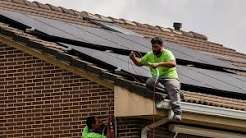
Solar installations are another part of the broader European building strategy. Under the revised framework, solar energy requirements will gradually apply to new buildings and certain existing buildings where installation is technically suitable and economically feasible.
For new residential buildings, solar installations are expected to become a requirement where appropriate for building permit applications from 2030. The policy reflects a broader attempt to make buildings active participants in Europe’s energy system rather than passive consumers of electricity and heating fuel.
For households, rooftop solar can potentially reduce electricity purchases and provide another source of energy for systems such as heat pumps. Yet installation costs, roof orientation, local regulations and access to financing will determine how practical the option is for individual properties.
The Biggest Question Is Who Pays for Renovation
The environmental case for renovation is strong, but the household economics are more complicated. Insulating a property, replacing windows or installing a modern heating system can require thousands of euros. For families living in older homes, finding that money can be far more difficult than recognizing the long term benefits.
The European framework acknowledges this challenge by placing greater emphasis on financing, advice and renovation support. Member states are expected to develop measures that help households undertake improvements and to pay particular attention to vulnerable and low income residents.
This matters because poorly designed renovation policies could create another housing problem. If landlords face large renovation bills and pass those costs directly to tenants through higher rents, energy savings could come at the expense of housing affordability. European rules therefore include safeguards intended to prevent renovation from disproportionately harming vulnerable residents.
What Homeowners Should Watch for Next
Homeowners should pay attention to national legislation rather than assuming that every EU requirement applies directly to their individual property. The practical rules will differ from country to country as governments complete their national building renovation plans.
For someone considering renovation, several steps can make sense before major money is spent.
- Check the property’s current energy performance certificate and identify the largest sources of energy loss.
- Assess insulation and windows before selecting a new heating system.
- Compare heat pump and other efficient heating options based on the building’s actual energy needs.
- Investigate national grants, financing programs and renovation advice before signing contracts.
- Use qualified professionals who can coordinate insulation, heating, ventilation and renewable energy improvements.
A staged renovation may also be more realistic than attempting every improvement at once. The EU framework supports renovation passports that can provide homeowners with a longer term roadmap for deep renovation, allowing major work to be planned across several stages.
Developers and Construction Firms Face New Expectations
The construction industry will also have to adapt. Developers will need to consider energy performance much earlier in the design process, while contractors and installers will face growing demand for specialized skills in insulation, efficient heating, ventilation, solar systems and building controls.
The transition could create opportunities for construction workers and energy specialists, but shortages of skilled labor could also slow renovation efforts. The European Commission has identified workforce training as part of the broader effort to accelerate building renovation.
There is also a growing focus on the environmental impact of construction itself. European rules are moving toward greater consideration of whole life emissions from buildings, including the emissions associated with construction materials and eventual demolition.
A More Comfortable Home Could Be the Most Visible Result
The climate debate can sometimes make building policy sound distant and technical. For residents, however, the consequences are remarkably physical. They can mean fewer cold rooms in winter, less overheating during summer, quieter windows, more stable indoor temperatures and lower energy consumption.
The European Commission says a zero emission building can consume dramatically less energy than a poorly performing building. That difference can also provide greater protection from sudden fossil fuel price increases, an issue that became particularly visible during Europe’s recent energy crisis.
Europe’s Housing Transition Will Depend on Practical Implementation
The direction of European policy is now firmly established, but the success of the strategy will depend on how national governments turn broad targets into practical renovation programs. Funding must reach households that need it most. Skilled workers must be available. Landlords and tenants need clear protections. Developers need predictable rules, and homeowners need straightforward information rather than a maze of technical requirements.
The EU’s revised building framework is ultimately about more than emissions. It is also about the quality and affordability of the places where people live. If renovation policies are implemented carefully, the result could be homes that require less energy, rely less on imported fossil fuels and provide greater comfort throughout the year.
For homeowners and developers, the message is becoming increasingly difficult to ignore: energy performance is moving from a secondary consideration to a central feature of Europe’s housing market. The transition will cost money and require careful planning, but the homes built and renovated during this period could shape European living standards for decades to come.