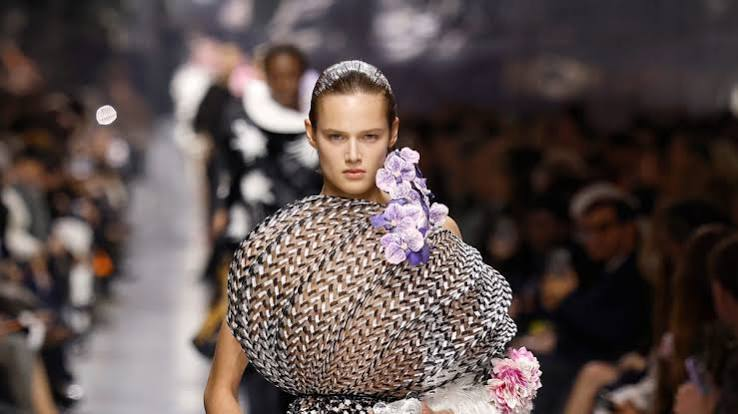
Paris Fashion Week closed on October 6 with a final burst of runway drama, unexpected celebrity appearances and a fashion industry increasingly willing to make sustainability part of the luxury conversation. The Spring Summer 2027 season brought major houses back to Paris, introduced new creative voices and gave established families and performers a place in the spotlight, while designers continued to experiment with recycled, plant based, deadstock and other lower impact materials.
Paris Fashion Week Brings a Packed Season to a Close
The official Paris Fashion Week calendar ran from September 28 through October 6, bringing the Spring Summer 2027 womenswear season to the French capital. The Fédération de la Haute Couture et de la Mode listed dozens of participating houses and presentations, with major names including Chanel, Dior, Saint Laurent, Louis Vuitton, Balenciaga, Loewe, Miu Miu, Hermès, Givenchy and Valentino appearing across the schedule.
For anyone watching from outside the fashion industry, the week can sometimes look like a parade of beautiful clothes and famous faces. From our perspective, however, the more revealing story is what happens when those two worlds meet. Paris remains one of the few places where a young model can share a runway with an Oscar winning actor, where a heritage house can introduce a new creative direction and where experimental materials can sit beside centuries old couture techniques.
The official Fédération de la Haute Couture et de la Mode calendar confirms the scale of the season and shows how widely the presentations were distributed across the week.
Celebrity Runway Debuts Became One of the Week’s Biggest Stories
One of the most memorable moments came at Chloé, where Apple Martin made her runway debut. The 22 year old daughter of Gwyneth Paltrow and Chris Martin appeared in the Spring 2027 presentation wearing a flowing white Chloé look with laser cut details and ruffles. Her arrival was another reminder that fashion families increasingly treat the runway as a place where the next generation can make its first public statement.
The appearance carried an unusual kind of curiosity because Martin has grown up close to entertainment and fashion without building a public career around either. A runway debut therefore creates a different kind of attention. The audience is not simply judging a garment. It is watching someone familiar step into an unfamiliar professional space.
That same element of surprise appeared at Miu Miu, where Oscar winning actress Olivia Colman walked in the Spring 2027 show. Colman is far more closely associated with film and television than conventional runway modeling, which made her appearance especially striking. She shared the show with other recognizable performers and emerging personalities, reinforcing Miuccia Prada’s long standing willingness to blur the boundary between celebrity culture and fashion casting.
Sixteen year old Lou Klum also made her first official fashion week appearance in Paris alongside her mother, supermodel Heidi Klum, at the Vivienne Westwood show. The mother and daughter pairing created one of the season’s most recognizable images while giving a new generation of fashion spectators a glimpse of how modeling careers can begin inside families already deeply connected to the industry.
New Creative Voices Also Took Their Place in Paris
The season was not only about celebrity arrivals. Paris also provided an important platform for designers taking on new responsibilities at established houses.
Drew Henry presented his first collection for Courrèges, while Kai Nesselrath made his debut at Carven. Their appointments were among the two major designer debuts identified in the official seasonal schedule, giving the houses an opportunity to establish new visual directions while working within recognizable brand histories.
That balance is one of the hardest tasks in luxury fashion. A new creative director needs enough freedom to make a collection feel personal, yet must preserve the codes that customers associate with a historic name. A successful debut therefore depends on more than a dramatic runway moment. It must communicate where the house came from and where it intends to go.
Heritage Fashion and New Generations Shared the Same Runways
The contrast between old and new was visible throughout the week. Houses with decades of history appeared alongside younger labels and designers who are still establishing their international identities.
Valentino returned to the Paris calendar after showing its previous collection in Rome, while Maison Margiela returned after presenting in Shanghai. Sacai, Ester Manas, Christopher Esber and Casablanca were also among the names returning to the official schedule.
That mixture gives Paris Fashion Week much of its character. The city is not simply preserving fashion history. It is continuously placing established institutions next to designers whose identities are still being formed.
We saw a similar idea at work through the SPHERE showroom, where emerging designers received a platform during the official fashion week period. The program included SEVALI, a Parisian brand founded by Chilean designer Sebastian A. de Ruffray that explores upcycling through deconstruction and reinterpretation.
Sustainability Is Moving From a Side Conversation to the Materials Room
The environmental discussion surrounding luxury fashion has become more specific. Instead of relying only on broad sustainability statements, designers are increasingly discussing what their clothes are actually made from, how materials are sourced and how much waste is created during production.
Stella McCartney remains one of the clearest examples. Her Spring 2027 presentation continued a long commitment to alternative materials, while her wider work has included forest friendly viscose, recycled materials, plant based alternatives and experimentation with next generation textiles.
Marine Serre has taken a different route by building much of her creative identity around upcycling. Her work demonstrates how discarded or overlooked materials can become part of a luxury aesthetic rather than being treated as something that must remain hidden.
CFCL offers another example of how sustainability can become part of the technical foundation of a brand. The house describes its approach as combining computer developed three dimensional knitwear with certified sustainable polyester yarns and technology designed around contemporary use.
These approaches matter because luxury fashion has traditionally been associated with scarcity, elaborate production and premium materials. The emerging question is whether luxury can continue to feel exceptional while using materials and production methods that place less pressure on natural resources.
Fashion Shows Themselves Are Becoming More Conscious
The sustainability discussion is not limited to garments. The fashion week infrastructure surrounding a runway show can involve temporary construction, lighting, transportation, printed materials, flowers, furniture and other elements that may be used for only a few hours.
The Fédération de la Haute Couture et de la Mode has responded with a common framework for more responsible event scenography. The framework includes 75 criteria covering areas such as transportation, shared venues, waste management, material reuse and environmental design.
That shift may seem less glamorous than a dramatic runway entrance, but it could prove more meaningful over time. A fashion industry that wants to reduce its environmental footprint cannot focus exclusively on the fabric of a dress while ignoring what happens around the show itself.
Why Sustainable Luxury Is Becoming More Complicated
There is also a reason to remain cautious about easy sustainability claims. A material can be recycled or plant based without automatically making an entire garment environmentally harmless. Transportation, dyeing, manufacturing, durability, washing and eventual disposal all affect the overall footprint.
That is why the strongest developments are often found in brands willing to discuss specific materials and production decisions rather than relying on vague language. Stella McCartney’s long running material research and Marine Serre’s upcycling practice provide useful examples of how sustainability can become part of design thinking itself.
Consumers can take a similar approach when shopping. Rather than judging a garment simply by a sustainability label, buyers can look at fiber composition, durability, care requirements, repair options and whether the brand provides meaningful information about sourcing and production.
Paris Fashion Week Still Runs on Human Emotion
For all the discussion about technology, materials and commercial strategy, fashion week remains deeply human. A model taking her first steps on a major runway still experiences the nerves of entering a room filled with cameras. A designer presenting a first collection for a historic house still has to watch the doors open and hope the clothes communicate what was imagined in the studio.
That emotional dimension was particularly visible in the week’s celebrity debuts. Seeing a familiar actor or the child of a famous fashion figure suddenly become part of the runway creates a moment that feels larger than the clothing itself. It reminds audiences that fashion is partly about identity and memory.
What Paris Fashion Week 2026 Leaves Behind
As the Spring Summer 2027 season closes, several themes stand out. Celebrity casting remains a powerful source of attention, but it is increasingly being combined with genuine fashion participation. New creative directors are being asked to define the future of historic houses without severing their connection to the past. Emerging designers are receiving broader platforms, while sustainability is becoming increasingly visible in materials, production and event design.
The official collections also show how broad the Paris fashion ecosystem has become. From Chanel and Dior to independent labels and experimental newcomers, the city continues to function as a meeting point for different generations, cultures and design philosophies.
For audiences, the most interesting question may no longer be simply which dress becomes the next viral image. We are watching a larger negotiation over what luxury should mean in the years ahead. Can a garment feel rare without wasting resources? Can a historic house remain relevant without abandoning its identity? Can a new model or actor enter the fashion world without being reduced to celebrity status?
Paris Fashion Week’s latest chapter does not answer those questions completely. What it does show is an industry willing to keep asking them. That may be the most significant development to carry forward from the Paris runways as fashion moves toward its next season.