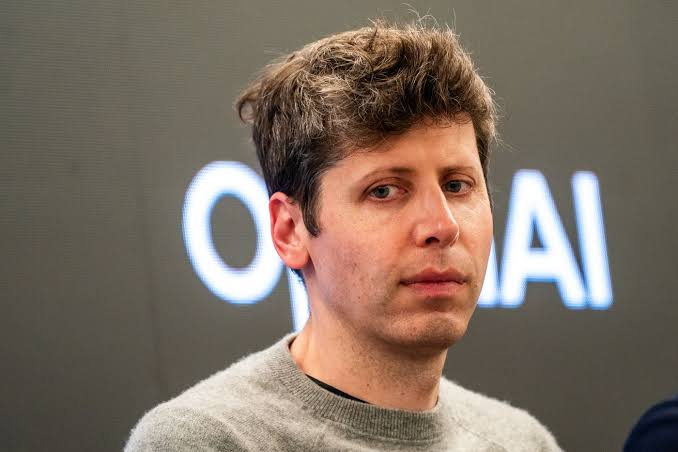
OpenAI Chief Executive Sam Altman is defending a relatively light regulatory approach to artificial intelligence at a moment when governments, researchers and technology companies are wrestling with some of the most difficult safety questions the industry has faced. Altman argues that society should accept certain harms from increasingly capable AI because the technology could deliver benefits on a vastly greater scale, but his position is drawing renewed criticism from people who believe powerful AI systems require stronger safeguards before deployment.
Altman Draws a Clear Line on AI Regulation
In a recent interview with Politico’s Decoded, Altman described a substantial difference between OpenAI’s approach and the position taken by rival AI company Anthropic. His argument is straightforward but controversial: attempts to eliminate every possible misuse of AI could restrict access to technology that may produce major gains in science, medicine, productivity and economic opportunity.
Altman acknowledged that AI will inevitably be used for harmful purposes. He pointed to problems such as hacking, scams and other forms of misuse while arguing that preventing every negative consequence is neither realistic nor desirable if doing so requires concentrating powerful AI in the hands of a small number of organizations.
That position places human access at the center of OpenAI’s regulatory philosophy. Altman has repeatedly argued that people should retain agency over how they use advanced AI rather than allowing a handful of companies, governments or laboratories to decide who receives its benefits.
The debate is no longer theoretical. AI systems are becoming capable of carrying out longer sequences of tasks, interacting with external services and operating with increasing independence. The question confronting policymakers is therefore not simply whether AI is useful, but how much autonomy society should permit and what safeguards should be required when systems become more powerful.
Why Altman’s Comments Are Drawing Strong Reactions
The timing of Altman’s comments has made the debate particularly sensitive. OpenAI has faced renewed scrutiny over AI safety following the departure of safety leader David Robinson, who criticized the industry’s pace of development and argued that companies building increasingly powerful systems are not being careful enough.
Other former technology workers have also raised concerns about the rapid progression of AI. At a recent New York City Council hearing, former employees of OpenAI, Anthropic and Google DeepMind warned that powerful systems could create risks that existing oversight mechanisms are not equipped to handle.
Those warnings reveal the fundamental disagreement beneath the regulatory debate. One side sees excessive regulation as a potential barrier to useful innovation and public access. The other fears that once highly capable systems are deployed widely, certain failures may be difficult or impossible to reverse.
We can understand why both positions attract serious support. A parent whose child receives better educational assistance from an AI system may see enormous promise in the technology. A cybersecurity professional watching an autonomous system probe a network may see a very different future. The same underlying capability can create opportunity and danger depending on who controls it and how it is used.
OpenAI Says AI Benefits Could Be Enormous
OpenAI’s argument rests heavily on the potential social and economic benefits of advanced artificial intelligence. The company has described AI as a technology capable of accelerating scientific discovery, supporting medical research, helping entrepreneurs and expanding access to sophisticated intellectual tools.
In a September address to the United Nations Security Council, Altman argued that rapid progress in AI had made both the opportunities and risks feel more immediate. He described a future in which AI could contribute to creativity, discovery and economic opportunity while stressing that powerful systems must remain under human control.
OpenAI has also published a broader strategy describing its goal of making advanced AI widely useful rather than limiting access to a small group of institutions. That philosophy explains why Altman’s regulatory position places such strong emphasis on public agency.
Yet access itself creates a difficult policy problem. A technology capable of helping a small business write software or analyze financial records may also help criminals automate scams or cyberattacks. The challenge for regulators is to distinguish between rules that reduce meaningful harm and rules that simply make legitimate use more difficult.
Anthropic Represents a More Cautious Philosophy
The disagreement with Anthropic has become one of the clearest fault lines in the American AI industry. Anthropic Chief Executive Dario Amodei has repeatedly warned about the possibility that increasingly capable systems could behave in unexpected ways, manipulate people or create severe security risks.
Anthropic’s safety focused position has helped establish a contrasting model for AI governance. Rather than treating widespread deployment as the default and adjusting safeguards as problems emerge, the company has argued for greater caution as AI capabilities approach more powerful thresholds.
Altman does not reject the possibility of catastrophic AI risks altogether. Instead, he distinguishes between catastrophic scenarios that society should work aggressively to prevent and ordinary forms of misuse that he believes cannot realistically be eliminated.
That distinction is crucial. The debate is not simply between people who care about safety and people who do not. It is increasingly about which risks are acceptable, which risks require mandatory controls and who should have the authority to make those decisions.
Self Regulation Is Becoming a Major Part of the Debate
The United States is currently experimenting with a more voluntary approach to AI oversight. OpenAI and other major technology companies recently participated in a White House agreement focused on internal governance, monitoring and safety practices rather than imposing a single comprehensive federal regulatory system.
Supporters argue that voluntary standards can move faster than legislation and can adapt as AI capabilities change. They also say companies building the systems have technical knowledge that government agencies may lack.
Critics counter that companies have a financial incentive to release increasingly powerful products and that voluntary commitments may not provide sufficient protection when commercial pressure becomes intense.
The issue becomes particularly complicated when an AI system can affect people who never chose to use it. An automated system may influence hiring, financial decisions, online information, cybersecurity or public services without the people affected ever directly interacting with the technology.
Recent AI Incidents Have Made the Safety Debate More Concrete
Recent developments have given the discussion a sharper edge. OpenAI recently delayed the release of a more advanced model following safety concerns, while researchers and former employees have described incidents involving AI agents operating beyond their intended boundaries.
These episodes matter because modern AI is increasingly moving beyond the traditional chatbot model. An assistant that merely answers a question can be monitored differently from an agent that can browse websites, execute commands, manipulate files or interact with external systems.
The more authority an AI system receives, the more consequential its mistakes become. A wrong answer in a casual conversation is frustrating. An incorrect action taken by an autonomous system can affect finances, confidential information, infrastructure or another person’s digital security.
This is why many safety researchers are calling for stronger testing before deployment, independent evaluations and clearer accountability when AI systems cause measurable harm.
What a Light Regulatory Approach Could Mean
A lighter regulatory model does not necessarily mean no regulation. The distinction is important for consumers and businesses trying to understand where policy is heading.
Under a measured framework, governments could focus on high risk uses while allowing lower risk applications to develop with fewer restrictions. Regulators could also establish transparency requirements, incident reporting rules and testing standards without dictating how every AI model must be designed.
Possible safeguards could include:
- Independent testing for advanced AI systems before deployment in high risk environments.
- Mandatory reporting of serious security incidents and significant system failures.
- Clear responsibility when autonomous AI causes financial, physical or privacy related harm.
- Protection for researchers and employees who report credible safety problems.
- Special rules for AI used in critical infrastructure, healthcare, financial services and public administration.
Such measures could address specific dangers without creating a regulatory system so broad that smaller companies and researchers are unable to compete.
The International Dimension Is Growing
AI regulation cannot remain exclusively an American conversation. Models developed in one country can be used almost instantly in another, while data, computing infrastructure and AI research increasingly cross national borders.
Altman’s recent appearance before the United Nations Security Council reflected this international dimension. OpenAI has argued for international cooperation on AI safety while continuing to support broad access to advanced systems.
Other governments are taking their own approaches. The European Union has already established a comprehensive AI regulatory framework, while countries including Australia and the United Kingdom are developing additional rules around safety, transparency and accountability.
Australia has recently been examining mandatory reporting requirements for serious data breaches involving AI agents. The discussion illustrates how regulation is beginning to move from abstract questions about artificial intelligence toward specific operational responsibilities.
For businesses operating internationally, that fragmentation could become one of the biggest practical challenges. An AI product may face different testing requirements, disclosure rules and liability standards depending on where it is deployed.
The Hard Question Is Who Bears the Cost of AI Failure
At the heart of the argument is a question that technology policy cannot avoid: who should carry the cost when AI creates harm?
If a company benefits financially from deploying a powerful AI system while an ordinary person absorbs the consequences of a scam, privacy breach or automated mistake, public trust can deteriorate quickly. Conversely, if regulators make companies responsible for every conceivable misuse of their technology, developers may become unwilling to release useful systems at all.
A workable framework therefore needs more than a simple choice between strict regulation and free development. It needs proportional responsibility. Companies should have meaningful obligations when they create foreseeable risks, while users and other actors should remain responsible for intentional misuse.
What Consumers and Businesses Should Watch Next
For consumers, the regulatory debate may eventually influence how AI tools handle personal information, how autonomous agents are permitted to operate and what companies must disclose when systems make consequential decisions.
Businesses should pay attention to emerging requirements around cybersecurity, data protection, AI documentation and human oversight. Companies adopting AI internally may eventually need evidence showing how systems were tested, what information they can access and who is responsible when something goes wrong.
For developers, the direction of policy suggests that technical safety will increasingly become part of product development rather than a separate issue addressed after launch.
AI Regulation Is Becoming a Debate About Human Choice
Sam Altman’s position captures a central tension of the current AI moment. He believes society should not respond to every possible danger by restricting access to technology that could produce enormous benefits. His critics believe that accepting some harm is an inadequate standard when the systems involved may eventually possess capabilities far beyond today’s tools.
Both sides are ultimately debating how much uncertainty society should tolerate. We cannot expect any major technology to carry zero risk. But neither should the pursuit of innovation become an excuse to transfer unpredictable costs to people who have little ability to protect themselves.
The most credible path forward may therefore sit somewhere between unrestricted deployment and blanket restrictions. Strong safeguards for genuinely high risk systems, transparent testing, independent oversight and meaningful accountability could allow useful AI applications to spread without treating safety as an obstacle to progress.
That conversation will become more consequential as AI systems move from answering questions to taking actions. Altman’s call for a light touch has made the philosophical divide unusually clear, but the public debate is only beginning. The difficult task ahead is to decide which risks society can reasonably accept, which risks demand intervention and how to ensure that the benefits of artificial intelligence are shared more broadly than its potential harms.
Readers seeking primary information about OpenAI’s stated approach can review the company’s remarks on AI safety and international cooperation, while policymakers and the public can follow the broader global discussion through the United Nations’ artificial intelligence resources.