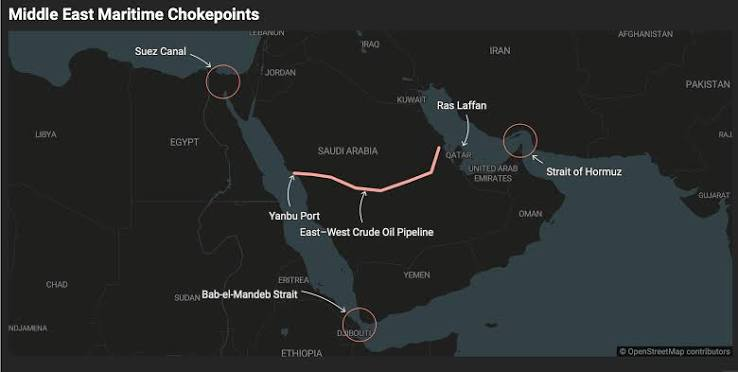
The global food system is facing another serious test as conflict and attacks disrupt two maritime corridors that carry food, fertilizer and other essential commodities across continents. The United Nations World Food Programme has warned that simultaneous pressure on the Black Sea and Bab el Mandeb Strait is creating a dangerous combination for food security, particularly for countries that depend heavily on imported grain. With shipping routes becoming harder and more expensive to use, the consequences could reach far beyond the waters where the attacks are taking place.
Why the Black Sea Has Become a Global Food Security Concern
The Black Sea is one of the most important agricultural trade corridors in the world. Russia and Ukraine together account for roughly one third of global wheat trade, according to the World Food Programme. Grain moving through the region supplies markets across the Middle East, Africa and other parts of the world where domestic production cannot always meet demand.
The latest security incidents are therefore about much more than ships and ports. On October 3, a Liberian flagged cargo ship was struck at a Ukrainian port in the Odesa region, killing one person and injuring three others. On October 5, Russia said it had struck two Ukrainian cargo vessels in the Black Sea. On October 6, a merchant vessel sank after a drone strike in Bulgaria’s exclusive economic zone, while another ship was damaged.
Responsibility for individual incidents remains subject to investigation and competing claims. What is becoming harder to dispute, however, is the growing risk faced by commercial shipping. European officials have condemned attacks on civilian vessels, while maritime security concerns are spreading farther from Ukraine’s immediate coastline.
For grain traders, the impact can be measured in more than headlines. A vessel delayed at sea means cargo arrives later. A ship diverted to a longer route means fuel costs increase. Insurance can become more expensive. Port congestion can grow. Eventually, those costs can reach importers, wholesalers and families buying basic food in markets thousands of miles away.
Bab el Mandeb Adds a Second Major Pressure Point
The Bab el Mandeb Strait presents a different but equally serious problem. This narrow waterway connects the Red Sea with the Gulf of Aden and forms a critical passage between Asian, Middle Eastern, African and European markets.
When commercial vessels face attacks or elevated security risks in the area, shipping companies may choose longer routes around southern Africa rather than passing through the Red Sea. That decision can add substantial sailing time and increase the amount of fuel required for each voyage.
The World Food Programme has described the simultaneous disruption of major maritime corridors as an especially serious threat because food systems depend on a limited number of critical routes. The organization has warned that pressure on the Black Sea, Red Sea and Strait of Hormuz can affect the movement of food, fuel and fertilizer at the same time.
This matters because food production itself depends on international trade. Farmers need fertilizer, fuel and agricultural inputs before they can harvest grain. Food importing countries then need functioning transport networks to move those commodities from ports into cities and rural communities.
Food Prices Do Not Need a Global Grain Shortage to Rise
One of the most misunderstood aspects of food security is that prices can rise even when the world has enough physical grain in aggregate. A disruption in transportation can create a regional shortage long before there is a worldwide shortage of wheat or corn.
Imagine a bakery in a country that imports most of its wheat. The grain may exist in another part of the world, but if ships cannot move it safely, the local buyer still faces a supply problem. The importer may pay more for insurance, transportation and storage. The mill may pass those costs to the bakery. The bakery may then increase the price of bread.
That chain can become particularly painful for households already spending most of their income on food. Wealthier consumers may absorb a moderate price increase. Poorer families may have to reduce the quantity or quality of food they purchase.
The World Food Programme has repeatedly warned that vulnerable populations are usually the first to feel the consequences of food and fuel disruptions. Yemen is a particularly exposed example because the country imports around 90 percent of its food.
Yemen Is Already Showing the Human Cost
The situation around Bab el Mandeb is unfolding alongside a severe deterioration in food security inside Yemen. The World Food Programme reported on October 2 that 18.3 million people across Yemen are facing acute food insecurity. It also reported that wheat flour prices had increased by 10 percent in two weeks in parts of Taiz, while traders estimated that wheat stocks covered only about two months of demand.
Those figures give the maritime security problem a human face. When a ship carrying food is delayed, the consequence is not simply another entry on a freight company spreadsheet. For a family already living close to hunger, a higher price for flour can determine whether there is enough food for everyone at the table.
The situation is also placing greater pressure on humanitarian organizations. WFP has said that renewed conflict and restricted access are making it harder to move assistance into communities that need it. The organization is preparing to expand emergency support for displaced families while dealing with increasingly difficult logistics.
Ukraine Faces Its Own Growing Export Challenge
Ukraine is also struggling to maintain agricultural exports as attacks and maritime restrictions affect its traditional Black Sea routes. The country has increasingly relied on alternative routes through the Danube and neighboring European countries.
Those alternatives are valuable, but they cannot always replace the scale and efficiency of major Black Sea ports. Reuters reported in September that Ukrainian grain shipments through Danube ports were facing serious congestion, with some vessels waiting more than two weeks to enter the Sulina Canal. Freight costs from those ports had also increased sharply.
Ukraine has been considering routes toward Baltic ports as another option. Such a change could provide additional capacity, but longer inland journeys and higher transportation costs would make the grain considerably more expensive to move.
This is where global food security becomes closely connected with logistics. A farmer can produce a strong harvest, but that harvest has little value to an overseas consumer if the transportation network cannot move it at a competitive cost.
Fertilizer Could Become the Next Major Concern
Grain is only one part of the equation. Fertilizer is equally important because farmers depend on nitrogen, phosphate and potash products to maintain crop yields.
Disruptions to major shipping routes can raise fertilizer costs through longer journeys, higher fuel consumption and increased insurance expenses. If fertilizer becomes too expensive, farmers in vulnerable countries may reduce applications. That can lower future harvests and create another layer of pressure on food prices.
The World Food Programme has warned that disruptions to major trade routes can affect both food and fertilizer markets. That creates a potential feedback loop in which transportation problems today contribute to higher production costs for tomorrow’s crops.
Why Developing Economies Face the Greatest Risk
Not every country has the same ability to absorb a global logistics shock. Wealthier economies can sometimes use strategic reserves, secure alternative suppliers or provide temporary assistance to consumers. Poorer countries may have much less room to respond.
Countries that rely heavily on imported wheat are particularly exposed. Governments may have to choose between protecting foreign currency reserves and paying higher prices for food imports. Some may increase subsidies, but that can place additional pressure on already strained public budgets.
For families, the adjustment can be immediate. A higher price for bread, cooking oil or other staple foods can force difficult choices between food, rent, transportation and medicine.
That is why the World Food Programme continues to focus attention on keeping trade routes open. Safe commercial shipping is not simply an economic issue. It is part of the international food security system.
Markets Are Watching Shipping Costs and Port Capacity
Investors and commodity traders will be closely watching several indicators over the coming weeks. Wheat prices are only one signal. Freight rates, marine insurance premiums, port waiting times, fertilizer prices and grain export volumes can reveal whether the disruption is becoming broader.
Ukraine’s ability to maintain exports will also matter. If grain remains trapped in storage because ports cannot operate normally, farmers and agricultural businesses can face severe financial pressure even if global grain prices rise.
Russia’s export capacity will also remain important because the country is a major supplier of wheat to global markets. Any major reduction in Russian exports could tighten international availability, while increased exports could partly offset disruption elsewhere.
What Governments Can Do Before a Crisis Becomes a Food Shock
The immediate priority is protecting civilian shipping and maintaining reliable access to major ports. Diplomatic efforts that reduce attacks on commercial vessels can have effects far beyond the conflict zones themselves.
Governments can also reduce vulnerability by diversifying import sources, improving storage capacity and strengthening inland transportation networks. Humanitarian agencies need predictable funding so that food can be purchased and positioned before supply disruptions become severe.
For countries dependent on imports, strategic food reserves can provide valuable time. But reserves cannot replace functioning international trade indefinitely. The longer a disruption lasts, the more important it becomes to restore normal commercial movement.
The United Nations World Food Programme continues to monitor these pressures because its humanitarian operations depend on many of the same trade and transport systems being disrupted by conflict.
A Warning That Reaches Far Beyond the Black Sea
The most concerning feature of the current situation is the possibility that several major food trade corridors could remain under pressure at the same time. The Black Sea affects grain exports directly. Bab el Mandeb affects the movement of food and other commodities between major regions. Pressure around the Strait of Hormuz can also affect fuel and fertilizer markets.
When one route becomes unavailable, traders can often find another. When several routes become dangerous or prohibitively expensive simultaneously, the alternatives become much harder to use.
We should therefore view the current warning not as a prediction that the world is running out of grain, but as a warning about the fragile infrastructure that connects farmers with consumers. Food security depends on production, but it also depends on ships, ports, roads, railways, warehouses, fuel and functioning markets.
The Human Cost Will Determine the Real Severity
The final measure of this crisis will not be found only in shipping indexes or commodity charts. It will be visible in the markets where families count their money before buying flour, in the warehouses where humanitarian workers try to preserve dwindling stocks and in the ports where crews wait for conditions safe enough to sail.
The world has experienced major food supply disruptions before, and international markets have repeatedly demonstrated an ability to adapt. New routes can be opened, suppliers can change and governments can intervene. But adaptation takes time, while hunger does not wait.
As October 2026 begins, the warning from the World Food Programme deserves close attention. Protecting the Black Sea and Bab el Mandeb trade corridors is not simply about keeping global commerce moving. It is about keeping food affordable, keeping agricultural production viable and preventing already vulnerable communities from being pushed deeper into hunger.