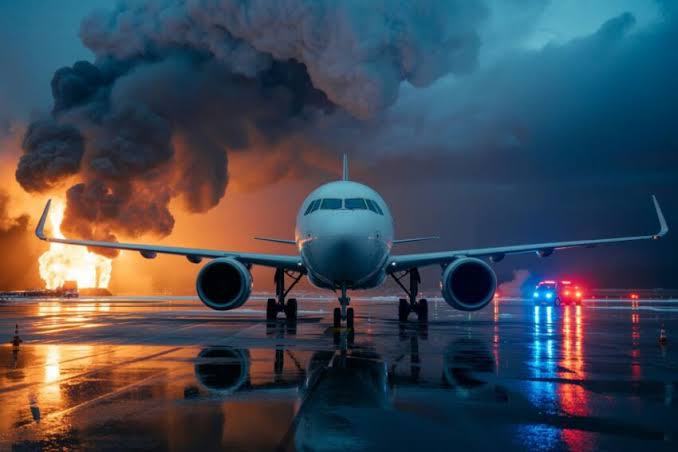
International aviation is facing another difficult stretch as airlines adjust flight paths across the Middle East and surrounding regions following renewed security threats, military activity and sudden disruptions to air traffic. For passengers, the changes may appear on a screen as a longer journey or an unexpected connection. Behind that simple notification, however, airlines are making complex decisions involving fuel, crew hours, aircraft range, air traffic control and the safety of everyone onboard.
Middle East Airspace Enters Another Period of Uncertainty
The latest disruption comes after months of instability across the region and a series of new security developments affecting civil aviation. On October 5, Houthi forces targeted airports in southern Saudi Arabia, including airports serving Jazan and Najran. The attacks added another layer of concern for airlines operating through an airspace already subject to heightened security monitoring.
The European Union Aviation Safety Agency has responded by maintaining and updating formal conflict zone advisories. Its current guidance lists active advisories covering Saudi Arabia, Jordan, Iran, Iraq, Lebanon and parts of the Persian Gulf and Gulf of Oman. The agency says operators must account for rapidly changing military activity, possible missile and drone threats, air defence operations and the possibility of short notice changes.
The EASA conflict zone advisories show how seriously aviation authorities are treating the situation. The current Saudi advisory, for example, identifies portions of the Jeddah flight information region where operators should not operate and calls for detailed risk assessment and contingency planning elsewhere.
Why Airlines Cannot Simply Fly the Usual Route
Commercial aviation depends on carefully planned air corridors. A flight between Europe and Asia may appear to travel in a relatively straight line on a map, but its actual path is determined by airspace permissions, military restrictions, weather, fuel requirements, aircraft performance and instructions from air traffic authorities.
When a section of airspace becomes unsafe or unavailable, the airline must build another route around it. That can mean flying farther south, moving north through different corridors or adding additional fuel planning to account for longer distances and possible holding patterns.
For passengers sitting beside an aircraft window, the difference may be almost invisible. The plane simply remains in the sky for longer. For the airline, however, a longer route can affect every part of the operation. Fuel consumption increases. Crews may approach their permitted working limits. Aircraft arrive later and may miss their next scheduled departure.
That is how a security problem affecting one region can spread across an international airline network.
Saudi Arabia Has Become a Key Focus for Civil Aviation
The latest EASA advisory for Saudi Arabia was issued on September 30 and remains active through November 16 unless reviewed earlier. EASA said the expansion of military activity across a wider part of the country had increased potential exposure for civil aviation beyond areas previously affected by Houthi attacks.
The agency also acknowledged that Saudi authorities have demonstrated an ability to manage the country’s airspace through tactical coordination and emergency air traffic measures. Yet the operating environment remains vulnerable to rapid deterioration.
That combination creates a difficult problem for airlines. An airspace can be technically open while still presenting risks that make a particular route unattractive. Airlines therefore do not wait for every corridor to close officially before changing their plans. Safety departments constantly evaluate threats and may recommend alternative routing before a government formally restricts an area.
Jordan Adds Another Complication for Regional Flight Paths
Jordan is another important part of the current aviation picture. EASA revised its advisory on September 30 and extended it through October 16. The agency recommends that operators avoid the Amman flight information region because of the potential for renewed military activity and the risks associated with missiles, drones, air defence systems and falling debris.
For airlines connecting Europe with the Gulf and Asia, avoiding Jordan can remove a useful corridor from the route network. The result is a more complicated puzzle in which dispatchers must identify safe alternatives while avoiding other areas that are already restricted or subject to heightened risk.
That is why an apparently distant conflict can affect flights between major cities that are not directly involved in the fighting. International aviation is interconnected, and the removal of one corridor can place additional pressure on neighboring airspace.
GPS Interference Is Another Aviation Challenge
Security threats are not limited to missiles or drones. Navigation interference has also become a growing concern for aircraft operating in parts of the Middle East.
GPS jamming and spoofing can interfere with satellite based navigation systems used by modern aircraft. Pilots have procedures and alternative navigation methods available, but widespread interference can increase operational complexity and require crews and air traffic controllers to pay closer attention to aircraft positioning.
For airlines, the goal is not simply to avoid one physical threat. It is to manage the total risk associated with a particular corridor. A route that passes through an area with military activity, navigation interference and rapidly changing airspace restrictions can become less attractive even when the route remains legally available.
The Impact Reaches European and Transatlantic Networks
The effects of Middle East airspace disruption are not confined to flights entering the region. Airline networks operate like connected webs. An aircraft flying from Europe to the Gulf may later be scheduled to operate another international service. A delay of several hours can therefore affect passengers who have never traveled anywhere near the Middle East.
European airports are particularly sensitive to these disruptions because they serve as major connecting points between North America, Europe, the Middle East and Asia. When aircraft take longer routes, arrival times shift and connection windows become tighter.
Transatlantic travelers can also feel the effects indirectly. An aircraft or crew delayed by an earlier Middle East operation may be unavailable for a later flight across the Atlantic. Airlines have to reposition aircraft, adjust crews and sometimes cancel or consolidate services when delays become severe.
This does not mean that every flight between Europe and North America is being rerouted because of Middle East security threats. Rather, the global airline network means that disruptions in one region can create operational consequences elsewhere.
Fuel Costs Make Longer Routes More Expensive
One of the most immediate financial consequences of rerouting is higher fuel consumption. Jet aircraft are highly efficient, but fuel remains one of the largest operating expenses for airlines. Adding hundreds of miles to a flight can therefore produce a meaningful increase in cost, especially across thousands of flights.
The effect can become more pronounced when airlines must carry additional reserve fuel because of limited routing options or congestion. More fuel means more weight, and more weight itself requires additional fuel.
Airlines then face a difficult choice. They can absorb the higher cost, adjust schedules, reduce frequencies or eventually pass part of the additional expense into fares. Competition between carriers and the duration of the disruption will influence which option becomes most common.
Passengers May See Longer Flights and More Schedule Changes
Travelers should expect airlines operating near affected regions to continue making route changes with limited notice. A flight that appears normal when a ticket is purchased can follow a different path on the day of departure if security assessments change.
Passengers can protect themselves by checking their airline’s latest flight information before leaving for the airport and allowing additional time for connections. Those traveling through major regional hubs should pay particular attention to minimum connection times because longer routes can produce arrival delays.
- Check the airline application and flight status before traveling to the airport.
- Allow additional connection time when traveling through affected regions.
- Keep important medications and essential items in carry on baggage.
- Review the airline policy for rebooking when a security related disruption affects the itinerary.
Airlines Are Balancing Safety Against Operational Pressure
For airline executives, the decision to reroute is rarely made lightly. Every alternative has consequences. A longer path can require more fuel. A different corridor can increase congestion. A route farther from a conflict zone may place an aircraft closer to another area with limited diversion airports.
Safety remains the central consideration. The International Air Transport Association’s aviation security guidance describes security and safety as fundamental priorities for the airline industry and highlights the need for adaptable risk management as threats change.
Modern airline operations are built around this kind of uncertainty. Dispatch teams monitor government notices, aviation authority warnings, weather systems, navigation conditions and military activity before and during flights. Crews are prepared to change course when conditions require it.
Why the Current Situation Matters for Global Aviation
The broader lesson is that commercial aviation depends on stable access to international airspace. Airlines can adapt to individual closures, but multiple disruptions occurring at the same time can place considerable pressure on the global route network.
The Middle East sits at an especially important geographical crossroads. Routes connecting Europe with South Asia, Southeast Asia and parts of Africa often pass through or near the region. When several corridors become unavailable, aircraft have fewer practical alternatives.
That can increase congestion in neighboring airspace, lengthen journey times and raise operating costs. Airports can then experience uneven demand as passengers change connections to avoid disrupted hubs.
The Human Side of an Airspace Crisis
Behind every altered flight plan is a passenger whose journey may have a personal purpose. Someone may be traveling home after months away. Another traveler may be rushing to a family emergency. A student may be trying to reach a university before classes begin. A business traveler may have one opportunity to attend an important meeting.
For these passengers, an extra two hours in the air is not simply a statistic. It can mean a missed connection, a lost night of sleep or an unexpected hotel stay. For airline crews, the same disruption can mean longer working days and complicated arrangements far from home.
That human reality is why aviation authorities generally take a conservative approach when security conditions deteriorate. The inconvenience of a longer route is difficult, but it is preferable to exposing passengers and crews to an avoidable risk.
What Comes Next for International Flight Routes
The situation remains fluid, and aviation authorities can revise their recommendations quickly if security conditions improve or deteriorate. Airlines will continue to assess individual routes rather than treating the entire Middle East as a single aviation environment.
Some corridors remain open, while others are subject to restrictions or avoidance recommendations. That distinction is important because airlines can continue serving many destinations even when their usual routes are unavailable.
For now, the international aviation system is adapting through longer routes, additional contingency planning and closer coordination between airlines, governments and air traffic authorities. The process may produce higher costs and less predictable schedules, but it also demonstrates the flexibility built into modern commercial aviation.
As October 2026 progresses, the key issue will be whether security conditions stabilize enough for airlines to restore more efficient routes. Until then, passengers should expect aviation networks to remain flexible, with safety assessments taking priority over speed and convenience. The changing paths visible on flight tracking maps are ultimately a reminder that the safest journey is not always the shortest one.