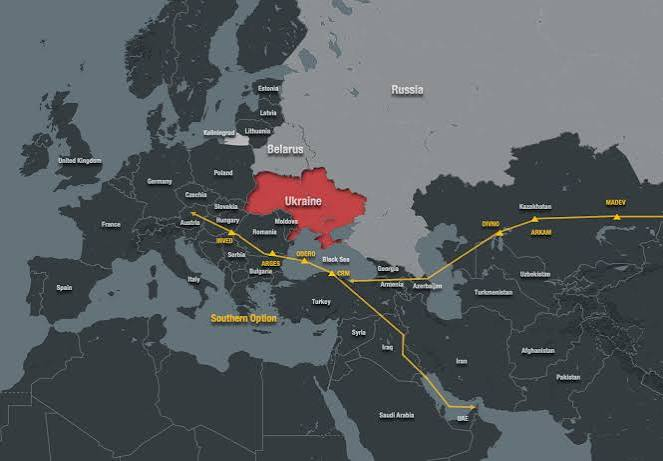
International airlines are reshaping flight schedules and long haul routes as airspace restrictions across the Middle East and Eastern Europe continue to alter some of the world’s busiest aviation corridors. What appears on a passenger’s itinerary as a longer flight can represent a much larger operational calculation involving fuel, crew duty limits, aircraft range, airport capacity, insurance, navigation risks and rapidly changing government guidance. Around October 6 and 7, 2026, airlines and travelers are once again having to plan around a fragmented airspace environment in which the shortest route is not necessarily the safest or most practical one.
Airlines Are Rebuilding Routes Around Restricted Corridors
The current aviation picture is particularly complicated across the Middle East. European aviation safety guidance has continued to affect several important flight information regions, while airlines are using alternative corridors to connect Europe with Asia, the Gulf and destinations farther east.
Operational analysis published on October 6 showed that the main Europe to Asia routes were increasingly moving either south through Egypt, Saudi Arabia and the Arabian Sea or north through the Caucasus and Central Asia. The same analysis reported continued concerns involving GPS jamming and spoofing across parts of the region. Current Middle East airspace operational guidance provides a detailed picture of how these routing changes are affecting airline planning.
The practical consequence for passengers is straightforward. A journey that once followed a relatively direct corridor can now require additional flight time and fuel. Aircraft may also need different departure routes, alternative cruising levels or contingency airports in case conditions change during the journey.
Iran and Iraq Remain Major Factors in Europe Asia Aviation
Iran and Iraq occupy a strategically important position between Europe and large parts of Asia. When airlines avoid those areas, the available alternatives become more crowded and operationally expensive.
Airlines generally do not make these decisions based on a single factor. Safety assessments can involve government warnings, military activity, missile risks, navigation interference and the reliability of communication systems. Even when a particular section of airspace remains technically open to civilian traffic, carriers may decide that avoiding it is more appropriate for their operations.
This distinction matters to travelers. An airspace region does not necessarily need to be formally closed for airlines to stop using it. A safety advisory can be enough to persuade major carriers to select another route, particularly when the alternative can be operated without exposing passengers and crews to unnecessary risk.
Saudi Arabia Is Becoming an Important Rerouting Corridor
Saudi Arabian airspace has become increasingly important as airlines seek alternatives to restricted areas farther north and east. The country sits along one of the practical routes connecting Europe with South Asia and Southeast Asia, making its airspace valuable when other corridors are unavailable.
Yet the rerouting process creates its own pressures. Operational specialists reported that Saudi Arabia was being used heavily as a diversion corridor while new security concerns were affecting parts of the Jeddah flight information region. This combination means airlines have to balance the benefit of an open route against congestion and changing security conditions.
The situation also illustrates why airspace planning can change rapidly. A corridor that is useful one day can become less attractive the next if military activity, airport disruption or navigation interference develops nearby.
Gulf Airlines Face a Difficult Recovery
The Gulf has some of the world’s most important aviation hubs, including Dubai, Abu Dhabi, Doha and Riyadh. These airports depend heavily on international connecting passengers. Their business models are built around the ability to move travelers efficiently between Europe, Asia, Africa and the Middle East.
Persistent airspace restrictions create a challenge because the disruption does not have to close a major airport to affect its business. Longer routes can reduce aircraft utilization, increase fuel consumption and complicate crew scheduling. Additional restrictions can also make it harder for airlines to maintain reliable connection times.
Several carriers have therefore delayed planned resumptions of Middle East services. On October 6, Wizz Air postponed the return of six European routes to Abu Dhabi until January 2027. The routes had been expected to restart in late October, but continuing regulatory guidance and security concerns led the airline to push the plans back. :contentReference[oaicite:0]{index=0}
Dubai Remains Important Despite Continuing Uncertainty
Dubai remains one of the world’s largest international connecting points, which makes changes to service levels particularly significant for tourism and business travel. Some airlines have continued operating while others have extended suspensions or adjusted winter schedules.
Finnair, for example, announced that it would discontinue Dubai services for the 2026 to 2027 winter season, from October 25 through March 27, 2027. The decision illustrates how airlines are making seasonal network choices while evaluating the continuing uncertainty around Middle Eastern airspace. Finnair travel updates provide passengers with current information about route changes and operational disruptions.
For travelers, the broader lesson is that the existence of an airport on an airline’s booking system does not guarantee that every scheduled seasonal route will operate as originally planned. Airlines can change frequencies, suspend services or shift aircraft to other markets when operating conditions change.
Eastern Europe Continues to Influence Long Haul Planning
The Middle East is not the only region affecting international flight paths. Eastern European airspace restrictions continue to influence how airlines connect Europe with destinations farther east.
Ukraine remains closed to normal civilian air traffic following the continuing conflict, while Belarusian airspace is also being avoided by some European carriers. Finnair has stated that it suspended operations in Belarusian airspace until further notice. These restrictions remove routes that might otherwise provide efficient connections between northern Europe and Asia.
For airlines based in northern Europe, the consequences can be especially noticeable. When traditional eastern corridors disappear, carriers may have to send aircraft farther north or south, increasing flight distance and putting additional pressure on aircraft utilization.
Longer Routes Mean Higher Costs
Every additional hour in the air carries a cost. Aircraft burn more fuel, crews spend more time working and maintenance cycles are affected by additional operating hours. Airlines also have to consider airport charges when alternative routes require technical stops or different contingency arrangements.
Fuel is particularly important because airlines operate with relatively narrow margins on many routes. A longer flight can therefore create a cost increase even when the ticket price does not immediately change.
Passengers may notice the effects through higher fares, fewer nonstop services or changes in departure times. However, airlines do not always pass every additional operating cost directly to travelers. They may instead absorb some of the expense, adjust capacity or use larger aircraft where demand allows.
Tourism Markets Feel the Effects Beyond the Airport
Tourism depends heavily on predictable transportation. Hotels, restaurants, tour operators and local businesses plan around the assumption that visitors can arrive without major disruptions.
When airlines suspend routes or reduce frequencies, destinations can lose some of their international visitor flow even if hotels and attractions remain fully operational. Travelers who previously considered a destination an easy weekend trip may reconsider if the journey requires an additional connection or substantially longer travel time.
For Gulf tourism hubs, the stakes are particularly high because aviation is deeply connected to hospitality, retail, conferences and international business events. A prolonged reduction in connectivity can therefore have consequences far beyond airline revenue.
Passengers Should Expect More Flexible Itineraries
Travelers flying through affected regions should pay closer attention to airline notices rather than relying only on the original booking confirmation. Route conditions can change after a ticket has been issued, particularly when government aviation warnings are updated.
- Check the airline’s official flight status shortly before leaving for the airport.
- Allow additional time for connections when flights are being rerouted.
- Review transit requirements if an airline changes the connecting airport.
- Keep important medications and essential items in cabin baggage.
- Consider travel insurance terms carefully because geopolitical disruptions may have specific exclusions.
Passengers with tight onward connections should be especially cautious. A longer route can make an itinerary that previously had a comfortable connection considerably more vulnerable to delays.
Airspace Restrictions Also Affect Cargo
Passenger travel receives most of the public attention, but commercial aviation carries an enormous volume of high value and time sensitive cargo. Pharmaceuticals, electronics, fresh food, industrial components and other goods can depend on predictable air connections.
Longer flight paths can increase freight costs and reduce aircraft capacity available for cargo. A passenger aircraft operating a longer route may carry less payload because additional fuel is required. Freight forwarders can then face difficult choices about whether to use another airline, another airport or another transportation mode.
This creates a wider economic effect. When an air cargo route becomes less efficient, businesses may have to hold more inventory or accept longer delivery times. Companies that rely on just in time production can be particularly exposed to repeated disruptions.
Safety Remains the Primary Consideration
Despite the economic costs, the fundamental purpose of airspace restrictions is passenger and crew safety. The aviation industry has learned through decades of experience that commercial flights should avoid unnecessary exposure to active conflict zones and unstable navigation environments.
Recent security incidents have reinforced those concerns. A serious incident involving a flydubai flight traveling toward Tel Aviv on September 30 prompted additional scrutiny of regional aviation security. Reuters reported that the aircraft landed safely in Saudi Arabia after an alleged attempted hijacking involving the copilot, while investigations continued. :contentReference[oaicite:1]{index=1}
The incident is separate from the broader airspace restrictions, but it adds another layer to an already sensitive operating environment. Airlines have to consider not only where an aircraft can legally fly but also whether passengers, crews and aircraft can be protected throughout the journey.
The Aviation Network Is Adapting Rather Than Standing Still
The current disruption should not be viewed simply as a story of flights being cancelled. International aviation is continually adapting. Airlines can change routes, shift aircraft, modify schedules and use alternative hubs when conditions require it.
That flexibility is one of the industry’s greatest strengths, but it also has limits. There are only so many practical corridors between major continents, and when several neighboring regions become restricted at the same time, the remaining routes can become crowded.
We are therefore likely to see continued experimentation with northern and southern corridors, more careful fuel planning and greater coordination between airlines, regulators and air navigation authorities. The pattern will depend heavily on geopolitical developments, but the operational principle is already clear: safety decisions are increasingly shaping the geography of international travel.
What Comes Next for Global Travel
The October 6 and 7 aviation picture shows a global travel network adjusting to a new set of geographic constraints. Eastern European restrictions continue to influence Europe Asia connectivity, while Middle Eastern risks are forcing airlines to reconsider routes through Iran, Iraq, Jordan, parts of the Gulf and surrounding corridors.
For travelers, the immediate result may be longer journeys, revised schedules and fewer nonstop choices. For airlines, the pressure is measured in fuel bills, aircraft utilization, crew planning and lost capacity. For tourism destinations, the issue is access: a hotel can offer a room, but the traveler still needs a reliable route to reach it.
We expect flexibility to remain the defining feature of international aviation while these restrictions persist. Airlines will continue searching for safe alternatives, governments will revise guidance as security conditions change and passengers will increasingly need to monitor their journeys closer to departure. Behind every altered flight path is a complex calculation, but the guiding priority remains simple: keeping people moving while giving safety the first word in every route decision.