Apple has reclaimed the title of the world’s most valuable publicly traded company, moving ahead of Nvidia as investors reassessed the cost and potential returns of the artificial intelligence boom. At the close of trading on October 30, Apple was valued at approximately $5.03 trillion, compared with Nvidia’s $4.93 trillion. The change came during a broader technology selloff, making the shift less a story of soaring Apple shares than one of changing investor expectations about the companies leading the AI race.
A Narrow Lead Emerges During a Technology Stock Pullback
The market movement was notable because neither company finished the session higher. Apple shares declined approximately 1.2 percent on Friday, while Nvidia fell about 4.2 percent. The larger drop in Nvidia stock was enough to move its market value below Apple’s, reversing the ranking that had placed the chipmaker at the top of the global stock market.
Apple’s lead was relatively narrow, at roughly $100 billion. In a market where company valuations can change by billions of dollars during a single trading session, that difference should be viewed as a snapshot rather than a permanent change in leadership. Still, the ranking carries symbolic weight. Apple had briefly moved ahead of Nvidia in late July, but Friday’s close marked its return to the top after the latest period of intense competition between the two technology giants.
The shift also reflects a broader question confronting investors: how much should companies be worth when their future growth depends on artificial intelligence investments that require enormous spending today?
Why Investors Are Reconsidering the Cost of Artificial Intelligence
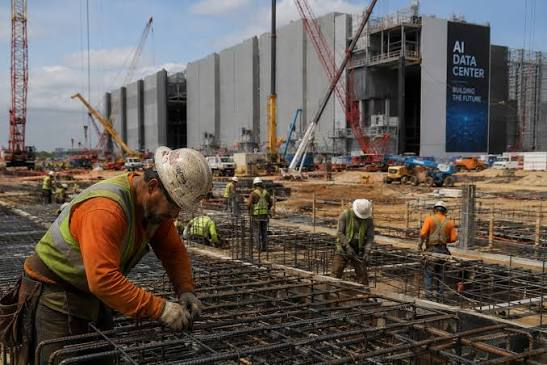
Technology companies have committed substantial resources to artificial intelligence infrastructure. That spending includes data centers, advanced processors, networking equipment, electricity capacity and specialized software. The investment has created major opportunities for semiconductor manufacturers, particularly Nvidia, whose graphics processing units are widely used to train and operate advanced AI systems.
However, investors are increasingly examining whether the revenue generated by AI services will justify the cost of building and maintaining that infrastructure. A company can report strong demand for computing equipment while customers and shareholders remain uncertain about how quickly that demand will translate into sustainable profits.
Recent financial updates from major technology companies added to those concerns. Disappointing reactions to results from Intel and Amazon followed pressure after reports from Alphabet and Meta Platforms. The market response suggested that investors were paying closer attention to spending plans, operating costs and the expected returns from AI development, rather than rewarding every company associated with the technology.
This does not mean the artificial intelligence market has stopped growing or that demand for advanced chips is disappearing. It means investors are becoming more selective. They want evidence that large investments can produce lasting commercial value, not simply bigger infrastructure budgets.
Apple’s Different Position in the AI Race
Apple occupies a different position from companies whose businesses are directly tied to selling large quantities of AI computing equipment. Its financial performance remains closely connected to its consumer technology ecosystem, including the iPhone, Mac, iPad, wearables and services. Customers who use several Apple products may remain within that ecosystem for years, creating opportunities for repeat purchases and ongoing services revenue.
That business structure may help explain why some investors viewed Apple as a comparatively defensive choice during the latest technology market pullback. The company is not dependent on selling data center processors to justify its entire valuation. Its established hardware and services businesses provide a different set of financial drivers from those supporting Nvidia’s growth.
Apple is still involved in the AI race. The company has been developing Apple Intelligence features and incorporating artificial intelligence into its software strategy. Its approach has placed considerable attention on integrating AI into devices and everyday user experiences, rather than competing directly with Nvidia as a supplier of data center accelerators.
That strategy has advantages and risks. Apple has a large installed base of devices through which it can distribute new features, but it must demonstrate that AI capabilities encourage customers to upgrade, use more services or remain loyal to its products. Competition from other technology companies is intense, and expectations surrounding improvements to Siri and other AI features remain significant.
Nvidia Remains Central to the Artificial Intelligence Economy
Although Nvidia lost the top market capitalization position, its importance to the technology industry has not suddenly diminished. Its processors remain a key part of the infrastructure used by cloud providers, research organizations and businesses developing advanced AI systems.
Nvidia’s success has been driven by more than the performance of individual chips. Its software tools, developer ecosystem and relationships with major technology customers have helped establish a strong position in accelerated computing. These advantages are difficult for competitors to reproduce quickly.
Nevertheless, a high valuation creates high expectations. Investors must consider whether demand can continue growing at a pace that supports the company’s share price. They also have to assess competition, supply constraints, customer spending plans and the possibility that technology companies could eventually become more efficient in how they use computing resources.
For Nvidia, the latest decline is therefore a reminder that even a company at the center of a major technological shift is not immune to market pressure. Strong long term demand and short term stock performance are different measures, and investors may reassess the second even when they remain confident about the first.
What the Market Capitalization Ranking Actually Measures
Market capitalization is calculated by multiplying a company’s current share price by the number of its outstanding shares. It provides a widely used estimate of the market value of a publicly traded business. It does not represent the company’s cash reserves, annual revenue, total assets or the amount of money it would receive in an actual sale.
Because share prices move throughout trading hours, rankings can change quickly. A company can become the world’s most valuable publicly traded business without reporting higher revenue or announcing a major new product. In Apple’s case, the latest change was driven largely by the difference in how investors valued its shares relative to Nvidia’s.
The distinction matters for everyday investors. A headline announcing that a company has reclaimed the top position can sound like evidence of a major business victory. In reality, the ranking is a reflection of market expectations at a particular moment. It should be considered alongside financial statements, profitability, cash flow, business risks and long term growth prospects.
What Investors Should Watch Next
AI spending and the returns it produces
The next stage of the AI investment cycle will be judged by results. Investors will look for evidence that spending on data centers and computing capacity is supporting profitable services, stronger productivity and new sources of revenue. If customers continue investing but struggle to generate meaningful returns, market pressure could persist across the technology sector.
Apple’s ability to turn AI into customer value
Apple will need to show that its AI features offer practical benefits. Improvements that make devices more useful, help users complete tasks or create reasons to upgrade could support its broader business. If customers see little difference in their daily experience, the company may find it harder to justify the expectations attached to its AI strategy.
Nvidia’s demand and competitive position
Investors will continue monitoring demand from cloud computing companies and other major customers. They will also watch for changes in semiconductor competition, the development of alternative AI processors and the efficiency of newer systems. Nvidia’s leadership remains valuable, but the market will expect continued evidence that its products and software ecosystem can defend that position.
A Change in Market Leadership, Not the End of the AI Boom
Apple’s return to the top of the global market capitalization rankings highlights a shift in investor priorities. During periods of strong optimism, companies supplying the infrastructure for artificial intelligence can attract extraordinary valuations. When concerns about spending and profitability increase, investors may give greater weight to established businesses with diversified revenue sources and familiar consumer demand.
That does not make Apple immune to competition, economic weakness or execution problems. Nor does Nvidia’s lower ranking mean the AI industry has reached its peak. Both companies remain influential, but they represent different parts of the technology economy and face different expectations from shareholders.
For now, Apple holds a narrow lead following the October 30 market close. Whether it can maintain that position will depend on future financial performance, product demand and investor confidence. Nvidia could regain the crown if its shares recover or Apple’s valuation weakens. The more meaningful story is not simply which company ranks first, but how investors are beginning to distinguish between the enormous promise of artificial intelligence and the financial returns required to support its cost.
Investors seeking a clearer picture should follow company disclosures and official financial reports rather than relying on market rankings alone. Apple’s latest filings and financial information are available through its investor relations website, while Nvidia publishes its business updates and financial reports through its investor relations portal. These records provide a more useful foundation for assessing each company’s performance than a single day’s change in market value.