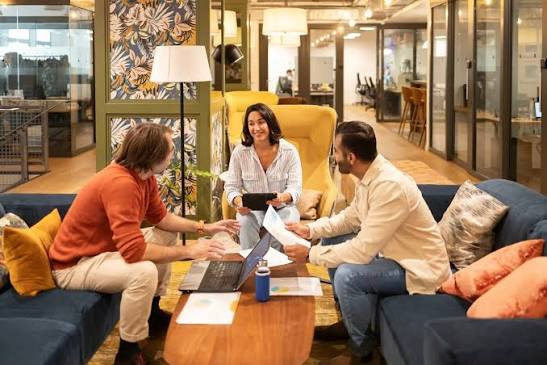
Glass office towers once filled with rows of desks are taking on new roles as commercial property owners reconsider how city centers should be used. With hybrid work changing employee routines and businesses reviewing their office requirements, developers and investors are increasingly exploring ways to convert older buildings into apartments, hotels, flexible workplaces and mixed use destinations. The shift is not simply about empty offices. It reflects a broader change in how people live, work and spend time in major urban centers. By November 3, 2026, office conversions and adaptive reuse have become important parts of commercial real estate discussions, even as demand for attractive, well located workplaces remains strong.
Why Commercial Real Estate Is Changing
The traditional office model was built around predictable attendance. Employees arrived in the morning, worked at assigned desks and left near the end of the day. Businesses therefore leased space according to the number of people they employed, often maintaining large offices in central business districts.
Hybrid work has changed that calculation. Many employees now divide their time between home and the workplace, while companies organize office attendance around meetings, collaboration and specific team activities. Some businesses need fewer permanently assigned desks, but still require attractive spaces where employees can meet and work together.
This creates a complicated situation for property owners. A modern building in a convenient location may continue attracting tenants, while an older property with outdated systems, inefficient layouts or high operating costs can struggle to compete. Rather than assuming that every office building will recover its former value, investors are examining whether certain properties could serve a different purpose.
Research from JLL indicates that global office utilization reached 56% in 2026, compared with 54% in 2025 and 49% in 2024. Its research also found that 62% of organizations required fixed in office days, up from 49% in 2025. These findings show that hybrid work is becoming more structured, not that offices are disappearing. Businesses still need physical workplaces, but they are reconsidering how much space they need and how that space should function.
Office Buildings Are Finding New Uses
Office conversion, also known as adaptive reuse, involves changing an existing building so it can serve a different purpose. A former corporate headquarters might become apartments, a hotel, student accommodation or a combination of residential and commercial spaces. Other properties may retain office floors while adding restaurants, shops, fitness facilities or shared meeting areas.
The approach can be attractive because cities already have substantial buildings in established locations. These properties may be close to public transportation, restaurants, hospitals, universities and other services. Reusing an existing structure can also preserve parts of the building rather than demolishing everything and starting again.
However, not every office can become a residential property. Apartment buildings need natural light, suitable window arrangements, plumbing, ventilation, private living areas and appropriate fire safety systems. Deep floor plates, limited windows and complicated structural layouts can make some conversions technically difficult or financially unrealistic.
Investors Are Taking a Closer Look at City Center Conversions
Recent property investment research suggests that redevelopment is becoming a more significant consideration in major European office markets. MSCI reported that offices purchased in European central business districts for conversion or renovation represented 17% of relevant sales in the first half of 2026. That was above the long term average of 13% and the highest share recorded in 14 years.
The research also found that residential properties and hotels accounted for more than 70% of known office conversions between 2022 and the first half of 2026. This indicates that investors are not simply abandoning office locations. They are assessing whether existing buildings can serve sectors with different demand patterns.
For property owners, the decision involves comparing the cost of upgrading an office with the potential return from changing its use. A building that cannot attract modern corporate tenants may still have value if it can be converted into housing or hospitality space. The right decision depends on purchase price, construction costs, local demand, financing and planning approval.
Mixed Use Developments Could Bring More Life to City Centers
A growing part of the discussion involves mixed use development. Instead of designing a neighborhood around a single purpose, developers combine several activities within one property or across a group of connected buildings. A resident might live upstairs, buy groceries nearby, visit a café downstairs and use a shared workspace within walking distance.
This arrangement can make urban districts more active throughout the day. Traditional office areas sometimes become quiet after employees leave in the evening. Adding housing, restaurants and leisure facilities can bring more people into those streets beyond standard business hours.
Mixed use projects can also help businesses attract customers. Cafés, convenience stores, gyms and other local services benefit from a combination of office workers, residents, hotel guests and visitors. When these uses are planned carefully, they can support a more balanced neighborhood economy.
Still, successful mixed use development requires thoughtful planning. Residential entrances, delivery areas, parking, noise control, waste collection and public access must be coordinated. A building that places incompatible activities too close together can create problems for both residents and businesses.
The Office Is Not Disappearing, but Its Purpose Is Changing
One of the most important developments in commercial real estate is the growing difference between desirable offices and buildings that no longer meet modern expectations. Companies may reduce the amount of space they lease while choosing better locations, improved technology and more comfortable workplaces.
CBRE’s 2026 global workplace research found that office utilization had increased to 53% across the organizations included in its benchmarking program, compared with 38% in 2024 and 35% in 2023. The research also highlighted the importance of collaboration, with employees using offices for activities that are more difficult to reproduce remotely.
This helps explain why some office properties remain attractive despite wider changes in working habits. Buildings with reliable transportation access, flexible layouts, good natural light, energy efficient systems and useful shared facilities may continue to attract tenants. Owners of older properties may need to invest in substantial improvements to compete.
Flexible workplaces and shared facilities
Some properties are responding by offering flexible office arrangements. These may include shared desks, private meeting rooms, short term suites and coworking facilities. Such spaces can serve smaller businesses, independent professionals and larger companies that need occasional locations for teams.
For landlords, flexible offices can create additional ways to use available floor space. For workers, they offer alternatives to working exclusively from home or commuting to a permanent corporate office. Their success, however, depends on location, service quality and the ability to maintain a reliable community of users.
Housing Needs Are Strengthening the Case for Adaptive Reuse
In many major cities, the demand for suitable housing remains a serious concern. High rents and limited availability make it difficult for workers, students and families to live near employment centers. Converting suitable commercial buildings into apartments can contribute to the housing supply without requiring every new home to be built on undeveloped land.
Location is particularly important. Former office buildings are often situated near transportation networks and established services, which can make them attractive residential sites. A successful conversion may allow people to live closer to workplaces, shops and public facilities.
However, office conversions cannot solve housing shortages by themselves. Projects may be expensive, take years to complete and produce apartments that are unaffordable to many households. Local governments must consider whether redevelopment includes a suitable mix of housing types and whether essential services can support additional residents.
Environmental Benefits and Construction Challenges
Reusing existing buildings can reduce the need for demolition and limit the demand for some new construction materials. Retaining structural elements may also preserve the energy and resources already invested in the original building. These benefits can make adaptive reuse an important part of sustainable urban development.
But conversion is not automatically environmentally preferable. Older buildings may require extensive upgrades to insulation, heating, cooling, electrical systems and plumbing. Construction work can generate waste, while inefficient buildings may continue consuming substantial energy after redevelopment.
Property owners should therefore assess the full environmental performance of a project. Energy consumption, material reuse, building durability and the expected lifespan of the new use all matter. Careful renovation can produce long term benefits, but superficial improvements may leave major problems unresolved.
What Property Owners and Investors Should Consider
For owners evaluating an older commercial property, the first step is to understand what the local market actually needs. A building may have weak demand as a conventional office but strong potential as a hotel, apartment development or flexible workspace. That potential must be supported by realistic financial and technical assessments.
Important considerations include the following:
- Building suitability: Examine floor layouts, natural light, structural condition, access and existing utility systems.
- Local demand: Study housing needs, hotel performance, office leasing activity and nearby development plans.
- Planning requirements: Confirm zoning rules, building codes, fire safety standards and approval timelines.
- Project economics: Compare renovation costs, financing conditions, expected rental income and long term maintenance.
- Community impact: Consider transportation, public services, affordability and the needs of existing residents.
Investors should also avoid assuming that a conversion will always generate a higher return than an office renovation. Construction delays, interest costs, planning restrictions and weak demand can undermine a project. The most successful strategy is likely to depend on the individual building rather than a universal preference for residential or commercial use.
A Different Future for the World’s Business Districts
The restructuring of commercial real estate reflects a more complicated reality than the simple idea that remote work has emptied city offices. Hybrid work has changed attendance patterns, but many organizations continue to use offices as important places for collaboration and business activity. At the same time, older buildings that no longer meet tenant expectations are creating opportunities for redevelopment.
For city centers, the potential benefits are significant. More housing can bring residents closer to jobs and services. Mixed use developments can support local shops and restaurants. Renovated offices can provide more useful workplaces, while carefully planned conversions can give aging properties a new purpose.
The transition will not happen evenly. Some buildings will remain offices, others will be renovated and some will be converted entirely. Local planning rules, construction costs, financing and market demand will determine which projects move forward.
The wider direction is nevertheless clear: commercial property owners are being asked to think beyond traditional office leasing. The city center of the future may contain fewer buildings devoted to a single purpose and more places where living, working, shopping and social activity exist side by side. The success of this change will depend on whether developers can create spaces that are financially viable, environmentally responsible and genuinely useful to the people who live and work in urban communities.
Further market research is available through MSCI’s real estate research and JLL’s global commercial property analysis, which examine investment activity, workplace utilization and changing demand across real estate markets.