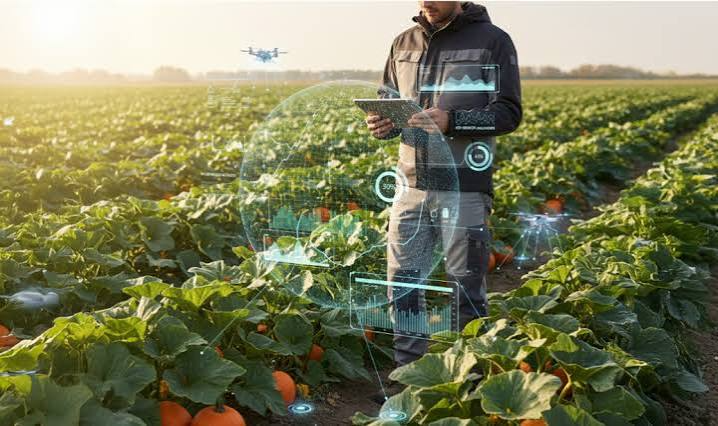
As extreme weather places growing pressure on farms and food markets, international agricultural initiatives are turning greater attention to climate resilient crop genetics, scientific research, and stronger supply chains. Food security discussions taking place on November 3, 2026, reflect a shared concern among researchers, governments, and agricultural organizations: how can the world protect staple grain production when heat, drought, floods, and unpredictable rainfall threaten harvests? Advances in crop breeding and agricultural technology offer promising answers, although delivering affordable food will require more than better seeds alone.
International Forums Put Agricultural Resilience in Focus
Several international gatherings scheduled for early November are bringing agricultural resilience and food system security into policy discussions. In India, the Regional Rural India Summit on Regenerative Agriculture, Water and Energy for Climate Mitigation and Adaptation is taking place in Lucknow on November 3 and 4. Convened by the Indian Institute of Technology Kanpur in partnership with the Pontifical Academy of Sciences and the Pontifical Academy of Social Sciences, the summit focuses on scientific and policy approaches to strengthening rural agriculture, water management, and energy systems.
Meanwhile, the Food and Agriculture Organization of the United Nations and the Government of Vanuatu are cohosting the 2026 Pacific Small Island Developing States Solutions Forum in Port Vila from November 3 through November 6. Its agenda includes agricultural innovation, investment, digital technology, climate adaptation, and stronger food systems across Pacific island communities.
Although these gatherings have different regional priorities, they reflect a common challenge. Food security depends not only on how much a country produces, but also on whether farmers can maintain production through difficult seasons, whether food can reach markets, and whether households can afford essential products. The discussions also underline the importance of cooperation between scientific institutions, governments, farming communities, and private businesses.
Why Climate Resilient Crop Genetics Matter
Wheat, rice, and maize form the foundation of diets and agricultural markets across much of the world. Millions of farming households depend on these crops for income, while consumers rely on them for affordable daily nutrition. When extreme temperatures or prolonged dry conditions damage a harvest, the consequences can extend far beyond the fields where the crops were grown.
Crop genetics offers one important way to reduce that vulnerability. Through conventional plant breeding, genomic selection, and newer genetic technologies, researchers can identify and develop varieties with traits that help them perform under specific environmental stresses. These traits may include improved tolerance to heat, drought, soil salinity, flooding, and certain plant diseases.
For example, a wheat variety that can maintain grain development during periods of high temperature may help farmers protect part of their harvest during an unusually hot growing season. Rice varieties that tolerate flooding or require less water can provide additional options in regions facing unpredictable rainfall. Drought tolerant maize can also help reduce the risk of severe production losses in dry farming areas.
These developments do not mean that every improved variety will perform equally well everywhere. Crop performance depends on local soil conditions, rainfall patterns, planting schedules, pests, and farming practices. Researchers must therefore test new varieties in the environments where farmers are expected to use them. A seed that performs well in a controlled research plot may produce different results on a small farm with limited irrigation and fertilizer access.
New Research Is Helping Scientists Prepare for Climate Stress
Recent scientific findings reinforce the urgency of agricultural adaptation. A study published in Nature Food in October 2026 examined the effects of droughts and heatwaves on global wheat productivity. Researchers improved crop modeling methods to assess the effects of extreme weather more accurately. Their analysis of historical conditions from 1981 through 2015 estimated average global wheat yield losses of 9.7% from drought, 5.8% from heatwaves, and 13.3% from combined drought and heat events.
The findings matter because climate risks rarely arrive in isolation. A region experiencing unusually high temperatures may also face declining soil moisture, increased irrigation demand, and greater pressure on water supplies. When several hazards occur together, farmers can face a much more difficult growing season than forecasts based on a single weather factor might suggest.
Research into crop genetics can help address these overlapping pressures. Scientists are examining plant characteristics that influence root development, water use, flowering periods, heat response, and grain formation. They are also using genetic information and advanced screening methods to identify useful traits in existing crop varieties and genetic collections.
Organizations such as the CGIAR global agricultural research network support work on crop improvement, farming systems, and climate adaptation. Their research connects plant science with practical agricultural needs, including the development of improved wheat, maize, rice, and other crops for vulnerable growing regions.
How Agricultural Technology Can Support Farmers
Genetic improvements are only one part of the agricultural technology effort. Farmers also need better information about weather, soil conditions, water availability, pests, and market demand. Digital agriculture tools can help provide that information at a useful time, allowing producers to make decisions before a problem becomes a major loss.
Better Weather and Crop Monitoring
Satellite imagery, remote sensing, and local weather stations can help monitor crop health and identify signs of drought or excessive moisture. Agricultural advisers can use these tools to identify areas where crops may need attention, while farmers can make more informed decisions about irrigation and planting schedules.
Smarter Water Management
Water availability is becoming a major concern in many agricultural regions. Efficient irrigation systems, soil moisture monitoring, and improved water planning can help farmers use available supplies more carefully. These measures are especially valuable in areas where groundwater levels are falling or rainfall is becoming less predictable.
Improved Access to Quality Seeds
Research has limited practical value if improved seeds never reach the farmers who need them. Reliable seed production, local distribution networks, affordable pricing, and agricultural extension services are essential. Small scale farmers often face financial and logistical barriers that prevent them from accessing improved varieties. Public investment and partnerships with local seed producers can help close that gap.
What Climate Resilient Crops Could Mean for Global Grain Prices
Food prices are closely connected to the balance between agricultural production and demand. When drought or extreme heat reduces harvests in a major producing region, available grain supplies can tighten. Traders and food manufacturers may respond to concerns about future shortages, while importing countries may compete for supplies from other markets.
More reliable crop production could reduce some of this pressure. If farmers can maintain more consistent harvests despite difficult weather, markets may become less exposed to sudden supply disruptions. Greater production stability can also help food processors, livestock producers, millers, and retailers plan their purchases with more confidence.
However, improved crop genetics cannot guarantee lower food prices. Grain markets are influenced by many additional factors, including fuel and fertilizer costs, shipping capacity, currency movements, trade restrictions, storage conditions, and geopolitical developments. Even a strong harvest may not translate into affordable food if transportation becomes expensive or distribution systems fail.
For this reason, supply chain security requires investment beyond the farm. Modern grain storage, efficient ports, reliable roads, transparent market information, and reduced postharvest losses all contribute to a more dependable food system. Countries that combine resilient production with effective storage and distribution are better positioned to manage unexpected shortages.
Small Farmers Must Remain at the Center of Agricultural Innovation
For large agricultural companies, investing in new seeds and technology may be part of a long term commercial strategy. For a small farmer, the decision to try a new crop variety can involve considerable financial risk. Seeds, fertilizer, labor, irrigation, and land preparation require money before the harvest provides any return. A failed growing season can affect a household’s income and its ability to plant again.
That is why agricultural innovation must be designed around the realities of farming communities. New varieties should be affordable, locally tested, and suitable for the conditions farmers actually face. Training and extension services can help producers understand planting requirements, seed storage, and appropriate crop management practices.
Farmers should also have access to dependable information about seed quality. Clear labeling, reliable certification, and responsible distribution can reduce the risk of counterfeit or unsuitable products. Without these safeguards, the benefits of scientific research may not reach the communities most exposed to climate related agricultural losses.
Women farmers, young agricultural entrepreneurs, and small producer organizations also need meaningful access to training, finance, land resources, and decision making. Food security becomes stronger when the people responsible for producing food can participate in shaping agricultural policy and technology programs.
Genetic Innovation Must Work Alongside Environmental Protection
Developing climate resilient crops should not come at the expense of biodiversity or long term soil health. Agricultural systems that depend on a narrow range of crop varieties can become vulnerable to emerging diseases and changing environmental conditions. Maintaining genetic diversity gives plant breeders a wider range of useful traits and helps protect the future of food production.
Traditional crop varieties and wild relatives can contain valuable genetic characteristics that modern breeding programs may use. Protecting seed collections, supporting agricultural research institutions, and maintaining diverse farming systems can preserve these resources for future generations.
Farm management also remains important. Crop rotation, healthy soils, responsible fertilizer use, integrated pest management, and careful water conservation can support stronger harvests. In many regions, combining improved seeds with better farming practices may deliver more dependable results than relying on a single technological solution.
Genetic engineering and gene editing may offer additional possibilities, but their use requires careful scientific evaluation, transparent regulation, and public engagement. Governments must consider environmental safety, food standards, intellectual property, and farmers’ ability to retain or purchase seed. Responsible oversight can help ensure that innovation serves public interests as well as commercial goals.
What Governments and Investors Should Prioritize
Turning agricultural research into stronger food security requires sustained investment. Governments and development institutions can support this effort by funding public crop research, improving rural infrastructure, strengthening seed certification, and expanding access to agricultural finance. International partnerships can also help countries share research, technical expertise, and practical solutions across borders.
Investors and agritech companies have opportunities in several areas, including improved seed development, precision agriculture, irrigation equipment, crop monitoring, grain storage, and supply chain technology. Yet successful investment should be measured by real improvements in productivity, farmer income, and food availability rather than by the number of technologies introduced.
Organizations can track progress through practical measures such as crop yield stability, water use efficiency, seed access, postharvest losses, and the ability of vulnerable households to obtain affordable food. These indicators provide a clearer picture of whether agricultural programs are delivering lasting benefits.
A More Resilient Food Supply Starts With Practical Action
The agricultural discussions taking place in November 2026 reflect a growing recognition that food security is inseparable from climate resilience. Advances in crop genetics can help wheat, rice, maize, and other staple crops withstand difficult growing conditions. Digital tools can improve decisions on farms, while stronger storage and transport networks can protect food after harvest.
Still, there is no single technology capable of solving every agricultural challenge. Farmers need suitable seeds, reliable water, healthy soils, access to markets, affordable financing, and the freedom to make decisions based on local conditions. Governments must connect scientific progress with policies that support these needs, particularly in regions where food shortages and climate risks are already severe.
The long term measure of success will not simply be the number of new crop varieties developed or agricultural technology projects announced. It will be whether farmers can produce dependable harvests, whether supply chains can withstand disruption, and whether families can afford the food they need. By connecting research with practical support for farming communities, global agritech initiatives can help build a food system better prepared for the challenges ahead.
Further information about international agricultural cooperation and climate adaptation is available through the Food and Agriculture Organization of the United Nations.