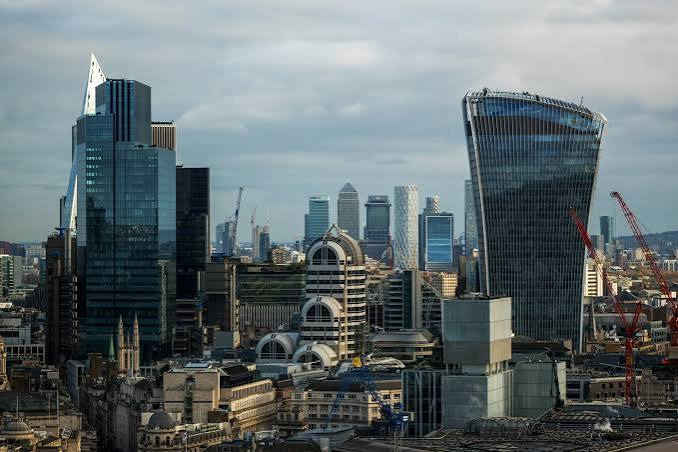
International commercial real estate investors are reassessing where they place capital as demand for modern logistics facilities, resilient urban infrastructure and energy efficient buildings reshapes markets across Europe and Asia Pacific. Research published in early November 2026 points to continued investment growth, even as higher borrowing costs and changing economic conditions encourage more selective decisions. Rather than moving uniformly between countries or property types, capital is increasingly concentrating on assets with strong occupier demand, reliable infrastructure and the potential to meet stricter environmental expectations.
The shift is visible in recent market figures from major property research firms. Global investment activity remains higher than a year ago, while Asia Pacific has recorded particularly strong growth and European logistics markets continue to attract substantial funding. The figures do not indicate one coordinated international investment programme. Instead, they reveal a broader change in investor priorities as institutions seek dependable income, operational efficiency and long term asset value.
Global Property Investment Remains Active Despite Higher Financing Costs
JLL’s November 2026 Global Real Estate Perspective, published on November 4, reports that direct global real estate investment volumes increased 19 percent over the first part of the year. Activity moderated during the third quarter, when global investment rose 7 percent year over year to approximately $235 billion. Higher government bond yields have made financing more expensive and encouraged investors to reassess property valuations, but they have not stopped investment activity.
Regional performance has varied. Investment across Europe, the Middle East and Africa increased 9 percent during the first nine months of 2026, although activity declined in the third quarter. Asia Pacific recorded stronger momentum, with investment volumes rising 29 percent year to date and 18 percent during the third quarter. Japan remained an important market, while Australia also recorded substantial quarterly investment.
These differences matter because commercial property is highly sensitive to local economic conditions. Interest rates, currency movements, planning rules, infrastructure quality and tenant demand can produce very different outcomes from one market to another. Investors are therefore comparing individual cities and property categories rather than treating Europe or Asia Pacific as a single investment destination.
JLL’s latest analysis also reports that logistics leasing gained momentum across regions. Demand from ecommerce companies, third party logistics providers and manufacturers is supporting the need for modern distribution space. Data centres and properties capable of supporting advanced technology are also attracting attention as businesses require more computing capacity and dependable electricity supplies.
European Logistics Facilities Attract Significant Investment
Europe’s industrial and logistics property market provides a clear example of the changing allocation of capital. CBRE’s European Industrial and Logistics Capital Markets Figures for the third quarter of 2026, published on November 4, show that investment volumes in the sector increased 4 percent year over year during the quarter. The total invested during the first nine months reached approximately €29.7 billion, an increase of 7 percent compared with the same period in 2025.
The Nordic region was particularly active. Investment across the Nordic markets reached €6.2 billion during the first nine months, representing growth of 44 percent. The figures suggest that investors continue to see opportunities in established distribution networks and locations connected to major transport routes, although individual markets still face differences in pricing, supply and financing conditions.
Modern warehouses are no longer simply large buildings used to store products. Many facilities now depend on automation, advanced inventory systems, temperature management, charging infrastructure and substantial electricity capacity. Their location can also determine how efficiently goods move between ports, manufacturers, retailers and consumers.
As supply chains adjust to changing trade patterns, businesses are looking for properties that can support faster distribution and more flexible operations. Facilities near major roads, rail connections, ports and population centres can offer practical advantages. Investors are consequently paying close attention to building specifications and the quality of surrounding infrastructure, not just the amount of available floor space.
Why Energy Efficient Buildings Are Gaining Investor Attention
Energy performance has become a financial consideration as well as an environmental one. Commercial buildings require electricity for lighting, heating, cooling, ventilation, lifts and digital equipment. When energy prices rise, inefficient properties can become more expensive to operate. Tenants may also prefer buildings that offer predictable running costs, modern equipment and better working conditions.
Investors are increasingly considering the cost of improving older properties before purchasing them. Insulation, efficient heating and cooling systems, improved windows, building management technology and renewable energy installations can reduce energy consumption. These improvements may also help owners prepare properties for changing regulations and tenant expectations.
In its 2026 Asia Pacific Investor Intentions Survey, CBRE reported that retrofitting existing buildings to improve environmental performance ranked above acquiring or developing green buildings as the leading sustainability option among surveyed investors. The finding is significant because it points toward investment in existing urban property rather than relying entirely on new construction.
Retrofitting can also make economic sense in cities where suitable land is limited or construction costs are high. A well located older office building may have considerable potential if its systems, layout and energy performance can be improved. However, renovation costs, building restrictions and the ability to retain tenants must be assessed carefully. Not every older property can be upgraded economically.
Asia Pacific Offers Growth Opportunities Across Several Property Types
Asia Pacific is attracting attention from international investors because of its varied economic growth patterns, expanding urban populations and evolving supply chains. Japan, Australia, Singapore and South Korea remain important markets, while other economies are developing opportunities linked to manufacturing, technology and consumer demand.
Logistics facilities continue to play an important role. Ecommerce distribution, regional manufacturing and changes in international trade have increased the need for warehouses that can handle larger volumes and more complex operations. Modern facilities with automation systems, efficient layouts and access to reliable power can be particularly attractive to occupiers.
Investment interest is not limited to warehouses. JLL’s November perspective identifies strong demand for offices in several Asia Pacific markets, alongside growing activity in data centres. Office leasing across the global market increased 5 percent year over year in the third quarter, with Asia Pacific providing an important source of growth. This suggests that investors are not abandoning offices altogether. Instead, they are paying closer attention to location, building quality, technology and the needs of modern tenants.
Data centres add another dimension to the infrastructure discussion. Their operations require substantial electricity, cooling capacity, secure connectivity and access to suitable land. As artificial intelligence and cloud computing increase demand for digital services, investors are examining whether cities and industrial regions can provide the power and infrastructure required to support new facilities.
Cross Border Investors Are Becoming More Selective
International investment allows property funds, pension managers, insurance companies and private investors to diversify beyond their domestic markets. However, purchasing property in another country introduces additional risks. Currency movements can affect returns, while differences in taxation, planning regulations, financing practices and legal systems can complicate transactions.
Higher borrowing costs have added another layer of caution. CBRE’s European logistics research reports that rising government bond yields have begun affecting prime property yields and capital values in several locations. Investors must therefore consider whether expected rental income and future property values justify the purchase price and financing costs.
One result is a stronger focus on asset quality. Buildings with reliable tenants, modern specifications and attractive locations may continue to command interest, while older properties requiring major investment can face more difficult valuations. This does not eliminate opportunities in secondary locations. It means buyers must understand the cost of improvements and the strength of local demand before committing capital.
What the Capital Shift Means for Cities and Businesses
Investment in energy efficient buildings and logistics infrastructure can influence urban development well beyond the property market. Better distribution facilities can support retailers, manufacturers and small businesses by improving access to storage and transport networks. Renovated offices can reduce operating costs and make existing city districts more attractive to employers and workers.
There are also potential environmental benefits. Improving the performance of existing buildings can reduce energy consumption without requiring every business to move into newly constructed premises. Modern logistics facilities may use more efficient lighting, automated systems and renewable electricity. However, the environmental value of these projects depends on actual energy savings, construction impacts and the source of the electricity they consume.
Local communities also need to be considered. New warehouses can create employment and improve distribution capacity, but they may increase road traffic and place pressure on nearby infrastructure. Large commercial developments require careful planning around transport, housing, public services and environmental protection. Investment should support the wider urban economy rather than operate separately from it.
What Investors Will Watch Through 2027
The next stage of the market will depend on financing conditions, economic growth and the ability of property owners to meet changing occupier requirements. Investors are likely to monitor several important factors:
- Energy performance: Whether buildings can reduce operating costs and meet environmental requirements.
- Logistics demand: Whether ecommerce, manufacturing and distribution companies continue expanding their property needs.
- Infrastructure access: Whether locations offer dependable electricity, transport connections and digital networks.
- Financing conditions: Whether borrowing costs and property valuations create room for new transactions.
- Renovation economics: Whether improvements to older buildings can produce sufficient rental income and long term value.
These measures will help investors distinguish sustainable demand from temporary market enthusiasm. They will also show whether the current preference for high quality properties can extend to buildings that require substantial renovation.
A More Focused Era for International Commercial Property
The latest figures suggest that commercial real estate investment is continuing to recover, but the pattern of capital allocation is becoming more selective. Europe remains an important destination for logistics investment, while Asia Pacific is recording strong growth across several property categories. At the same time, energy performance and infrastructure quality are playing a larger role in decisions about which buildings deserve funding.
For property owners, the message is that location alone may no longer be enough. Buildings must serve the practical needs of tenants, manage energy costs and remain competitive as technology and environmental expectations change. For cities, the opportunity lies in attracting investment that improves existing districts, strengthens transport and distribution networks and supports more efficient use of resources.
The commercial property market is not moving toward a single universal strategy. Investors are balancing risk and opportunity across different countries, sectors and building types. Yet the direction of the latest research is clear: assets that combine dependable demand, modern infrastructure and credible energy performance are gaining a stronger place in international investment decisions.
Recent market data and regional analysis are available through JLL’s Global Real Estate Perspective and CBRE’s European Industrial and Logistics Capital Markets report.