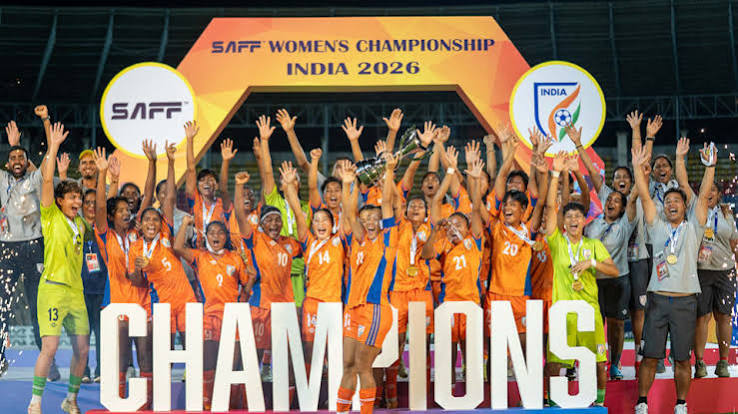
South Asian football returned to the spotlight on November 5, 2026, as the SAFF Championship 2026 officially got underway in Dhaka, Bangladesh. The opening day delivered an exciting contest between regional rivals India and Pakistan, with defending champions India securing a dramatic 3 to 2 victory at the National Stadium. A dominant first half gave India a three goal advantage, but Pakistan’s remarkable late response turned the closing minutes into a tense battle. The result gave India an important opening victory while leaving Pakistan with valuable lessons ahead of its remaining group matches. For football supporters across South Asia, the tournament represents another opportunity to celebrate regional competition, emerging talent and the growing importance of international football in the region.
SAFF Championship 2026 Begins With High Expectations
The 15th edition of the South Asian Football Federation Championship brings together national teams competing for one of the region’s most significant international football titles. Hosted in Bangladesh, the competition runs from November 5 through November 17, with matches scheduled at the National Stadium in Dhaka.
Six national teams are participating in the tournament: Bangladesh, India, Pakistan, Maldives, Sri Lanka and Bhutan. The teams have been divided into two groups, creating opportunities for regional rivalries and competitive group stage encounters before the knockout rounds.
Group A features host nation Bangladesh alongside Sri Lanka and Bhutan, while Group B includes defending champions India, Pakistan and Maldives. The top two teams from each group will advance to the semifinals, scheduled for November 14. The championship final is set for November 17.
India enters the competition with considerable expectations after winning the previous edition in 2023. The team has secured nine SAFF Championship titles and is pursuing a record extending tenth trophy. Bangladesh, meanwhile, will look to benefit from home advantage as supporters hope to see their national team compete for the championship.
India Defeats Pakistan 3 to 2 in an Exciting Opening Match
The opening Group B encounter between India and Pakistan provided an entertaining start to the competition. Played at the National Stadium in Dhaka on Thursday, the match featured impressive Indian attacking football, a missed Pakistani penalty and a dramatic late comeback attempt.
India controlled much of the first half, using accurate passing, coordinated movement and forward pressure to create opportunities. Pakistan struggled to contain the Indian attack, allowing the defending champions to establish a commanding advantage before halftime.
Suhail Ahmad Bhat Gives India an Early Advantage
India opened the scoring in the 13th minute through forward Suhail Ahmad Bhat. The attacking move began when Muhammad Suhail collected the ball from a throw in on the left and advanced before delivering a precise pass into the penalty area. Bhat positioned himself effectively and finished from close range to put India ahead.
The young forward quickly demonstrated why he was one of India’s important attacking players in the competition. In the 19th minute, Abhishek Suryavanshi produced an excellent forward pass that split the Pakistani defensive line. Bhat timed his run perfectly and calmly placed the ball beyond goalkeeper Yousuf Butt.
His second goal gave India a valuable two goal advantage and placed additional pressure on Pakistan. The Indian side continued to find spaces behind the opposing defense, creating further problems for the Pakistani players.
Manglenthang Kipgen Extends India’s Lead
India increased its advantage to 3 to 0 in the 31st minute. Noufal PN carried the ball forward through the middle before delivering a pass into space for Manglenthang Kipgen. The midfielder moved into the penalty area and finished past the advancing goalkeeper.
The third goal appeared to put India in a comfortable position. The defending champions had demonstrated effective attacking coordination, while Pakistan faced the difficult task of recovering from a significant first half deficit.
Pakistan nevertheless received an opportunity to reduce the margin before the interval. Hayyaan Khattak won a penalty after being brought down inside the penalty area. However, Shayak Dost sent his attempt over the crossbar, allowing India to maintain its three goal lead.
Pakistan’s Late Comeback Creates a Dramatic Finish
India continued to control much of the second half, creating opportunities to extend its advantage. Pakistani goalkeeper Yousuf Butt produced important saves, including an intervention against Adison Singh Thokchom in a one on one situation.
For much of the remaining match, Pakistan struggled to find a way through the Indian defense. However, the final moments produced a remarkable change in momentum as the Pakistani players began pushing forward with greater urgency.
Najeeb Ullah Scores Pakistan’s First Goal
Pakistan finally found the net in the 91st minute. Junaid Shah delivered a cross from the left, allowing Najeeb Ullah to rise above the Indian defenders and direct a header past goalkeeper Arsh Anwer Shaikh.
The goal provided Pakistan with renewed confidence and gave supporters hope of a possible comeback. Although India still held a two goal advantage, the late breakthrough changed the atmosphere surrounding the match.
Alamgir Ghazi Produces a Spectacular Finish
Just three minutes later, Pakistan scored again. McKeal Abdullah delivered a cross from the right side of the penalty area, which Alamgir Ghazi controlled before producing an impressive acrobatic finish.
The goal reduced India’s advantage to just one and created a nervous finish for the defending champions. Pakistan continued searching for an equalizer, but India managed to protect its remaining advantage and secure all three points.
Despite the defeat, Pakistan’s two late goals demonstrated attacking determination and provided some encouragement for its upcoming fixtures. The result also highlighted the importance of maintaining concentration throughout an entire match, particularly when facing an opponent capable of creating scoring opportunities quickly.
India Begins Its Title Defense With Important Points
The victory gives India a positive start in Group B as the team pursues another SAFF Championship trophy. Head coach Naushad Moosa will be encouraged by the attacking contribution of Bhat and Kipgen, along with the creativity displayed by Suryavanshi and other midfield players.
However, the closing stages also provide areas for improvement. Allowing Pakistan to score twice in stoppage time exposed defensive vulnerabilities that India will need to address before facing stronger opposition in the later stages of the competition.
India is competing with a largely younger squad rather than its full senior international lineup. Several established players were unavailable because of club commitments and the timing of the tournament outside the main FIFA international window for the opening fixture.
Despite these limitations, the team’s performance demonstrated the potential of its emerging footballers. A successful tournament could provide valuable international experience for players seeking more opportunities at senior national team level.
Pakistan Faces an Important Challenge in Group B
For Pakistan, the opening defeat creates additional pressure ahead of its remaining group stage fixtures. Head coach Nolberto Solano will need to address the defensive difficulties that allowed India to score three times during the first half.
The missed penalty was another significant moment. Converting that opportunity could have changed the psychological balance of the match and given Pakistan greater confidence before the interval.
Nevertheless, the late goals offer some positive signs. Najeeb Ullah demonstrated his aerial ability, while Alamgir Ghazi’s impressive finish showed the team’s potential to create dangerous attacking situations.
Pakistan will next face Maldives on November 8. The fixture represents an important opportunity to collect points and keep its semifinal qualification hopes alive. A strong performance will be essential if the team hopes to remain competitive in Group B.
Bangladesh Looks to Use Home Advantage
As host nation, Bangladesh carries considerable expectations throughout the competition. Playing in front of home supporters can provide an important advantage, particularly during closely contested international fixtures.
Bangladesh has been placed in Group A alongside Sri Lanka and Bhutan. The home side will be hoping to use familiar conditions and local support to progress into the semifinals.
The tournament also provides an opportunity for Bangladesh to strengthen its football reputation across South Asia. Its supporters have waited for another championship success, with the national team seeking to end a lengthy title drought dating back to 2003.
For the host country, organizing a regional football competition also brings attention to local stadium facilities, sports administration and the development of football infrastructure. Successful hosting can encourage greater participation and investment in the sport.
Upcoming SAFF Championship 2026 Fixtures
The group stage will continue over the coming days, with every participating team looking to secure enough points for semifinal qualification. The remaining fixtures will be particularly important for teams that have already lost their opening matches.
- November 8: Maldives versus Pakistan and Sri Lanka versus Bhutan.
- November 11: India versus Maldives and Bangladesh versus Sri Lanka.
- November 14: Both semifinal matches.
- November 17: Championship final.
India will meet Maldives on November 11 in its next Group B fixture, while Pakistan must concentrate on its November 8 encounter. The results of these matches will help determine which teams advance to the knockout stage.
Why the SAFF Championship Matters for South Asian Football
The SAFF Championship provides national teams across South Asia with an important international platform. While the participating countries face different levels of investment, infrastructure and professional development, regional competitions allow players to gain experience against familiar opponents.
For younger footballers, these matches can provide opportunities to demonstrate their abilities, develop confidence and attract attention from professional clubs. International exposure also helps coaches evaluate their squads and identify areas requiring improvement.
The competition has significance beyond the results on the scoreboard. Football remains a powerful source of community identity across South Asia, bringing together supporters who share a passion for their national teams. Matches between India and Pakistan carry particular emotional importance because of their sporting history and regional rivalry.
At the same time, the championship provides an opportunity for friendly sporting competition. Players from neighboring countries can represent their national identities while contributing to a shared regional football culture.
What to Expect as the Tournament Continues
The opening match has already demonstrated that the SAFF Championship 2026 can deliver excitement and unpredictable moments. India has secured an important victory, but its late defensive difficulties suggest that the team cannot afford to become complacent.
Pakistan, meanwhile, must build on its second half response and improve its overall performance if it hopes to reach the semifinals. Its next fixture against Maldives could become a decisive moment in the team’s tournament campaign.
Bangladesh will also attract considerable attention as it attempts to use home support to challenge the region’s strongest teams. Meanwhile, Maldives, Sri Lanka and Bhutan will be looking for opportunities to produce competitive performances and advance beyond the group stage.
A Promising Start to South Asia’s Biggest Football Competition
The SAFF Championship 2026 has opened with an entertaining contest that captured the excitement and intensity of South Asian international football. India’s 3 to 2 victory over Pakistan provided the defending champions with three valuable points, while Pakistan’s late response demonstrated the importance of persistence even when a match appears beyond reach.
As the competition continues in Dhaka, attention will shift toward the remaining group fixtures and the race for semifinal qualification. Every match presents an opportunity for participating nations to demonstrate their progress, test emerging players and compete for regional recognition.
For football supporters, the coming days promise more international action and important encounters. Whether India can defend its title, Pakistan can recover from its opening defeat or Bangladesh can take advantage of playing at home will become clearer as the tournament approaches its November 17 final.
Official tournament updates, fixtures and competition information are available through the South Asian Football Federation, while match reports and Indian national team announcements can be followed through the All India Football Federation.