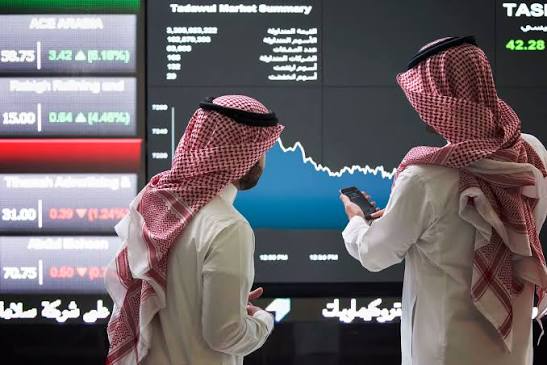
Saudi Arabia’s real estate sector is drawing renewed attention as shares of property developers experience notable price fluctuations amid changing expectations for regional infrastructure investment. Companies including United Real Estate Development Company and First Avenue have been among the names attracting market interest. The movements offer a snapshot of how investors are weighing development opportunities, project demand and the broader economic outlook, while also highlighting the uncertainty that can accompany a sector closely tied to long term investment plans.
Two Developers, Two Different Trading Directions
The contrast between the two listed developers was particularly visible in the November 16 trading session. View United Real Estate Development Company, traded under the symbol 9591, last changed hands at SAR 2.15, compared with its previous close of SAR 2.04. That represented a gain of approximately 5.39 percent. First Avenue for Real Estate Development Company, listed under symbol 9610 on the Nomu parallel market, moved in the opposite direction. Its shares last traded at SAR 1.67, down 5.11 percent from the previous close of SAR 1.76.
These figures describe the last reported trades for the session, rather than necessarily representing the official closing prices. They also show why investors should avoid treating the performance of two companies as a complete measure of the Saudi property market. Individual share movements can reflect company specific developments, trading activity, investor expectations and broader market sentiment at the same time.
For First Avenue, the decline came after a period in which its shares had experienced considerable pressure. Market data available before the November 16 session showed substantial declines over several recent reporting periods. The company had also announced that its board approved a proposed transfer from Nomu to the Saudi Exchange Main Market, subject to regulatory approval and compliance with listing requirements. The proposed move is a significant corporate development, although it does not guarantee a particular share price or an immediate improvement in liquidity.
Why Infrastructure Investment Matters to Property Developers
Infrastructure spending is an important part of the outlook for Saudi real estate because transport networks, utilities, public services and urban facilities influence where people and businesses choose to live, work and invest. A new road can make a previously less accessible district more attractive. Improved public transport can support residential development around connected areas, while logistics facilities and industrial corridors can create demand for commercial property.
For developers, these changes can create opportunities, but the benefits are rarely immediate. A project may take years to move from planning and land acquisition to construction, completion and occupancy. Investors therefore need to distinguish between an announced infrastructure programme and the measurable economic activity that follows its delivery. A development location may become more attractive over time, but its commercial success still depends on affordability, access, demand and the amount of competing property available.
Saudi Arabia’s wider development programme continues to provide a substantial backdrop for the property sector. Government investment, private sector participation and economic diversification initiatives are supporting projects across major urban centres. The CBRE Saudi Arabia market research has highlighted the importance of infrastructure delivery, commercial demand and changing residential conditions in assessing the country’s property outlook.
A Property Market Showing Different Signals
Recent market research suggests that Saudi real estate is not moving in one uniform direction. Residential activity, office demand and industrial property conditions have each followed different patterns. Knight Frank reported that the Kingdom recorded 45,740 residential transactions in the second quarter of 2026. That was 12 percent below the same quarter a year earlier, although activity increased 9 percent compared with the first quarter. The total value of residential transactions reached SAR 41.9 billion, down 24.6 percent year on year.
Land transactions accounted for a substantial share of that activity. Residential land represented approximately half of all recorded residential transactions and around 52 percent of their total value. This matters because land purchases do not automatically translate into completed homes. Some buyers may be acquiring plots for future development, while others may be holding land or exploring partnerships with developers.
Prices also varied by property type and location. Riyadh apartment values increased 3.1 percent year on year in the second quarter, while villa values declined 2.2 percent. Jeddah and the Dammam Metropolitan Area also recorded different combinations of transaction activity and price performance. These differences suggest that local affordability, employment, infrastructure access and available supply are increasingly important when assessing individual markets.
Office and Industrial Property Offer a Different Picture
Residential softness does not necessarily mean that every part of the real estate sector is weakening. Demand for quality office space in Riyadh has remained comparatively resilient, supported by companies establishing or expanding regional operations. Businesses entering the market need suitable premises, reliable transport connections and access to employees and services. These requirements can support demand for well located commercial buildings even when residential buyers become more cautious.
Industrial and logistics property also has a distinct relationship with infrastructure investment. Warehouses, distribution facilities and industrial sites depend on road connections, transport corridors and access to utilities. As trade and domestic distribution networks develop, strategically located facilities may attract tenants seeking efficient access to suppliers and customers. However, investors must still assess construction costs, vacancy levels, rental terms and the strength of tenant demand before assuming that new infrastructure will produce higher returns.
What Investors Should Watch Next
The November 16 share movements provide a reason to examine the Saudi property sector more closely, but they should not be interpreted as a direct prediction of future performance. Investors following View United and First Avenue may wish to monitor several factors in the coming weeks and months.
- Company announcements: Project completion updates, new contracts, financing arrangements and changes in development plans can influence expectations about future revenue.
- Market transfer progress: First Avenue’s proposed move from Nomu to the Main Market remains subject to exchange approval and applicable listing requirements.
- Infrastructure delivery: Investors should follow completed transport and utility improvements, not just project announcements, when assessing the prospects of development locations.
- Residential affordability: Mortgage conditions, household purchasing power and the balance between new supply and actual demand will remain important indicators.
- Trading liquidity: Share price movements can be more pronounced in securities with limited trading activity, making volume and transaction data important parts of market analysis.
Investors should also examine company financial statements, debt levels, cash flow, project exposure and the timing of expected revenue. A developer with a promising project pipeline may still face financial pressure if construction costs rise, sales slow or completion schedules change. Likewise, a single strong trading session does not establish that a company’s long term prospects have improved.
Saudi Real Estate Outlook: Opportunity Alongside Caution
Saudi Arabia’s real estate market remains connected to a broad programme of urban development, infrastructure expansion and economic diversification. Those forces can support demand for housing, offices, retail space and logistics facilities. Yet the latest residential figures show that growth is uneven, with affordability concerns and changing buyer preferences influencing transaction activity. The gap between long term development ambitions and near term market conditions is therefore an important consideration for developers and investors.
The contrasting performance of View United and First Avenue on November 16 illustrates this uncertainty. One company’s shares advanced while the other’s declined, even as both operated within the same national property environment. Their movements underline the importance of company level analysis rather than relying solely on broad sector optimism.
For the wider market, the central question is not simply how much infrastructure investment Saudi Arabia attracts, but how effectively that investment translates into occupied buildings, viable businesses and sustainable property demand. Roads, utilities and new districts can create the foundations for growth. Lasting value, however, depends on whether projects meet real needs and whether developers can deliver them at costs that make commercial sense.
As the market progresses through the remainder of 2026, investors will be watching corporate disclosures, project delivery, financing conditions and new property data for clearer signals. The latest share movements offer a timely reminder that opportunity and caution can exist side by side in one of the region’s most closely watched real estate markets.
Market Information and Investment Disclaimer
Share prices cited in this article refer to reported last traded prices for November 16, 2026, and may differ from official closing prices. Market data can change and should be checked against current exchange disclosures. This article is for general news and information purposes only. It does not constitute investment advice or a recommendation to buy or sell any security.