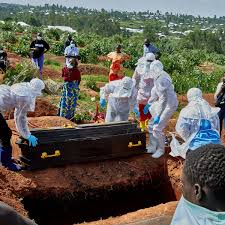
Two major infectious disease threats are testing public health systems on different continents. In the Democratic Republic of the Congo, an expanding outbreak of Bundibugyo virus disease has killed more than 5,600 people, with confirmed cases and deaths roughly doubling over three months. In the United States, health authorities are stepping up vaccination outreach and local response efforts after the country lost its measles elimination status on November 17, 2026. The crises involve different viruses and very different circumstances, but both underline the same public health reality: early detection, trusted communication and access to prevention and care can determine how far an outbreak spreads.
DRC Ebola Outbreak Reaches a Severe New Milestone
The World Health Organization reported that, as of November 17, the Democratic Republic of the Congo had recorded 11,613 confirmed cases of Bundibugyo virus disease and 5,678 deaths across 68 health zones in eight provinces. Active transmission was continuing in 48 health zones. The figures represent a substantial increase from late August, when the WHO reported 5,794 confirmed cases and 2,786 deaths. In roughly three months, both totals have almost doubled.
The outbreak is being driven by Bundibugyo virus, one of the viruses that causes Ebola disease. It is important to distinguish this outbreak from Ebola outbreaks caused by the Zaire ebolavirus species. The distinction matters because vaccines and treatments developed for one Ebola virus species cannot automatically be assumed to work against another.
Ituri and North Kivu remain among the hardest hit provinces. The WHO has also reported that some areas have experienced a modest decline in cases, even as transmission remains intense across the country. This uneven pattern makes outbreak control difficult: progress in one location does not necessarily mean the wider emergency is easing.
Deaths Outside Treatment Centres Reveal Gaps in Access to Care
One of the most troubling features of the DRC outbreak is the number of people dying in their communities rather than in dedicated treatment centres. The WHO has highlighted this pattern, particularly among young children. Such deaths can point to delays in recognising symptoms, reaching health services or receiving appropriate treatment.
For families, the consequences are immediate and deeply personal. A suspected case can mean urgent travel to a health facility, separation from relatives during isolation and uncertainty while medical teams investigate. In communities where transport is difficult or health services are stretched, getting help quickly can be a serious challenge. When people become severely ill at home, relatives and other close contacts may also face greater exposure.
Community deaths also complicate surveillance. Health workers need timely information about symptoms, contacts and possible exposure to identify transmission chains. If people are not diagnosed until late in the illness, or deaths are not promptly investigated, opportunities to prevent further infections can be lost.
Why the Bundibugyo Virus Outbreak Is Especially Difficult
There is no licensed vaccine specifically approved for prevention of Bundibugyo virus disease. This makes rapid identification, infection prevention and control, supportive medical care, contact monitoring and community cooperation especially important. Patients may need careful treatment for dehydration, shock and other complications, while health workers must use appropriate protective measures when caring for suspected or confirmed cases.
Containing an outbreak across dozens of health zones also requires more than hospital capacity. Response teams need reliable transport, laboratory testing, protective equipment, trained staff and the cooperation of local leaders. People must be able to report illness without fear or stigma and understand why certain precautions are necessary.
The WHO’s Disease Outbreak News updates provide a central source of information on the spread of the virus and the response. The figures are reported over time and may be revised as investigations, laboratory confirmation and surveillance improve. They should therefore be read as an evolving picture rather than a final count.
United States Officially Loses Measles Elimination Status
Across the Atlantic, the United States faced a major public health setback when the Pan American Health Organization confirmed on November 17 that the country had lost its measles elimination status. The designation had been achieved in 2000. Its loss reflects evidence that a chain of measles transmission continued within the country for at least 12 months, rather than being interrupted within the required period.
Elimination does not mean a disease has been eradicated worldwide. It means that sustained domestic transmission has been stopped in a particular country or region. Imported cases can still occur, but public health authorities aim to prevent those introductions from developing into long lasting chains of local infection. Losing the designation is therefore a warning that measles has regained a foothold in communities.
The development is significant, but it does not mean that every American is suddenly at high risk. Risk varies by location, vaccination coverage and exposure. People who have received the recommended two doses of the measles, mumps and rubella vaccine are strongly protected. The immediate concern is the continued spread in areas where vaccination gaps have left groups of people vulnerable.
US Measles Cases Rise Above 5,800 in 2026
Data published by the Centers for Disease Control and Prevention showed 5,838 confirmed measles cases in the United States as of November 19, 2026. Cases had been reported in 47 jurisdictions. The total illustrates the scale of the resurgence and the challenge facing health departments trying to contain outbreaks across multiple states.
Measles is among the most contagious infectious diseases. The virus spreads through the air when an infected person breathes, coughs or sneezes, and it can remain infectious in an indoor space for a period after that person has left. Symptoms commonly include fever, cough, runny nose, red or watery eyes and a rash that typically begins on the face before spreading across the body.
Although many people recover, measles can cause serious complications, particularly in infants, young children, pregnant people and those with weakened immune systems. These can include pneumonia, brain inflammation and, in rare cases, death. A large outbreak therefore places pressure not only on families but also on emergency departments, clinics, laboratories and public health teams.
Health Authorities Turn to Vaccination and Community Outreach
In a statement released after the loss of elimination status, the CDC and its partners said they would continue encouraging MMR vaccination, expanding access to vaccines and helping communities close gaps in protection. The agency said it had provided approximately $100 million in additional funding since August to support prevention and response work through much of 2027.
The funding includes support for state and local health departments to identify communities at increased risk, strengthen partnerships and respond quickly when cases appear. CDC teams have also assisted jurisdictions that requested help with outbreak investigations and response. Pennsylvania and New York were among the states that had requested additional support, following earlier assistance to several other states.
Public health officials face a task that cannot be solved through funding or medical guidance alone. They must reach families who have missed routine vaccinations, answer questions from parents and make immunisation services accessible. Trusted local doctors, nurses, schools, faith leaders and community organisations can help explain the benefits of vaccination in language people understand and in places they already know.
For parents and caregivers, checking vaccination records is a practical first step. Anyone unsure whether a child or adult has received the recommended MMR doses can contact a healthcare provider or local health department. People who develop symptoms consistent with measles should call a medical facility before arriving in person, so staff can take precautions and reduce the risk of exposing others in waiting rooms.
What the Two Outbreaks Reveal About Global Health Preparedness
The DRC Ebola emergency and the US measles resurgence are not directly connected, and the viruses require different prevention and treatment strategies. Yet both demonstrate how quickly infectious disease risks can grow when surveillance, access to care or community protection are insufficient.
In the DRC, the immediate priorities include finding cases earlier, protecting healthcare workers, supporting patients and reducing transmission in affected communities. In the United States, the central challenge is restoring high vaccination coverage and interrupting measles transmission before further chains become established. In both settings, public confidence matters. People are more likely to seek care, share information and accept preventive measures when health authorities communicate clearly and treat communities with respect.
Neither emergency should be reduced to a statistic. Behind every reported case is a patient, a family and a community facing uncertainty. The numbers help governments and health agencies decide where to send staff, supplies and funding, but effective action depends on reaching people before illness spreads further.
The Road Ahead for the DRC and the United States
The DRC outbreak remains a serious international health concern, with thousands of deaths and sustained transmission across a wide area. Continued monitoring by the WHO and other public health partners will be essential, but lasting progress will depend on strong local healthcare services and the ability to identify infections quickly. The high number of community deaths makes improving access to timely care an urgent priority.
For the United States, losing measles elimination status is a setback rather than an irreversible outcome. The CDC and its partners have stated that regaining the designation will require sustained leadership, stronger surveillance, effective outbreak response and renewed efforts to close vaccination gaps. The most reliable protection remains vaccination, supported by accessible healthcare and clear public information.
These developments offer a sobering reminder that diseases once brought under control can return when prevention systems weaken or access to care falls short. The response must be practical, consistent and rooted in public trust. Whether the challenge is Ebola disease in Central Africa or measles in American communities, protecting lives depends on acting early, supporting frontline health workers and ensuring that prevention reaches the people who need it most.