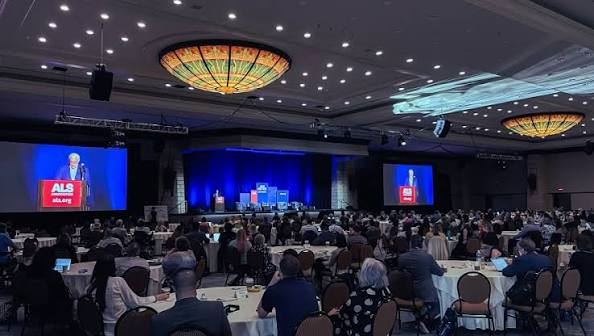
The ALS Association has announced ALS Nexus 2026 as a major international meeting focused on scientific progress, earlier genetic diagnosis and multidisciplinary clinical care for people living with amyotrophic lateral sclerosis. The August 18, 2026 announcement places renewed attention on a field where researchers, physicians, genetic specialists, therapists, caregivers and patient advocates increasingly work together to address one of the most challenging neurological diseases.
A Global Meeting Focused on the Next Stage of ALS Care
ALS remains a complex disease that can affect movement, communication, breathing and daily independence. Its progression can be difficult to predict, and patients often require support from several medical specialties at the same time. That reality makes collaboration especially important.
ALS Nexus 2026 is being positioned around the exchange of international research and clinical knowledge, with particular attention to advances in genetic diagnosis and coordinated care. For patients and families, these subjects are not simply academic. Earlier information about the biological basis of disease can influence conversations with specialists, while coordinated clinical support can make a major difference in how patients and caregivers navigate changing needs.
We should view a conference of this kind as more than a gathering of researchers. The most meaningful progress in ALS care often occurs when discoveries made in laboratories are connected with the practical realities faced by people living with the disease.
Why Earlier Genetic Diagnosis Matters
Genetics has become an increasingly important part of ALS research. Some cases of ALS are associated with inherited genetic changes, while other cases occur without a known family history. Advances in genetic testing and research are helping scientists identify biological pathways that may contribute to disease development.
Earlier genetic diagnosis can provide valuable information for certain patients and families. It may help physicians determine whether a person’s ALS has a known genetic component and can influence discussions about family testing, clinical research and eligibility for studies involving particular genetic targets.
For families, genetic information can also carry an emotional weight that cannot be measured in laboratory results. A diagnosis can raise difficult questions about relatives, future planning and inherited risk. Medical teams therefore need to combine scientific accuracy with sensitive communication.
The goal should not be to treat genetic testing as a simple answer to every ALS question. Rather, it can become one part of a broader diagnostic process that combines clinical evaluation, family history, neurological assessment and other forms of testing.
Genetic Research Is Changing How Scientists Study ALS
Researchers have identified several genes associated with inherited forms of ALS, providing clues about the biological mechanisms involved in nerve cell damage. These discoveries have also helped scientists explore therapies designed around particular molecular pathways.
That approach represents an important shift in neurological research. Instead of viewing ALS as one uniform condition, scientists can investigate whether different biological causes require different therapeutic strategies.
Genetic research can also contribute to clinical trial design. When researchers understand the genetic characteristics of a group of patients, they may be able to develop studies that focus on specific biological mechanisms rather than enrolling patients solely on the basis of clinical symptoms.
ALS Nexus 2026 is therefore relevant to a broader scientific movement toward more precise disease classification and treatment development. The long term objective is to turn biological discoveries into meaningful improvements in patient care.
Multidisciplinary Care Remains Central to Daily Life With ALS
While genetics may provide important clues about disease biology, patients still face immediate practical needs. ALS can affect walking, muscle strength, swallowing, speech and breathing. These challenges often require assistance from several healthcare professionals working as a coordinated team.
Multidisciplinary ALS care can involve neurologists, respiratory specialists, physical therapists, occupational therapists, speech and language professionals, nutrition specialists, social workers, nurses and other clinicians. Each professional addresses a different aspect of the patient’s needs, but communication between them is equally important.
Consider a patient whose ability to swallow begins changing. A neurologist may monitor disease progression, while a speech and swallowing specialist evaluates safety, a nutrition professional considers adequate calorie intake and the broader care team discusses practical adjustments. When these decisions are coordinated, the patient and family do not have to navigate every issue independently.
This team based model recognizes that ALS is not experienced as a single symptom. It affects everyday activities, relationships, employment, mobility, communication and emotional wellbeing.
The Patient Perspective Needs to Remain at the Center
Medical conferences naturally focus on research findings, clinical data and scientific presentations. Yet the people most affected by those discoveries are patients and families waiting for better options.
A person living with ALS may measure progress differently from a researcher. A scientific breakthrough may be defined by a new molecular pathway or clinical trial result, while a patient may see progress as being able to speak more easily with family, remain independent for longer or participate in an important event.
Both perspectives matter. Research must maintain scientific rigor, but clinical care must also remain connected to the priorities of individual patients.
The ALS Association provides resources for people affected by ALS through its official website at The ALS Association, including information intended for patients, caregivers and communities.
Clinical Care Extends Beyond Medical Treatment
Living with ALS can place significant demands on caregivers. Family members may suddenly find themselves helping with transportation, communication, meals, mobility and medical appointments. The emotional burden can be substantial even when relatives are deeply committed to providing support.
Multidisciplinary care can help by addressing practical needs before they become emergencies. Occupational therapy may identify equipment that can make daily activities easier. Physical therapy can focus on safe movement and maintaining function where possible. Speech professionals can discuss communication strategies, while respiratory specialists can monitor breathing and recommend appropriate interventions.
These services illustrate why ALS care cannot be reduced to medication alone. Quality of life depends on a network of clinical and social support that changes as the disease changes.
Research and Clinical Practice Need a Stronger Connection
One of the most valuable outcomes of international medical meetings is the exchange between researchers and clinicians. Laboratory discoveries can take years to become practical treatments, and physicians need reliable evidence before changing established approaches to patient care.
Conferences can help shorten the distance between those worlds by allowing specialists to discuss research findings, clinical experiences and unanswered questions. A clinician may identify a challenge that researchers had not fully considered, while a scientist may provide a new explanation for a clinical pattern that physicians have observed.
That exchange becomes even more important when ALS research involves highly specialized areas such as genetics, biomarkers, molecular biology and targeted therapies.
International Collaboration Can Accelerate ALS Research
ALS does not stop at national borders, and neither should the search for better treatments. Researchers working in different countries may have access to different patient populations, healthcare systems, genetic datasets and clinical research infrastructure.
International collaboration can make it easier to compare findings and develop research programs that include people with diverse backgrounds. Larger and more representative research populations can be particularly valuable when scientists are investigating genetic factors and disease subtypes.
Global collaboration can also help researchers avoid duplicating work unnecessarily. Sharing knowledge allows scientific teams to build on existing findings rather than repeatedly investigating the same questions in isolation.
Genetic Counseling Is an Important Part of the Conversation
Genetic testing should be accompanied by appropriate counseling. A positive result can affect more than the person being tested because inherited genetic findings may have implications for relatives.
Patients and families may need help interpreting what a result actually means, what it does not establish and whether other family members should consider testing. These conversations can be emotionally difficult, especially when there is a history of ALS within a family.
Healthcare professionals must therefore communicate genetic information carefully. The presence of a genetic variant does not automatically provide a complete prediction of an individual’s future health, and genetic findings need to be interpreted within appropriate medical and scientific contexts.
The Search for Earlier Answers Continues
One of the major challenges in ALS remains the difficulty of diagnosing and understanding the disease at its earliest stages. Symptoms can overlap with other neurological conditions, and the diagnostic process may involve multiple evaluations.
Earlier recognition could potentially provide patients with faster access to specialist care, genetic counseling and appropriate clinical research opportunities. It may also help researchers study disease biology closer to its beginning rather than relying primarily on information collected after substantial progression.
For that reason, research into biomarkers, genetics and improved diagnostic methods remains highly significant. Better diagnosis is not valuable simply because it produces a name for a condition. It can create an earlier opportunity for informed medical decisions and participation in research.
Technology Is Supporting Modern ALS Care
Technology is also becoming increasingly relevant to multidisciplinary neurological care. Digital communication tools, remote consultations and assistive technologies can help patients remain connected with healthcare professionals, particularly when travel becomes difficult.
Communication technology can be especially valuable for people experiencing changes in speech or movement. Assistive communication systems can give patients additional ways to express needs, maintain relationships and participate in decisions about their care.
Technology cannot replace personal medical relationships, but it can provide additional support when mobility and access become more challenging. The best approach combines technological assistance with experienced clinical teams and individualized care planning.
What ALS Nexus 2026 Could Mean for the Future
The significance of ALS Nexus 2026 will ultimately depend on what knowledge participants take from the meeting and how that knowledge moves into research programs and clinical practice. Scientific conferences do not produce instant cures, and responsible reporting should avoid presenting promising research as established treatment.
Progress in ALS is often incremental. A new genetic finding may lead to a better understanding of disease biology. That insight may support a laboratory study. A successful laboratory result may then lead to a clinical trial, followed by years of evaluation before a treatment becomes widely available.
For patients and families, that process can feel painfully slow. Their need for answers is immediate, while medical research must proceed carefully to establish whether an intervention is safe and genuinely effective.
The National Institutes of Health maintains extensive information on ALS research and neurological science through its National Institute of Neurological Disorders and Stroke ALS resources, offering a broader view of the scientific questions researchers continue to investigate.
A Shared Goal Across Science and Care
ALS Nexus 2026 arrives at a time when genetic research, precision medicine and multidisciplinary care are increasingly connected. The meeting’s focus reflects a broader effort to understand ALS more precisely while improving the practical support available to people living with the disease.
We should measure progress not only through scientific announcements but through the chain that follows them. A discovery matters when it improves understanding. Better understanding matters when it changes research. Research matters when it produces reliable clinical evidence. And clinical evidence matters most when it gives patients better choices, better care or more time with the people they love.
For families affected by ALS, every additional day of independence and every improvement in communication or comfort can carry enormous meaning. That human reality should remain at the heart of the international research effort.
ALS Nexus 2026 represents another opportunity for scientists, physicians, genetic specialists, caregivers and patient advocates to share knowledge and strengthen cooperation. The path toward better ALS diagnosis and treatment remains difficult, but advances in genetics and coordinated clinical care offer important areas for continued research.
The most meaningful legacy of the conference will not be the number of presentations delivered or discoveries discussed. It will be whether those conversations help move ALS research closer to earlier answers and help clinical teams provide more coordinated, compassionate care to the people and families who need it most.