A renewed political push to bring large rental housing portfolios under public ownership in Berlin is raising concerns across Germany’s property market. Aroundtown, one of Europe’s major commercial real estate groups, has warned that uncertainty over possible expropriation could discourage international investors, restrict financing, and weaken property values. The warning, delivered on November 25, 2026, comes as Berlin’s post election coalition negotiations revive a debate that has divided politicians, landlords, tenants, and housing campaigners for years.
The dispute reaches beyond the future of a handful of major property companies. At its heart is a difficult question facing Berlin: how can the city make housing more affordable without discouraging the investment needed to build, maintain, and supply homes? Aroundtown argues that restricting rents or threatening private ownership will not solve the shortage. Housing campaigners, meanwhile, say public control of large portfolios could give the city greater influence over rents and tenant protections.
Why Aroundtown Is Worried About Berlin’s Expropriation Debate
Aroundtown raised its concerns after publishing its latest quarterly results. Timothy Wright, the company’s chief capital markets officer, told Reuters that proposals to expand the powers available to Berlin to take over large landlords’ housing portfolios could damage confidence in Germany’s real estate market.
Under the proposal currently being discussed, landlords with more than 10,000 apartments could fall within the scope of a potential measure. Aroundtown owns fewer than 10,000 residential units in Berlin, leaving it below that threshold as it is presently understood. However, Wright argued that the consequences would not be limited to companies directly affected by the proposal.
He warned that uncertainty could cause both international and domestic financing to dry up. If investors become concerned that property ownership may be subject to major political changes, they may delay purchases, reconsider development plans, or demand higher returns to compensate for perceived risks. That can reduce transaction activity and put pressure on real estate valuations.
For a property company, access to reliable financing is essential. Buildings require regular maintenance, energy improvements, renovations, and long term investment. If lenders become more cautious or investors withdraw, the consequences can reach beyond corporate balance sheets and affect the supply and condition of rental homes.
How Berlin’s Housing Expropriation Debate Returned
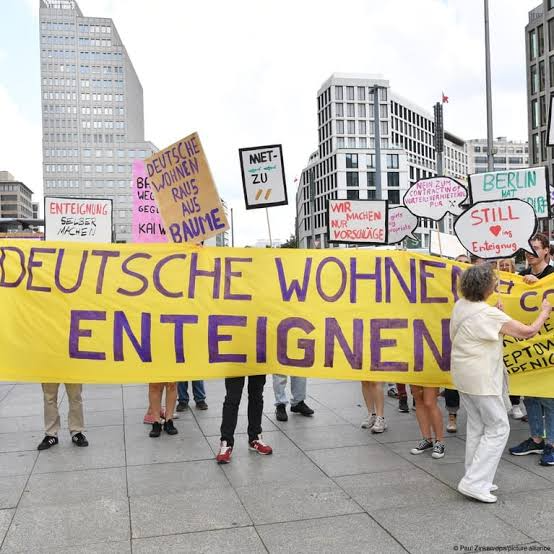
The current dispute has roots in a public referendum held in Berlin in September 2021. Voters supported a proposal calling for large private housing companies to have their Berlin portfolios transferred into public ownership. The campaign, commonly known as Deutsche Wohnen and Co. enteignen, gained support amid rising rents, limited apartment availability, and frustration over the growing cost of living.
The original campaign focused on companies owning more than 3,000 apartments in Berlin. Its proposal called for the city to prepare legislation to socialize those housing portfolios. The referendum was politically significant, but it did not itself transfer ownership of any apartments or automatically create an enforceable expropriation law.
Since then, the legal and political debate has continued. Berlin’s parliament adopted a socialization framework in March 2026, but that framework did not itself set out a completed law transferring private housing portfolios into public ownership. The precise legal mechanism, compensation arrangements, and constitutional questions remain important obstacles.
The issue gained renewed political momentum after Berlin’s September 2026 state election, in which the Left Party emerged as the winner. The party has consistently supported implementing the 2021 referendum. Coalition negotiations have therefore brought the question back into the centre of discussions about the city’s housing policy.
Why the 10,000 apartment threshold matters
The threshold now being discussed in the proposals cited by Aroundtown is more than 10,000 apartments, rather than the 3,000 apartment threshold associated with the original 2021 referendum. These figures refer to different stages of the political debate and should not be treated as interchangeable. The details of any final legislation would determine which companies and properties could actually be affected.
That distinction is particularly important for investors. A proposal that applies only to a defined group of very large landlords creates a different level of direct exposure from a measure covering a much wider share of the market. Even so, uncertainty about the rules can affect companies that fall outside the proposed threshold because lenders and investors assess the broader regulatory environment, not just the ownership status of one business.
The Housing Shortage Behind the Political Conflict
Berlin’s housing debate reflects a problem residents experience in practical terms. Finding an affordable apartment can mean competing with numerous applicants, accepting a smaller living space, or moving farther from work, education, and family. Rising rents can place particular pressure on lower income households and people who need to move for employment or personal reasons.
Housing campaigners argue that large private landlords have too much influence over the rental market and that transferring substantial portfolios into public ownership could give the city greater control over rents and housing conditions. Supporters see socialization as a way to protect tenants from excessive increases and make housing policy less dependent on private profit.
Landlords and property investors counter that ownership changes alone will not create additional apartments. They argue that Berlin needs more construction, faster planning approvals, available land, and predictable rules if it is to close the gap between housing demand and supply.
Aroundtown’s Wright made a similar argument, saying that keeping rents low cannot solve the shortage if there are not enough homes available. He warned that a prolonged lack of supply could eventually create deeper social problems. The disagreement therefore concerns not only who owns existing apartments, but also how the city will finance and deliver the homes its residents need.
Aroundtown Sees Office Conversions as Part of the Solution
Rather than relying only on new construction, Aroundtown is looking at ways to convert existing commercial buildings into residential accommodation. Wright said the company had identified approximately 120,000 square metres of office space that could potentially be converted into housing. That represents around 5% of its office portfolio.
The idea reflects changes in the commercial property market. Some office buildings may no longer be suitable for the needs of modern businesses, while cities continue to face pressure to provide additional homes. Converting suitable buildings can make use of existing urban sites and infrastructure rather than requiring every new apartment to be built on undeveloped land.
Why converting offices is not a simple solution
Office to residential conversion can be attractive, but not every building is suitable. Residential properties need adequate natural light, ventilation, access to services, appropriate layouts, and compliance with housing and safety standards. Some office structures may require extensive renovation before they can provide comfortable homes.
Planning permission, construction costs, building regulations, and the availability of financing also influence whether a conversion makes economic sense. Nevertheless, Aroundtown’s identification of 120,000 square metres suggests that it sees a meaningful opportunity in adapting existing properties to meet housing demand.
Wright said municipalities were becoming more receptive to conversion projects. If local authorities can make approval processes clearer and developers can identify buildings that are technically suitable, such projects could contribute to additional housing supply while giving underused commercial properties a new purpose.
Why International Property Investors Are Watching Germany
Germany has long been an important destination for institutional real estate investment. Its large economy, established legal system, major cities, and substantial rental market have attracted pension funds, insurance companies, property groups, and other long term investors.
Berlin holds particular importance because of its population, employment opportunities, universities, cultural industries, and international profile. Investment in the city’s buildings supports more than property ownership. It can finance renovations, energy efficiency improvements, commercial spaces, and housing projects that contribute to the wider urban economy.
Investors generally expect regulation, but they also need to understand how rules will be applied and whether property rights and compensation arrangements are predictable. A proposal to transfer large housing portfolios into public ownership introduces questions about valuation, compensation, financing, and the treatment of existing debt.
These questions could influence investment decisions even before a final law is introduced. A fund considering a large German property purchase may decide to wait until the political and legal position becomes clearer. If enough investors take that approach, fewer transactions could take place, reducing market liquidity and potentially affecting prices.
The Legal Questions That Could Shape Berlin’s Plans
Germany’s constitution protects private property while also allowing certain forms of expropriation and socialization for public purposes under defined conditions. The debate in Berlin is closely connected to Article 15 of the Basic Law, which provides a possible route for transferring land and other assets into common ownership through legislation.
However, the existence of that constitutional provision does not mean that any proposed transfer would automatically be lawful. Questions about proportionality, public interest, compensation, and the relationship between state and federal powers could all become subjects of legal challenges.
Compensation is especially sensitive. If Berlin were required to pay close to market value for large housing portfolios, the financial burden could be substantial. If compensation were set significantly below market value, affected companies could challenge the measure in court. The final cost and legal timetable would therefore remain uncertain even if political agreement were reached.
Germany’s federal government has also signalled opposition to state led expropriation measures and discussed nationwide legislation intended to restrict such action. The precise legal effect of any federal measure would itself be open to scrutiny. This creates another layer of uncertainty for businesses trying to assess the long term rules.
What the Dispute Could Mean for Berlin Residents
For tenants, the debate is not an abstract argument about investment returns. It concerns monthly rent, housing security, the condition of apartments, and the ability to remain in neighbourhoods where people have built their lives. Many residents want meaningful action after years of pressure in the rental market.
At the same time, a decline in investment could create problems for the same households the policy is intended to help. If landlords reduce spending on renovation or developers postpone projects, the city could face older housing stock and fewer new apartments. If financing becomes more expensive, the cost of developing future homes could also rise.
Neither public ownership nor private investment alone guarantees an affordable and sufficient housing supply. The outcome will depend on how properties are managed, how much new construction takes place, how quickly planning decisions are made, and whether public authorities have the financial resources to maintain the housing they acquire.
What Happens Next for Aroundtown and Germany’s Property Market?
The immediate focus will remain on Berlin’s coalition negotiations and the details of any proposed socialization legislation. Investors will be watching for clarity on which landlords could be affected, how compensation would be calculated, and whether federal legislation or constitutional proceedings could prevent implementation.
Aroundtown’s warning also places the wider investment climate under scrutiny. The company is not directly above the 10,000 apartment threshold currently being discussed, but its comments underline how policy uncertainty can influence the market beyond the businesses named in a proposal.
Berlin faces a difficult balancing act. It must respond to residents who need affordable homes while maintaining conditions that encourage the construction, renovation, and financing of housing. A lasting solution will require more than a dispute over ownership. It will require a credible plan to increase supply, protect tenants, and provide clear rules for the companies and institutions that finance the city’s buildings.
Readers can follow company announcements through Aroundtown’s official website and review Berlin’s housing and policy information through the Berlin state government portal. The coming political and legal decisions will help determine whether the city moves toward public ownership, a different model of housing regulation, or a broader strategy focused on building more homes.