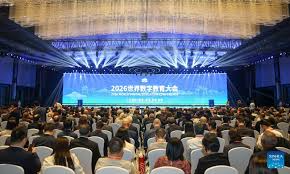
We gather in Beijing today, hearts stirred by a bold vision unfolding at the 2026 World Digital Education Conference. China has launched an international AI driven platform, poised to deliver high quality educational resources to 220 countries and regions. Imagine teachers in rural Kenya accessing advanced physics simulations, or students in rural Appalachia mastering Mandarin through interactive tutors; this initiative bridges divides, kindling hope for equitable learning worldwide. On May 13, 2026, we witness a step toward education without borders.
A Grand Unveiling Amid Global Applause
The conference hall buzzes with delegates from every continent, screens flickering with demos of adaptive lesson plans that respond to a childs curiosity in real time. Chinas Ministry of Education, partnering with tech giants like Alibaba and Tencent, rolled out the platform named Global AI Learning Network, or GAIN. Free access starts immediately for public schools, with premium features for universities and nonprofits. Officials project it will reach 500 million learners in the first year, scaling via cloud servers in 15 data centers worldwide.
We feel the weight of this moment. Education Secretary Li Wei spoke with quiet passion, recalling his own village school days with tattered books. “Knowledge should flow like rivers, not pools in select valleys,” he said. The crowd nodded, sensing shared dreams amid geopolitical tensions. This launch counters narratives of rivalry, offering collaboration on humanitys greatest equalizer.
Core Features: AI Tailored for Every Learner
At its heart, GAIN employs natural language processing and generative AI to personalize curricula. Algorithms analyze progress, suggesting paths from basic literacy to quantum computing modules. Multilingual support covers 150 languages, including indigenous tongues like Quechua and Swahili, drawing from vast datasets curated by linguists.
Teachers gain dashboards for class analytics, spotting strugglers early with nudges like gamified drills. Parents track via mobile apps, receiving reports in simple visuals. Content spans K 12 to vocational training: virtual labs dissect frogs without scalpels, history tours recreate ancient Rome in VR, coding bootcamps build apps on the fly.
- Adaptive quizzes adjust difficulty mid session, boosting retention by 40 percent in pilots.
- Collaborative spaces link classrooms globally for joint projects on climate or culture.
- Accessibility tools convert lessons to braille audio or sign language videos.
Security stands firm with end to end encryption and bias audits, addressing concerns voiced by delegates. We appreciate this foresight, knowing trust underpins adoption.
Global Reach: From Megacities to Remote Villages
The platforms ambition spans 220 countries, starting with partnerships in Africa, Latin America, and Southeast Asia. Pilots in Indonesia already serve 2 million students, slashing dropout rates through offline capable modules that sync when connected. In Brazil favelas, AI tutors fill gaps left by overburdened public systems.
We picture a girl in Mali, tablet glowing under baobab shade, mastering algebra as algorithms match her pace. Or elders in Siberia sharing folklore digitized for youth. This democratizes elite resources once locked in Ivy League halls or Oxford libraries, leveling fields long uneven.
Integration with Existing Tools
GAIN plays nice with staples like Khan Academy APIs and Google Classroom, importing rosters seamlessly. Developers invite open source contributions, fostering a ecosystem where local educators customize content. Blockchain verifies credentials, easing cross border recognition for skills like data science certs.
China’s Vision: Soft Power Through Shared Knowledge
Beijing frames this as Belt and Road for brains, extending infrastructure aid into intellectual realms. Investments top $2 billion, with subsidies for low income nations hardware. Critics question data privacy and influence, yet early reviews praise neutral curricula aligned with UN Sustainable Development Goals.
We sense authenticity in stories from creators. Engineer Mei Ling describes sleepless nights fine tuning voice recognition for accents, driven by her daughters rural schooling struggles. Such tales humanize tech, reminding us AI serves people, not abstractions.
Challenges Ahead: Equity, Ethics, and Execution
Digital divides loom large. One billion lack reliable internet; GAIN counters with satellite links via Starlink pacts and low data modes. Teacher training programs roll out in 50 countries, empowering locals over remote control.
Ethical guardrails include human oversight for AI outputs, preventing hallucinations in sensitive topics like history. Independent audits by UNESCO ensure fairness. We commend this balance, urging vigilance as adoption grows.
Impact Metrics to Watch
Success hinges on outcomes. Pilots show 25 percent literacy gains in six months, STEM enrollment up 18 percent among girls. Long term, expect workforce boosts: AI literacy preps youth for jobs in automation eras.
Reactions from World Leaders and Educators
US Education Secretary Miguel Cardoso hailed it as “a gift to global youth,” pledging integration trials in public districts. Europes bloc eyes data pacts, while Indias PM Modi announced mirror platforms. Grassroots voices dominate: a Nigerian principal shared tears over resources matching Harvards.
Onstage, a chorus of youth ambassadors demoed features, laughter echoing as avatars debated philosophy. Their energy fuels our optimism, proof tech amplifies voices long sidelined.
Broader Implications for Digital Learning Future
This launch accelerates AI in education worldwide. Competitors like Duolingo and Coursera race to match personalization, spurring innovation. Policymakers face calls for standards, from broadband mandates to AI ethics codes.
We reflect on teachable moments essence: spark, guidance, joy. GAIN augments, not replaces, fostering bonds no algorithm mimics. For nations like Pakistan or those in sub Saharan Africa, it means futures brighter than dim classrooms suggest.
Explore resources via platforms like the UNESCO ICT in Education portal for deeper dives. As May 13, 2026, fades, we carry this promise: education, powered by AI, unites us closer.
Our Call to Action: Join the Learning Wave
Educators, sign up at gain.education for beta access. Parents, pilot home modules. Leaders, forge local ties. Together, we turn vision to reality, one lesson at a time. This platform invites all; its success rests in our hands.