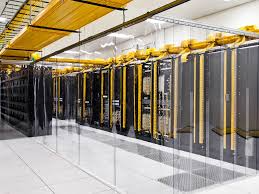
China announced on June 24, 2026 that its LineShine supercomputer has achieved a sustained performance of 2.198 exaflops, officially taking the top position on the TOP500 list and unseating the United States flagship system El Capitan. The milestone marks the fastest single leap in measured supercomputing power since the exascale era began and signals a palpable shift in the contest for technological leadership between Beijing and Washington.
What LineShine achieved and why the number matters
LineShine reached 2.198 exaflops, which means the machine can perform roughly 2.198 quintillion floating point operations per second on the benchmark used by the TOP500 community. That figure is more than a raw bragging right. It reflects months of engineering optimization across processors, interconnects, cooling, and software that together determine how real workloads run at scale. Rather than a single component breakthrough the result speaks to systems engineering at a national scale and to supply chain coordination that sustained deployment required.
How TOP500 measures supercomputers
The TOP500 ranking relies on the LINPACK benchmark to measure double precision floating point performance. LINPACK results are widely used as a comparable yardstick across machines, though experts caution it captures peak numerical throughput on linear algebra problems and not every real world workload. Still LINPACK remains the accepted metric for comparing high performance computing systems and for signaling where raw capability sits.
Technical profile and design approach
Chinese announcements describe LineShine as a heterogeneous system that combines domestically designed accelerators with high bandwidth interconnects and liquid cooling to sustain dense packing of components. The architecture prioritizes throughput for large matrix operations while supporting the data movement patterns that modern AI training and scientific simulation require. Observers have noted that LineShine leverages modular racks and custom networking to sustain both latency sensitive tasks and long running simulations without throttling.
Cooling and energy considerations
Operating at exascale levels puts extraordinary strain on data center power distribution and thermal management. LineShine reportedly uses direct liquid cooling across many of its nodes to remove heat more efficiently than air solutions. That approach reduces energy required per computation and allows higher sustained performance. Energy use will remain a focal point for analysts watching how global supercomputing growth scales with environmental and grid constraints.
Geopolitical context and reactions
The United States response to LineShine topping TOP500 is measured and strategic. Officials in Washington emphasize continued investments in domestic research facilities and collaborations between national laboratories and industry. The change in ranking does not mean US scientific projects halt. El Capitan remains one of the most capable machines for specific Department of Energy workloads, and US planners stress diversification of capability across multiple sites rather than a single system focus.
For Beijing the victory carries symbolic weight. Public statements position LineShine as evidence of national capacity in advanced computing and industrial coordination. That tone fits a longer narrative about technological self reliance and leadership in critical infrastructure. Internationally the development prompts discussion about export controls, cross border collaborations, and the division of labor in software development and hardware manufacturing.
Implications for scientific research and artificial intelligence
Supercomputers like LineShine are workhorses for climate modeling, materials discovery, genomics, nuclear research, and large scale machine learning training. A jump in available FLOPS can shorten the timeline for complex simulations and enable higher fidelity models. For climate scientists more grid points or finer physical models can be simulated; for materials researchers quantum calculations can explore broader chemical spaces. For AI researchers the capacity to train larger models or run more extensive hyperparameter sweeps can accelerate experimentation.
Limits of raw speed for everyday innovation
Despite the headline grabbing number, most practical progress depends on software ecosystems, data availability, and workforce skills. Porting codes to exploit billion dollar systems is non trivial. Converting a LINPACK record into faster discovery requires optimized libraries, resilient storage systems, and teams that can iterate at scale. That reality helps explain why national strategies increasingly pair hardware investment with long term training programs and open science partnerships.
Comparing LineShine to El Capitan
El Capitan, previously the top ranked system, was designed with US national lab priorities in mind and delivered leading performance for a range of Department of Energy applications. LineShine eclipses its LINPACK number but the two systems have different design trade offs and user bases. El Capitan retains advantages in verified software stacks and existing scientific workflows within US labs. LineShine’s advantage on the TOP500 list reflects measurable throughput but does not instantly reconfigure decades of collaborative research infrastructure and access models.
Industry and academic responses
Leading supercomputing centers and university departments reacted with a mix of admiration, competitive determination, and pragmatic planning. Many saw LineShine as a reminder to accelerate investments in local talent, build broader public private partnerships, and refine procurement strategies to prevent single point dependencies. Researchers emphasized the need to expand training in parallel programming, low level optimization, and reproducible workflows so teams can fully exploit new machines regardless of where they are located.
What comes next
Expect several near term outcomes. First more nations and organizations will push to allocate funding for next generation systems and to mature domestic supply chains for chips and interconnects. Second the TOP500 list will continue to be a proxy battlefront where nations measure progress but complementary metrics such as application performance, energy efficiency, and accessibility will receive greater attention. Third both public and private actors will double down on software and workforce investments that convert hardware into scientific and commercial impact.
Where readers should watch
- Announcements from major national labs and university consortia about new procurement or partnership plans.
- Publications showing application performance comparisons rather than only benchmark scores.
- Policy changes related to export controls and cross border research collaboration that influence access to processors and accelerators.
Further reading from reputable sources
For technical context on the TOP500 methodology consult the official TOP500 website which explains benchmarking rules and submission procedures. For analysis of national science policy and computing investments the U S Department of Energy Office of Science publishes program summaries and roadmaps that clarify research priorities and funding directions.
The arrival of LineShine at the top of the TOP500 list marks a consequential moment in high performance computing. It is a milestone in raw capability and a prompt for scientists policy makers and engineers everywhere to ask how to convert that capability into shared scientific progress and responsible stewardship of powerful computational resources.