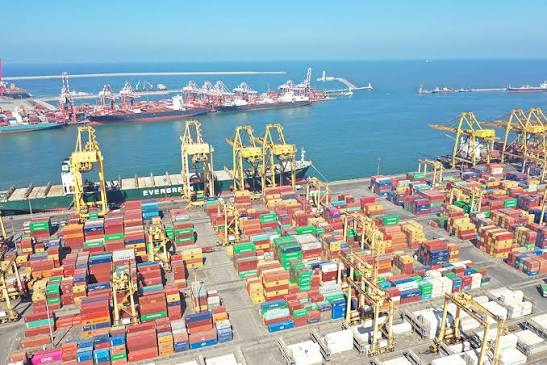
There is a particular kind of pride that settles over a port city when its harbor starts making global headlines, and Colombo is feeling that pride right now. As of August 30, 2026, global shipping platform Alphaliner confirmed that the Port of Colombo has climbed six places to rank 20th among the world’s busiest container hubs, a jump that reflects far more than a shift in numbers on a spreadsheet. It signals a genuine realignment in how cargo moves across the globe, and it places Sri Lanka’s flagship port squarely among the names that shape international trade and travel logistics.
What the Ranking Actually Means
For those outside the shipping industry, a six place climb might sound modest, but within the world of container logistics, movement of that magnitude in a single ranking cycle is significant. Alphaliner’s rankings track container throughput across the globe’s busiest maritime hubs, and competition for position near the top twenty is fierce, with ports in China, Singapore, South Korea, and the Middle East typically dominating the upper tiers. For Colombo to rise six spots and secure the 20th position, the port needed to handle a meaningfully larger volume of containers than in previous cycles, a shift that reflects both increased vessel calls and growing confidence among shipping lines in the port’s capacity and reliability.
We think it is worth pausing here to appreciate what that confidence actually represents. Shipping lines do not reroute cargo casually. Every decision to increase calls at a particular port reflects careful calculations around berth availability, turnaround time, transshipment efficiency, and connectivity to onward destinations. Colombo’s rise suggests that major carriers increasingly view the port as a dependable, strategically positioned node in their networks, rather than a secondary stop chosen only when other options are unavailable.
Colombo’s Strategic Position on the Map
Much of this story traces back to simple geography, though geography alone rarely explains success without capable execution behind it. Colombo sits remarkably close to the main east west shipping lanes connecting Asia, Europe, and the Middle East, making it a natural transshipment point for cargo moving between these regions. Vessels traveling these routes can call at Colombo without significant deviation, allowing shipping lines to consolidate cargo efficiently before sending it onward to smaller regional ports that larger vessels cannot service directly.
This transshipment role has long been part of Colombo’s identity, but the current ranking climb suggests the port has strengthened its execution considerably, likely through a combination of infrastructure investment, operational efficiency improvements, and deepened partnerships with major shipping alliances. Industry data compiled by organizations such as UNCTAD’s trade and logistics division has consistently highlighted how transshipment hubs that combine favorable geography with reliable operations tend to capture disproportionate growth as global trade patterns shift, and Colombo appears to be demonstrating exactly that dynamic in real time.
The Human Story Behind the Numbers
Statistics about container throughput can feel abstract, but we would encourage readers to picture what this ranking climb actually looks like on the ground. It means longer queues of vessels waiting for berth assignments, cranes working around the clock under floodlights, and dock workers moving through shift after shift to keep cargo flowing smoothly. It means logistics coordinators in offices overlooking the harbor tracking vessel schedules with the kind of intensity usually reserved for air traffic control. For the thousands of people whose livelihoods depend directly or indirectly on Colombo’s port operations, from stevedores and crane operators to customs officials and freight forwarders, this ranking climb is not an abstract statistic. It is validation of years of demanding, often unglamorous work.
We also find it meaningful to consider what this growth means for Sri Lanka more broadly. Ports have long served as economic anchors for the nations that host them, generating employment, attracting ancillary industries, and positioning host countries as credible players in global trade conversations. A rising ranking tends to attract further investment interest, both from shipping lines considering expanded service and from logistics companies weighing where to establish regional operations. That kind of momentum, once established, has a tendency to compound over time.
How This Fits Into Broader Shipping Realignments
Colombo’s climb did not happen in isolation. It reflects broader realignments occurring across international travel and cargo logistics, as shipping lines continue adjusting routes in response to shifting trade patterns, evolving vessel sizes, and ongoing efforts to build resilience into supply chains that were tested severely in recent years. Ports capable of offering efficient transshipment, deep water berths suitable for larger vessels, and reliable turnaround times are increasingly favored in this environment, and Colombo’s ranking suggests it has positioned itself well to meet those evolving demands.
We would also note that rankings like this one tend to be self reinforcing to a degree. As a port climbs in global standing, it becomes more attractive to additional shipping lines evaluating where to route cargo, which in turn can drive further volume growth in subsequent cycles. Whether Colombo can sustain and build upon this momentum will depend heavily on continued investment in infrastructure and operational capacity, along with maintaining the reliability that appears to have earned it this recognition in the first place.
What Comes Next for Colombo and Regional Trade
Looking ahead, we expect stakeholders across Sri Lanka’s maritime and logistics sectors to treat this ranking as both a milestone worth celebrating and a benchmark worth defending. Sustaining a position among the world’s twenty busiest ports requires ongoing investment, careful capacity planning, and continued responsiveness to the needs of shipping partners whose loyalty can shift if service quality falters. We would encourage regional policymakers and port authorities to view this moment as an opportunity to accelerate infrastructure development further, ensuring Colombo remains competitive as neighboring ports across South Asia also pursue ambitious expansion plans of their own.
For now, though, there is genuine reason for celebration. Colombo’s climb to 20th busiest port in the world represents years of strategic positioning, operational discipline, and no small amount of hard work by the people who keep its docks running day and night. We will be watching closely to see whether this momentum continues building in the months ahead, and we suspect the broader shipping industry will be watching just as closely.