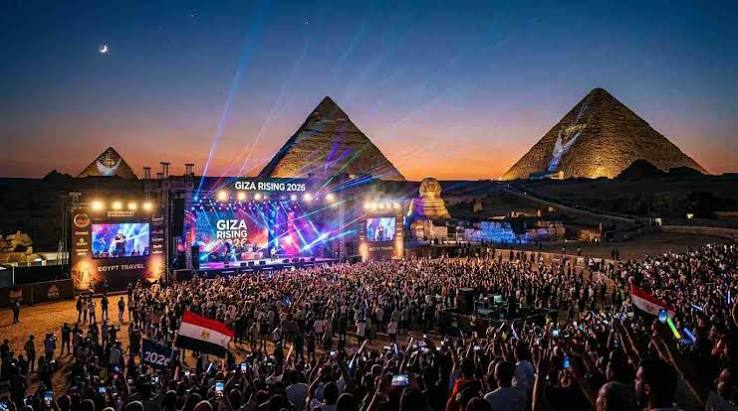
Few places on Earth can match the atmosphere of live music beneath the ancient pyramids of Giza. Against a desert horizon shaped by thousands of years of history, Egypt is seeking to bring its cultural landmarks into a new era of international entertainment. As Venture Lifestyle and local authorities position historic sites as platforms for major music events, the country is exploring how heritage tourism and live performances can work together to attract international visitors, support local businesses, and strengthen Egypt’s place on the global cultural calendar. The reported initiative, dated October 12, 2026, reflects a broader ambition to make North Africa a more prominent destination for music tourism while preserving the historical significance of its most recognizable monuments.
Why the Giza Pyramids Are Attracting the Music Industry
The Giza pyramid complex is among the world’s most recognizable historical sites. Its immense stone structures, desert setting, and connection to ancient Egyptian civilization give it a visual identity that few modern entertainment venues can reproduce. For international artists, promoters, and audiences, the prospect of attending a performance near these monuments offers something beyond a conventional concert experience.
Music tourism increasingly involves traveling for a specific performance, festival, or cultural event rather than simply attending an attraction during an ordinary holiday. Visitors may plan flights, accommodation, restaurant reservations, and sightseeing around a single event. When the venue is an internationally recognized landmark, the event can become a reason to choose a destination that might otherwise have remained outside a traveler’s plans.
Egypt has a particular advantage in this respect. The pyramids already attract travelers interested in archaeology, architecture, and ancient history. Connecting carefully planned live music events with the country’s existing tourism appeal could encourage some visitors to extend their stays, explore nearby attractions, and experience more of the local culture.
However, the commercial opportunity depends on more than an impressive backdrop. A successful event must deliver reliable organization, safe access, suitable sound and lighting, and a positive experience for both international visitors and residents. The historical setting may attract attention, but operational quality will determine whether audiences choose to return.
Venture Lifestyle and the Push for Landmark Events
The reported involvement of Venture Lifestyle and local authorities points to a model in which private event organizers and public institutions work together to bring entertainment to historically significant locations. Such cooperation can involve venue planning, permits, crowd management, transportation arrangements, cultural protection, and communication with tourism businesses.
Private promoters may bring experience in artist bookings, production technology, ticketing, sponsorship, and international marketing. Local authorities, meanwhile, have responsibilities that extend beyond the commercial success of an individual performance. They must consider the protection of archaeological sites, the needs of nearby communities, public safety, and the wider reputation of Egypt’s cultural heritage.
At the time of writing, the brief announcement does not establish the complete scope of the reported partnership, the confirmed lineup of events, ticket sales, or a detailed financial forecast. Those details should be treated as unconfirmed unless supported by formal announcements or independently verifiable reporting. Nevertheless, the stated direction illustrates how historic destinations can be considered for carefully managed contemporary cultural programming.
How Music Tourism Can Support Egypt’s Economy
Large music events can create economic activity well beyond the concert grounds. International visitors may book hotels, hire drivers, purchase meals, visit museums, shop for local products, and arrange excursions before or after a performance. Even a short event can generate spending across several parts of the tourism economy when visitors remain in the destination for more than one night.
For hotels and guesthouses, event dates can create additional demand during periods when ordinary sightseeing bookings might be less predictable. Restaurants and cafes may benefit from increased foot traffic, while transport operators can provide airport transfers and journeys between accommodation, historic attractions, and event sites. Tour guides and local travel companies may also develop packages that combine performances with visits to cultural landmarks.
Employment opportunities can arise in stage production, sound engineering, lighting, security, hospitality, ticketing, transportation, and event support. Local suppliers may provide equipment, catering, signage, and other services. The scale of these benefits depends on event attendance, visitor spending, contract arrangements, and how much of the work is supplied by businesses within Egypt.
To make the economic benefits meaningful, organizers should create opportunities for local enterprises rather than relying entirely on external suppliers. Clear vendor policies, fair employment practices, transparent procurement, and partnerships with Egyptian tourism operators can help more of the event’s financial value remain within the surrounding economy.
North Africa’s Growing Opportunity in Cultural Tourism
Egypt’s reported strategy also has implications for North Africa’s wider tourism sector. The region combines ancient archaeological sites, historic cities, coastal destinations, distinctive musical traditions, and contemporary creative communities. Carefully organized music events could encourage travelers to consider destinations not only for their monuments and beaches but also for performances and festivals that reflect local identity.
Different countries and cities can offer distinct experiences. Historic urban settings may suit smaller performances and cultural gatherings, while suitable open air locations can accommodate larger productions when environmental and safety requirements are met. A stronger regional event calendar could give international visitors more reasons to plan longer trips and explore more than one destination.
Still, competition for global music tourism is intense. Established festival destinations often offer dependable transportation, clear ticketing systems, a wide choice of accommodation, and extensive experience handling international audiences. North African destinations will need to demonstrate similar reliability while presenting experiences that cannot easily be replicated elsewhere.
Egypt’s greatest strength may be the connection between contemporary music and an exceptionally deep historical identity. That connection can appeal to travelers seeking both entertainment and cultural discovery. The challenge is to ensure that modern events complement the region’s heritage rather than reducing it to a decorative background for commercial promotion.
Protecting an Ancient Landmark While Hosting Modern Events
Any event associated with the Giza pyramids must place conservation at the center of its planning. These monuments are irreplaceable archaeological structures, and their surroundings contain historical features that require careful management. Large crowds, temporary installations, vehicles, lighting equipment, and sound systems can create risks if event operations are not planned around the needs of the site.
Responsible planning should involve relevant heritage specialists and authorities from the earliest stages. Event organizers need to establish approved boundaries, protect sensitive areas, control visitor movement, and ensure that equipment does not damage archaeological features. Waste management, sanitation, emergency access, and post event inspections are equally important.
Noise and lighting also deserve attention. Concert sound can travel beyond the intended performance area, potentially affecting nearby residents, wildlife, and other visitors. Powerful lighting may alter the nighttime atmosphere of a historic landscape. Site specific assessments can help determine suitable production limits and operating hours without compromising public safety or the integrity of the location.
The guiding principle should be straightforward: the event must adapt to the landmark, not the landmark to the event. A carefully managed performance can introduce new audiences to Egyptian history, but any damage to the site would undermine the cultural value that makes the location distinctive in the first place.
What International Visitors Need From a Music Destination
A memorable setting may inspire travelers to buy tickets, but the overall journey influences whether they recommend the experience to others. Visitors need accurate event information, trustworthy ticketing, clear entry requirements, dependable transportation, and practical guidance about accommodation and local conditions.
International promotion should therefore include more than dramatic photographs of the pyramids. Organizers and tourism partners should provide confirmed event dates, venue access details, ticket policies, accessibility information, and clear advice about arriving and leaving safely. Any travel package should distinguish between services included in the price and activities that require separate bookings.
Travelers can prepare by checking official Egyptian tourism information and reviewing the details supplied by the event organizer before making nonrefundable arrangements. Egypt’s official tourism website provides a starting point for exploring destinations, attractions, and travel experiences around the country.
Reliable information is especially important when a major performance attracts visitors unfamiliar with the area. Clear communication can reduce confusion around transport, entrance arrangements, and local rules. It also helps protect travelers from fraudulent ticket offers and unofficial packages that promise access or services they cannot provide.
Measuring Success Beyond Ticket Sales
Attendance figures and ticket revenue are useful measures of commercial performance, but they do not tell the entire story. A sustainable music tourism strategy should also examine visitor spending, hotel bookings, local employment, community feedback, transport performance, and the condition of the historic site after an event.
Organizers and authorities could assess several practical indicators:
- How many attendees travel from outside Egypt specifically for the event.
- How long visitors stay and how much they spend with local businesses.
- How many Egyptian workers, suppliers, and tourism operators participate.
- Whether crowd management and transportation systems operate safely and efficiently.
- Whether heritage protection requirements are met before, during, and after performances.
These measures would help distinguish a one time publicity success from a durable tourism model. They could also guide decisions about event frequency, audience capacity, venue suitability, and whether certain activities should take place away from sensitive archaeological areas.
Balancing Commercial Ambition With Cultural Respect
There is an understandable tension between using a famous landmark to attract visitors and protecting its meaning as a place of historical importance. For some audiences, a concert near the pyramids may offer a powerful way to connect with Egypt. For others, commercial entertainment around an ancient monument may raise questions about respect, access, and the use of shared cultural heritage.
Listening to local communities is essential. Residents, historians, archaeologists, tourism workers, and cultural organizations can offer perspectives that event planners might otherwise miss. Their involvement can help ensure that the programming reflects local priorities and that economic benefits are not concentrated among a small group of businesses.
Music itself can also provide an opportunity for cultural exchange. International performances could be paired, where appropriate, with Egyptian artists and regional musical traditions. Such programming would help present the country as a living cultural destination rather than a place defined solely by its ancient past. Any such plans, however, would need to be confirmed by organizers rather than assumed as part of the current initiative.
What Comes Next for Egypt’s Music Tourism Strategy
The long term prospects for music tourism around the Giza pyramids will depend on implementation. Clear agreements between organizers and authorities, consistent event standards, credible visitor information, and strong conservation safeguards will be necessary to build international confidence. Early events, if confirmed and successfully delivered, could provide useful lessons about audience demand, site management, and the economic effects on surrounding businesses.
Egypt will also need to decide how frequently landmark events should take place and which locations are appropriate for different types of performances. Not every historic site is suitable for a large crowd, and not every event needs to happen directly beside a major monument. A wider program of concerts and cultural gatherings at suitable venues could distribute tourism spending while reducing pressure on particularly sensitive areas.
For now, the reported positioning of the Giza pyramids as an international music event destination signals an effort to connect Egypt’s extraordinary heritage with contemporary travel interests. The opportunity is substantial, but the outcome will depend on credible organization, local participation, and a firm commitment to conservation.
A New Audience for an Enduring Landmark
The pyramids have stood as symbols of human ingenuity for millennia. Introducing international audiences to the surrounding landscape through carefully managed music events could create new reasons to visit Egypt and encourage travelers to experience its history alongside its contemporary cultural life.
The strongest version of this strategy would deliver more than striking concert photographs or a temporary increase in bookings. It would support local businesses, create fair employment opportunities, protect archaeological heritage, and give visitors a deeper appreciation of the country they have come to see.
If Venture Lifestyle, local authorities, and tourism partners can balance those responsibilities, music tourism could become a valuable addition to Egypt’s international appeal. The measure of success will not simply be how many people gather beneath the pyramids, but whether those events leave behind stronger local opportunities and an enduring commitment to the preservation of one of humanity’s most remarkable historic landscapes.