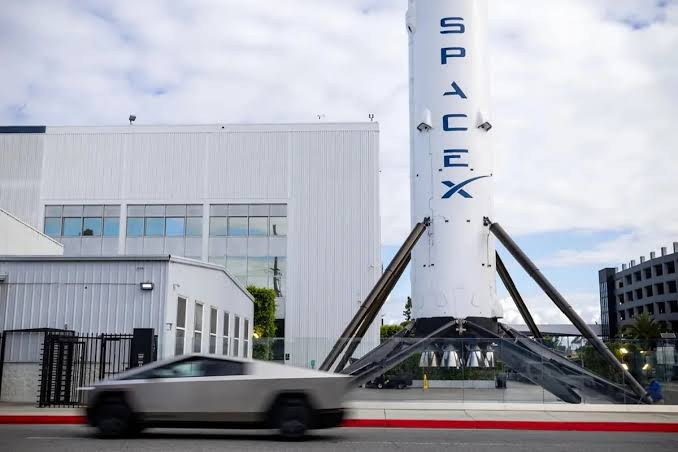
SpaceX has secured a major regulatory victory for its ambitious plan to move artificial intelligence computing infrastructure beyond Earth, after the Federal Communications Commission authorized its proposed Starmind satellite network on November 25, 2026. The decision allows the company to pursue a constellation of up to one million orbital data center satellites, despite objections from technology competitors, astronomers and environmental organizations. It also raises a difficult question: how should regulators balance the race to build advanced AI infrastructure against the environmental and scientific consequences of filling low Earth orbit with millions of additional objects?
The approval marks an important step for Elon Musk’s vision of solar powered computing in space. However, it is not an unconditional green light for every part of the project. The FCC granted some requested authority, deferred other elements and declined to require a new environmental review under its recently revised interpretation of federal environmental law. The distinction matters because regulatory permission does not establish that the proposed network can be built affordably, operated safely or deployed at the scale SpaceX has requested.
What the FCC Actually Approved
The FCC Space Bureau issued its decision on November 25 under the name SpaceX Orbital Data Center System, also known as Starmind. The authorization covers a proposed non geostationary satellite constellation of up to one million spacecraft operating at altitudes between approximately 500 and 1,002 kilometers.
SpaceX intends to use the satellites as computing platforms in orbit. Rather than sending every task to a traditional data center on the ground, the system would process substantial amounts of information in space and transmit results back to Earth. The satellites are expected to communicate primarily through optical links, including laser connections between spacecraft and links with existing Starlink infrastructure. Radio frequency connections would provide backup and emergency communications.
The FCC described the authorization as a significant step for emerging technology and American leadership in artificial intelligence and space. But the order was granted in part and deferred in part, with conditions. In particular, the agency did not grant every requested waiver concerning the disposal of satellites operating above 600 kilometers. SpaceX must provide additional information and obtain further regulatory approval before using alternative disposal methods for those spacecraft.
The decision therefore authorizes an ambitious system while leaving important technical and regulatory questions unresolved. It is not the same as permission to launch every satellite immediately under any operating arrangement.
Why SpaceX Wants to Put AI Data Centers in Orbit
Artificial intelligence systems require enormous computing capacity. Training and operating advanced models depend on specialized processors, reliable electricity, cooling equipment and extensive networks that move information between users and data centers. On Earth, the rapid growth of AI has increased pressure on electricity supplies, land availability and cooling resources.
SpaceX argues that orbital computing could address some of these constraints. Satellites in suitable orbits can receive sunlight for long periods, potentially providing a substantial and predictable energy source. Solar arrays could supply electricity without depending on local power grids, while optical links could allow spacecraft to exchange information without relying entirely on conventional ground networks.
The company has presented the concept as a way to support the growing demand for AI processing while reducing some of the burdens associated with large terrestrial data center campuses. If the technology works at scale, it could create a new category of computing infrastructure connected to satellite communications and space based services.
Yet sunlight is only one part of the energy equation. Powerful processors generate heat, and removing that heat in the vacuum of space presents a difficult engineering challenge. Orbital hardware must also withstand radiation, temperature changes and the demands of long periods without ordinary maintenance. A system that appears attractive in a conceptual presentation must still prove that it can operate reliably and economically.
Environmental Review Becomes the Central Legal Dispute
One of the most contentious parts of the FCC decision concerns environmental oversight. Organizations opposing the application had urged regulators to examine the cumulative effects of a constellation on an unprecedented scale. Their concerns include atmospheric pollution from rocket launches and satellite reentries, collision risks, orbital debris, interference with scientific observations and changes to the natural appearance of the night sky.
Earthjustice, which represented environmental concerns in the regulatory debate, criticized the approval because the FCC did not require a comprehensive environmental review under the National Environmental Policy Act. The organization argued that a project of this size should not proceed without a detailed assessment of potential consequences.
The FCC relied on a policy change adopted in October 2026. Under that revised interpretation, the agency concluded that licensed space based operations generally do not constitute a major federal action requiring environmental review under the law because the activities take place beyond United States territory. The commission therefore declined to require a new environmental assessment for Starmind.
The agency also said some concerns about pollution caused by satellites burning up during atmospheric reentry remained speculative and were not sufficiently supported in the regulatory record. It treated certain questions about rocket launch emissions as outside its own authority.
This reasoning is likely to remain controversial. Critics argue that environmental effects do not stop at national borders and that the cumulative consequences of repeated launches and large scale satellite disposal deserve careful scientific examination. The decision raises a wider legal question about how existing environmental statutes should apply when commercial activities are conducted in orbit but may have consequences for people and ecosystems on Earth.
Amazon, Viasat and Astronomers Raised Objections
SpaceX did not receive approval without opposition. Amazon’s Kuiper Systems, satellite operator Viasat and the American Astronomical Society were among the parties that challenged or questioned the proposal during the FCC review process.
Amazon argued that the application lacked important technical details and questioned whether the proposed constellation represented a sufficiently developed plan. Viasat raised concerns about the consequences of adding such a large number of satellites to an already busy orbital environment. The American Astronomical Society warned that bright and reflective spacecraft could interfere with optical and infrared astronomy, while radio frequency activity could create additional problems for radio astronomy.
The astronomical concerns extend beyond professional observatories. Satellites crossing the night sky can affect long exposure observations and make it more difficult to study faint objects. A substantial increase in satellite numbers could also change the experience of viewing a naturally dark sky, a resource valued by scientists, communities and the public.
The FCC rejected the petitions to deny the application, although the order did not resolve every issue raised by opponents. The agency’s decision reflects its view of the scope of its regulatory responsibilities, rather than a finding that every potential environmental or scientific effect has been conclusively ruled out.
Deployment Will Take Years, Not Months
The authorization establishes a long deployment schedule. SpaceX must place at least one authorized Starmind satellite into operation by November 25, 2033. The company must then reach 10 percent of the approved constellation by November 25, 2035, 50 percent by November 25, 2038, and the full authorized total by November 25, 2040.
These milestones give SpaceX a lengthy period to develop the hardware, launch capacity and operating systems needed for the project. They also show why the decision should not be mistaken for an immediate arrival of one million orbital data centers. The authorization creates a regulatory pathway, but the company must still demonstrate that it can meet the technical and financial requirements.
SpaceX’s plans are closely connected to its launch business and its ambition to use Starship to lower the cost of transporting large payloads into orbit. If reusable launch technology achieves the reliability and economic performance the company expects, it could make very large satellite deployments more practical. If launch costs remain high or development takes longer than planned, the economics of the constellation could change substantially.
The Technical Challenges Are Still Significant
Building a data center in orbit is fundamentally different from placing servers inside a terrestrial facility. On Earth, operators can replace failed equipment, expand electrical connections, install cooling systems and dispatch technicians. In orbit, hardware must be designed to function autonomously for extended periods, with repairs and replacements far more difficult and expensive.
Heat management is one of the largest obstacles. Space is cold, but vacuum does not allow heat to escape through ordinary air circulation. Orbital data centers would need large radiator systems to release heat through radiation. These systems add mass, complexity and additional demands on satellite design.
Connectivity presents another challenge. The satellites must move information between themselves and ground infrastructure with sufficient speed and reliability to support demanding AI workloads. Even if optical links provide high bandwidth, the overall system must manage routing, latency, security and failures across a huge network of moving spacecraft.
There is also the question of whether specialized chips can remain reliable in a radiation rich environment. AI processors are expensive, and replacing damaged hardware in orbit could undermine the economic case for the project. SpaceX must show that the benefits of solar power and orbital processing outweigh the costs of manufacturing, launching, maintaining and eventually disposing of the equipment.
Why the Decision Matters for the Future of Space Regulation
The Starmind authorization may influence how regulators approach other companies seeking to build computing infrastructure in orbit. SpaceX is not the only organization exploring the concept. Other proposals have been submitted to the FCC, including plans associated with Starcloud and Blue Origin.
That makes the decision significant beyond one company. Regulators may face a growing number of applications involving large constellations designed for purposes that extend beyond traditional communications. The questions will include how to assess orbital congestion, coordinate spectrum use, manage debris and evaluate cumulative environmental effects across several operators.
The legal implications are also important. The FCC’s interpretation of its environmental responsibilities could shape future disputes over commercial activity in space. Opponents may pursue further administrative or judicial review, depending on the applicable procedures and deadlines. The approval itself does not mean that every possible legal challenge has been resolved.
Readers can examine the agency’s position in the Federal Communications Commission’s official regulatory materials, while Earthjustice provides information about the environmental objections raised against the project.
A Major Approval, but an Unproven Business Model
For SpaceX, the FCC decision is a major achievement. It gives the company a pathway to develop a network that could connect two of the most consequential technology sectors: artificial intelligence and commercial spaceflight. If successful, orbital data centers could become an important part of future computing infrastructure.
For critics, the approval demonstrates the risks of allowing industrial scale projects to move forward before their wider effects are fully understood. The potential consequences involve more than the commercial interests of one company. They include the sustainability of Earth’s orbital environment, the future of astronomical research and the responsibility to assess environmental impacts that may cross borders.
The coming years will determine whether Starmind becomes a functioning computing network or remains an ambitious proposal facing difficult engineering and financial barriers. The FCC has opened the regulatory door, but the hardest work still lies ahead. The central challenge will be proving that moving AI infrastructure into space can deliver genuine benefits without creating environmental and scientific costs that future generations will be left to manage.