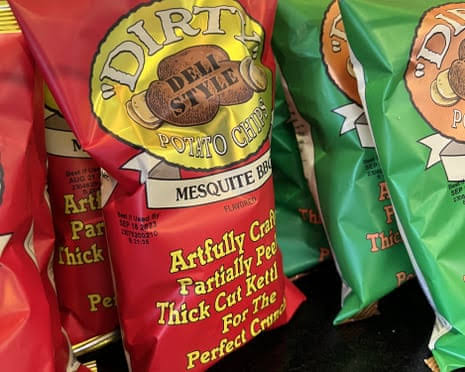
The U.S. Food and Drug Administration has issued its most serious warning over a widespread potato chip recall, after investigators identified a severe salmonella risk that stretches across distribution chains in the United States and abroad. The action places chip brands, logistics partners and retailers under intense scrutiny as public health officials work to trace the contamination and prevent more products from reaching consumers.
Why this recall stands out
This is not the kind of food safety alert that fades quietly in the background. A highest level warning from federal regulators signals that the risk is urgent and that exposure could cause serious illness or death. In practical terms, it means the problem is no longer limited to a single warehouse or a narrow batch. The concern now reaches through production, shipping and retail networks that move snack foods across state lines and international markets.
Potato chips are a product many households keep on hand without a second thought. The crinkle of a bag at a lunch table, the salt and oil, the casual reach into a bowl during a movie night all carry a sense of ordinary comfort. That is exactly why the news lands so hard. When a familiar snack becomes the subject of a federal salmonella warning, consumers are forced to confront how quickly everyday food can become a public health concern.
What salmonella means for consumers
Salmonella is one of the most closely watched foodborne pathogens because it can cause significant gastrointestinal illness and, in severe cases, require medical treatment. Symptoms can include diarrhea, fever, stomach cramps and vomiting. Young children, older adults, pregnant people and those with weakened immune systems are at greater risk of complications. Because the bacteria can spread through contaminated food without obvious warning signs, trace back investigations are essential.
In recalls like this one, the key issue is not only whether a consumer has already eaten the product, but whether it may still be sitting in homes, school cafeterias, vending machines or store shelves. That is why regulators move quickly to identify lot codes, production dates and distribution points. The aim is simple: keep more people from being exposed while investigators narrow down the source.
Why logistics matter
The recall has international logistics implications because chip distribution chains often cross borders through multiple suppliers, packers, freight carriers and wholesalers. A contamination issue in one part of the chain can ripple outward quickly, especially when a product is sold under different labels or moved through regional distribution hubs before reaching stores. That complexity makes trace back work both urgent and difficult.
In the food sector, packaging and shipping are rarely invisible for long when a recall begins. Every transfer point becomes relevant. Officials need to know where ingredients came from, where chips were processed, how they were stored and which shipments reached which markets. The more global the distribution network, the more complicated the investigation becomes, and the more important communication is for consumers who may never have heard of the original facility.
What shoppers should do now
Consumers who have purchased potato chips in the affected brands or distribution zones should check package codes, expiration dates and any recall notices issued by the manufacturer or retailer. If a product matches the recall, it should not be eaten. It should be discarded or returned in line with the retailer’s instructions. Anyone who has already consumed a recalled product and feels ill should contact a medical professional promptly, especially if symptoms are severe or persistent.
Households with children, older relatives or immunocompromised family members should be particularly careful. Shared snack bowls, school lunches and pantry staples can easily spread concern when a recall breaks. Clear labeling, careful storage and quick disposal are the most practical steps people can take while agencies and companies continue the investigation.
Why the FDA action is so serious
Federal food safety action at this level is meant to signal a high degree of concern to the public and to industry. It also reflects the fact that regulators are no longer treating the issue as routine quality control. Instead, they are signaling that contamination may be widespread enough to warrant a broad response across the supply chain, including retailers, distributors and overseas partners.
This kind of warning also places pressure on manufacturers to prove that their internal safety systems work. The question is not only where the contamination occurred, but whether testing, sanitation or oversight failed at an earlier stage. The stronger the trace back evidence, the better regulators can target the source and reduce the chance of repeat exposure.
The broader food safety lesson
Recalls of packaged snacks remind us that modern food systems are efficient but fragile. A product may pass through fields, processing plants, warehouses and shipping containers before it reaches a pantry. That long path creates convenience and scale, but it also means one failure can touch many households at once. A warning about chips is therefore never only about chips. It is about the entire system that puts sealed food on shelves and asks consumers to trust it.
That trust matters because most people have no way to inspect a product for invisible contamination. They depend on regulators, suppliers and retailers to catch problems early and communicate clearly when something goes wrong. When that chain works, outbreaks can be contained. When it breaks, ordinary meals become a source of fear.
What to watch next
Over the coming days, more detail should emerge about the brands involved, the specific lots affected and the source of the contamination. Consumers should pay close attention to updated notices from the FDA, the manufacturers and major retailers. International buyers and importers will also be watching closely because a recall at this scale can affect trade, warehouse procedures and future inspection standards.
For now, the most important takeaway is caution. Anyone with a recalled product should set it aside immediately, clean surfaces it may have touched and follow disposal instructions carefully. In a recall driven by a severe salmonella risk, quick action at home is one of the simplest and most effective ways to reduce the chance of illness.