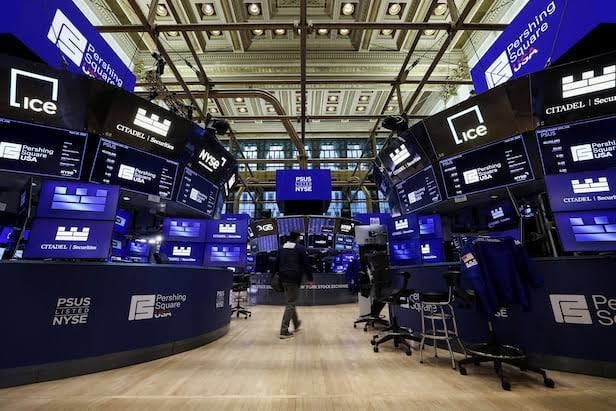
The market sent a split screen message on July 3, 2026: investors pulled back from the most crowded corners of the tech trade, yet the Dow Jones Industrial Average pushed to a fresh record close of 52,900.07, rising 1.1 percent on the day. I see that divergence as more than a one session curiosity; it reflects a market that is still rewarding earnings, cash flow, and industrial breadth even as it questions the valuation of AI driven megacaps and semiconductor leaders.
What drove the split
The immediate pressure fell on chipmakers and the broader artificial intelligence complex, where worries about stretched valuations triggered a noticeable selloff. Micron and Nvidia were among the names hit hardest as investors reassessed whether enthusiasm for AI infrastructure had outrun near term fundamentals.
That reassessment matters because semiconductors have been one of the market’s most powerful engines over the past two years. When that group weakens, it often signals that investors are becoming less willing to pay up for future growth without a clearer path to earnings delivery. The mood was not one of panic, but of hesitation, and that hesitation was enough to drag the sector lower.
Why the Dow kept climbing
The Dow’s record close tells a different story. Unlike the more tech heavy indexes, the Dow has broader exposure to industrials, healthcare, financials, consumer names, and other companies that tend to be viewed as steadier profit generators. That mix can look old fashioned during speculative rallies, but it can also become a strength when investors want a more grounded path to returns.
In practical terms, the index benefited from rotation. As money came out of high multiple technology stocks, some of it moved into companies with durable earnings, clearer near term guidance, and less dependence on the hottest trade in the market. The result was a session in which caution toward chip leaders did not translate into weakness across the entire market.
AI enthusiasm meets valuation reality
Artificial intelligence remains one of the defining investment themes of the decade, but themes do not move in a straight line. After a long run of strong gains, even the most admired names begin to face harder questions about pricing, capital intensity, and how quickly demand can justify current market values. That is especially true for semiconductor companies that have become symbolic of the AI buildout.
When investors worry that too much optimism is already embedded in the price, they often rotate out first and ask questions later. That is what made the pullback in Micron and Nvidia so important: it was not about abandoning the AI story, but about demanding a better entry point and a more convincing margin of safety.
What “overvaluation” really means here
Overvaluation is often used loosely, but in this case it points to a genuine tension between price and expectations. If a stock has already priced in years of growth, any slowdown in shipment momentum, capital spending, or margin expansion can trigger an outsized reaction. That is why some of the sharpest moves in the market happen not when business turns bad, but when business merely stops surprising to the upside.
This kind of repricing is painful for momentum traders, yet it can also be healthy for the market over time. It forces capital to distinguish between strong companies and expensive stocks, a distinction that matters more after a prolonged rally.
Why the broader market stayed resilient
The resilience of the wider market suggests that investors are still willing to own equities, just not at any price. That is an important nuance. A rotation out of semiconductors does not automatically mean a broader risk off move; it can simply mean that traders are rebalancing toward names with more modest expectations and more immediate earnings visibility.
For households and long term investors, that is a reassuring sign. It means the market is not breaking down across the board. Instead, it is sorting through which parts of the rally still deserve premium valuations and which parts may need time to cool.
What this means for investors
For anyone holding a diversified portfolio, this session is a reminder that leadership changes frequently. A record close in the Dow while chip stocks wobble does not necessarily point to a crisis. It points to a market in transition, where different sectors are being judged on different timelines and different expectations.
Investors may want to pay attention to whether the tech pullback becomes a short reset or the beginning of a deeper valuation unwind. The answer will likely depend on earnings reports, guidance, capital spending trends, and whether AI demand remains strong enough to support current optimism.
Useful signals to watch
Several indicators will matter in the days ahead. First, watch whether the selling in semiconductors broadens to other growth sectors or stays concentrated in the most crowded names. Second, look for signs that industrials, banks, and healthcare continue to attract buyers as a shelter from volatility. Third, pay attention to guidance from major chipmakers, since their commentary often shapes the market’s view of the entire AI supply chain.
These signals matter because markets rarely turn on a single headline. They move through a chain of sentiment, positioning, and earnings expectations, and each layer can either calm nerves or deepen the debate over value.
The emotional side of a market rotation
There is a very human feeling behind sessions like this. Investors who chased the AI trade at record highs may feel uneasy when leaders start to stumble. Others, especially those who missed the earlier run, may feel relief that prices are finally becoming more reasonable. Both reactions are understandable.
What the day really showed is that markets are still capable of rewarding discipline. The companies with the biggest narratives are not guaranteed the strongest finishes, and the index that looks most traditional can still end the day setting records when the market’s mood changes.
Looking ahead
The coming weeks will help determine whether this is a healthy rotation or an early warning that the market is running out of patience with lofty tech valuations. If buyers quickly return to semiconductors, the dip may be remembered as a pause in a larger bull move. If the pressure continues, investors may need to adjust to a broader and more selective market environment.
Either way, July 3 was a useful reminder that market strength is not always concentrated in the same places. Sometimes the most dramatic signal is not the hottest sector, but the one that keeps rising while the crowd looks elsewhere.
For investors tracking the next leg of the move, the key lesson is simple: the market is still open to growth, but it is becoming less forgiving of excess. That is what made the Dow’s new record close so striking, and why the chip rout deserves close attention even in the face of a broader rally.