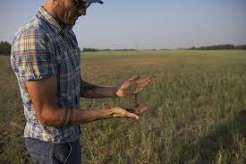
International agricultural leaders are gathering to address a growing food security challenge as extreme weather disrupts wheat and coffee production across major farming regions. The September 7, 2026 discussions are centered on emergency supply distribution models designed to move essential crops across national borders when severe drought, flooding, heat and other climate related events create sudden shortages.
Extreme Weather Is Reshaping Global Food Supply Planning
For farmers, climate disruption is rarely an abstract policy issue. It can arrive as a scorching afternoon that dries a field before harvest, weeks of rain that leave crops vulnerable to disease, or an unexpected cold spell that damages plants at a critical stage of development. When these events occur across major producing regions at the same time, their effects can travel far beyond the farm.
Wheat and coffee illustrate two very different sides of the challenge. Wheat is a staple food for billions of people and plays a major role in bread, flour and many processed foods. Coffee is a globally traded agricultural commodity that supports millions of farmers, workers and businesses. A production shock in either sector can influence prices, trade flows and household budgets.
At the summit, agricultural leaders are focusing on how countries can respond before a local crop failure becomes a wider international supply crisis. The proposed approach places greater attention on emergency reserves, coordinated purchasing, regional distribution networks and mechanisms for sharing supplies between nations during periods of severe disruption.
Why Wheat Shortages Could Have Broad Consequences
Wheat occupies a particularly important position in global food security because it is consumed directly by households and is also a key ingredient in commercial food production. When harvest expectations decline, governments and businesses can face pressure to secure alternative supplies quickly.
Extreme heat can reduce grain development, while drought can limit water availability during important stages of crop growth. Heavy rainfall can create a different set of problems by damaging fields, delaying harvests and affecting grain quality.
The risk becomes more complicated when several producing countries experience unfavorable conditions within the same growing season. International buyers may compete for a smaller pool of available wheat, potentially increasing prices and putting additional pressure on countries that depend heavily on imports.
That is why summit discussions are looking beyond individual national reserves. A country may have adequate supplies during an ordinary year but still face serious difficulties if a major weather event disrupts domestic production and international markets simultaneously.
Emergency Food Distribution Could Become More Coordinated
One proposal receiving attention is a more coordinated international system for emergency agricultural supplies. Rather than allowing each country to respond independently after a shortage becomes severe, participating governments could establish clearer procedures for identifying shortages, releasing reserves and directing shipments toward the areas facing the greatest need.
A functioning model would require accurate information and rapid communication. Governments would need reliable crop forecasts, updated reserve information and transportation data. They would also need agreed rules determining when an emergency distribution mechanism should be activated.
Potential elements could include:
- Shared monitoring of crop conditions and weather related production risks
- Emergency grain reserves that can be released during severe shortages
- Regional agreements for temporary food supply assistance
- Faster customs and transportation procedures for emergency agricultural shipments
- Improved communication between governments, farmers, traders and humanitarian organizations
The objective is not to replace normal agricultural trade. Instead, emergency systems could provide a safety mechanism when conventional markets struggle to respond quickly enough to an unexpected production shock.
Coffee Farmers Face a Different Kind of Climate Pressure
Coffee presents another dimension of the agricultural challenge. Coffee plants are sensitive to temperature, rainfall patterns, pests and disease. Many producers are small farmers whose livelihoods depend heavily on annual harvests.
For a coffee growing community, a difficult season can mean more than a temporary reduction in exports. Lower yields can affect household income, employment and the ability of farmers to invest in the next crop. When production declines across multiple growing areas, international buyers can also face tighter supplies.
The result can eventually reach consumers. Higher costs at the production and distribution stages may contribute to increased retail prices, while businesses may need to adjust purchasing strategies or product offerings.
International agricultural policy therefore has to consider both food security and the livelihoods of farming communities. A strategy that protects global supply while leaving producers financially vulnerable would not provide a durable answer.
Farmers Need Support Before a Crisis Begins
Emergency distribution can help after a shortage develops, but agricultural leaders are also considering measures that can reduce vulnerability before extreme weather strikes.
Farmers can benefit from access to drought resistant crop varieties, improved irrigation, better soil management, weather forecasting and agricultural insurance. In coffee producing areas, farmers may also require support for shade systems, disease management and farming practices suited to changing temperature and rainfall conditions.
These investments can be difficult for small producers to finance on their own. International agricultural programs can therefore play an important role by connecting farmers with financing, technical knowledge and reliable market information.
The Food and Agriculture Organization of the United Nations provides extensive information on food security, agricultural production and climate related risks that can help policymakers assess these challenges.
Food Reserves Could Provide a Critical Buffer
Strategic food reserves are another important part of the discussion. Maintaining reserves has costs, including storage, transportation and spoilage management, but the expense can be justified when supplies are threatened by major disruptions.
The difficulty is determining how much food should be stored and where it should be located. A reserve that is too small may provide little protection during a major crisis. A reserve that is poorly distributed may also be difficult to move to affected populations when transportation networks are under pressure.
International cooperation could allow countries to coordinate reserve policies and identify strategic locations for emergency supplies. Such arrangements could be especially valuable for nations that depend heavily on imported wheat or other essential agricultural products.
Trade Rules Will Matter During a Supply Crisis
Emergency food distribution cannot work effectively without cooperation on trade. During periods of scarcity, governments may face domestic pressure to restrict exports in order to protect local consumers. While such measures can appear attractive in the short term, widespread export restrictions can make international shortages more severe.
Policy leaders are therefore considering how emergency agreements could maintain predictable trade routes while ensuring that vulnerable populations have access to essential food supplies.
The World Trade Organization provides a broader framework for international trade policy through its work on agricultural commerce and market access. Discussions around food security increasingly have to consider how trade rules interact with climate related production shocks.
Better Forecasting Could Give Governments More Time
One of the most practical lessons from recent agricultural disruptions is the value of early information. Governments cannot prevent every drought or flood, but they can prepare more effectively when they know that a significant production decline may be approaching.
Modern agricultural monitoring can combine weather observations, satellite imagery, field reports and crop assessments to identify potential supply problems. Earlier warnings give governments additional time to arrange alternative imports, review reserves and coordinate humanitarian assistance.
For consumers, this preparation may be invisible. A well managed emergency can look like nothing happened at all because supplies remained available on store shelves. Behind that stability, however, there may be months of planning and international coordination.
The Human Cost Behind Global Commodity Prices
Discussions about wheat and coffee often appear on economic charts as changes in production volumes, export figures or commodity prices. Those numbers represent real lives. A lower harvest can mean a farmer deciding whether there is enough income to repair equipment, pay workers or plant again next season.
For families already spending a large share of their income on food, a sudden increase in the price of wheat products can also force difficult choices. The same applies to communities whose employment depends on agricultural exports.
This human dimension is one reason international cooperation matters. Climate related crop losses do not respect political borders, and neither do the economic effects that follow them.
A More Resilient Food System Will Require Long Term Cooperation
The Global Food Policy Summit highlights a difficult reality facing agricultural policymakers in 2026. Climate related production shocks are becoming a central consideration in how countries plan food supplies, trade relationships and emergency response systems.
Wheat and coffee require different agricultural strategies, yet both demonstrate the same underlying problem. When weather conditions become less predictable, relying entirely on normal harvest cycles and conventional trade patterns can leave countries exposed.
We believe the most practical response combines preparedness with investment. Emergency reserves can provide immediate protection. Coordinated trade can move supplies where they are needed. Better forecasting can give governments valuable preparation time. Support for farmers can strengthen production capacity before the next crisis arrives.
The goal should not simply be to respond faster when shelves begin to empty. It should be to build an international food system capable of absorbing serious agricultural shocks without placing an unbearable burden on farmers or families.
For millions of people, the success of these policies will ultimately be measured in ordinary moments: bread remaining affordable at a neighborhood bakery, coffee farmers receiving a fair opportunity to recover after a difficult harvest, and families being able to purchase essential food without fearing the next weather disaster. Those outcomes may depend on decisions being made far from the fields, but their consequences will be felt directly by the people who grow, sell and consume the world’s food.