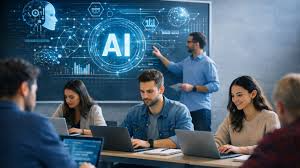
Higher education is moving quickly to keep pace with a fast changing AI industry. New survey findings showing that more than 51 percent of enterprise technology pipelines now rely on hybrid AI methods are forcing leading universities around the world to rethink computer science programs, with a sharper focus on model agnostic systems, serverless GPU infrastructure, and practical deployment skills.
Why universities are shifting now
The change is being driven by a simple reality: the tools students learn in class must still be relevant when they enter the job market. For years, many computer science programs leaned heavily on theory, general programming, and a narrow view of machine learning. That approach is no longer enough for employers who now expect graduates to understand how modern AI systems actually run across cloud environments, data pipelines, and production platforms.
Hybrid AI methods are at the center of that shift. These systems combine different model types, orchestration layers, and infrastructure choices rather than relying on one large model for every task. That means students need to know more than how to train a model. They need to understand deployment tradeoffs, latency, cost, governance, and how to move between tools without rebuilding everything from scratch.
What hybrid AI means for learning
Hybrid AI is not just a buzzword. In practice, it often means combining traditional machine learning, large language models, retrieval systems, rules based logic, and cloud compute strategies to solve real business problems. For students, that requires a broader technical foundation. A graduate who can only describe model architecture on paper may struggle in a setting where an enterprise team needs fast, efficient, and flexible production systems.
That is why universities are putting greater emphasis on model agnostic design. Rather than teaching students to depend on one specific provider or one single class of model, educators are beginning to focus on transferable concepts. Students are being asked to think about how systems behave across platforms, how to choose the right model for the job, and how to keep a project adaptable when the technology stack changes midstream.
Serverless GPU systems enter the classroom
One of the most important signs of change is the growing attention to serverless GPU infrastructure. In enterprise settings, these systems let teams access high powered compute without managing physical hardware or constantly reserved capacity. That is especially useful for AI workloads that rise and fall over time, such as training bursts, inference spikes, and batch processing jobs.
For universities, this shift has practical consequences. Students can no longer stop at writing code that runs on a laptop or a static lab machine. They need experience with distributed computing, cloud based acceleration, and the kinds of resource management decisions that shape real deployments. A modern AI engineer is increasingly expected to understand performance, scale, and operational cost in the same breath as accuracy.
What employers are asking for
Industry demand is helping drive the curriculum reset. Employers want graduates who can move between research and production without needing months of retraining. They want engineers who can work with changing model ecosystems, support business teams, and make technical choices that fit budget and compliance requirements. In short, they want people who understand how AI behaves in the messy reality of enterprise work.
That demand has changed what counts as job ready. A strong candidate today may need to explain how a model is routed, monitored, updated, and secured in a live environment. They may also need to understand how to balance speed with cost, and how to design systems that remain useful even if the underlying model changes. Universities that ignore those expectations risk graduating students who are smart but underprepared for the jobs available to them.
The pressure on faculty and departments
For computer science departments, the shift is both exciting and difficult. Revising curriculum means more than adding one new course. It often requires rethinking degree structures, lab access, faculty training, industry partnerships, and how projects are assessed. Professors who built careers in one era of computing may now need to teach in a different one, with new expectations around cloud systems, AI orchestration, and deployment workflow.
That transition will not happen evenly. Some universities will adapt quickly because they already have strong ties to industry and access to modern infrastructure. Others will move more slowly because of budget limits, staffing gaps, or institutional caution. But the direction is clear. The schools that want to stay competitive will need to make hybrid AI engineering part of the core academic experience rather than an optional specialty.
What this means for students
For students, the changes may feel demanding, but they also open a wider range of opportunities. A curriculum built around hybrid AI systems can prepare graduates for roles in cloud engineering, machine learning operations, platform architecture, applied AI, and technical product development. It also gives them a more realistic understanding of how technology is built and maintained inside organizations.
There is a deeper benefit too. When students learn model agnostic thinking, they learn flexibility. When they study serverless GPU systems, they learn efficiency. When they work across changing tools and environments, they learn how to solve problems rather than memorize a single workflow. Those are the habits that matter in a field where the tools keep changing but the need for good judgment remains constant.
A broader shift in higher education
This is not only a computer science story. It is a sign that higher education is being pulled closer to the pace of industry. Universities have long balanced timeless fundamentals with current practice, but the speed of AI adoption is making that balance harder to maintain. If over half of enterprise pipelines are already using hybrid AI methods, then schools cannot afford to treat those methods as future possibilities. They are already part of the present.
The most successful institutions will likely be those that keep their academic standards while making room for real world systems thinking. That means teaching algorithms, but also teaching deployment. It means studying theory, but also using live infrastructure. It means preparing students not just to understand AI, but to work with it responsibly in complex environments.
What comes next
The next phase will likely bring more partnerships between universities and technology firms, more cloud based labs, and more courses built around practical AI workflows. We may also see greater attention to ethics, governance, and sustainability, since enterprise AI is no longer only about what can be built but about how it should be built and maintained. Those questions will shape the next generation of engineers as much as any coding exercise.
This curriculum shift is a reminder that education is not standing still. It is being pulled forward by the people and systems it serves. Students entering computer science today are stepping into a field that expects fluency across models, infrastructure, and real business constraints. Universities are adapting because they have to, but the change may ultimately produce a more capable, more flexible generation of AI engineers.
Readers interested in the wider technical and academic backdrop can follow the U.S. National Science Foundation for research funding trends and the Association for Computing Machinery for computer science education and professional standards.