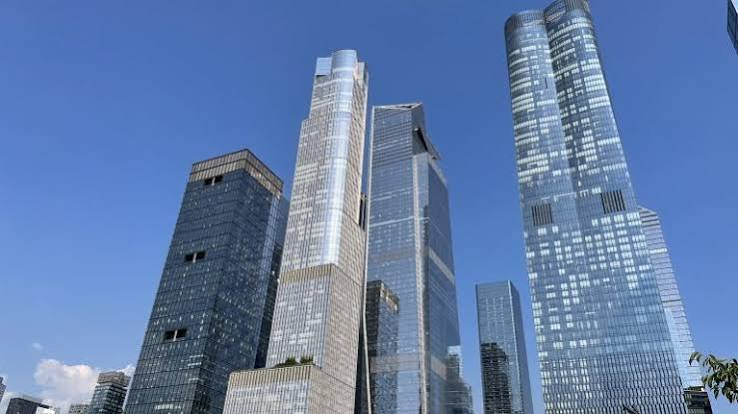
Global real estate investment has crossed the $1 trillion threshold, marking a significant shift in commercial property markets as institutional investors respond to stabilizing interest rates, improving financing conditions and new opportunities created by technology. From office towers and logistics facilities to residential developments and data centers, capital is moving across borders again, giving the property industry a stronger sense of direction after several difficult years.
A Major Milestone for Global Property Markets
Passing the $1 trillion mark signals renewed activity across international real estate markets. Investors that previously held back because of expensive borrowing costs are finding greater clarity as interest rate expectations become more stable in several major economies. That clarity matters because real estate transactions depend heavily on financing costs, property valuations and expectations about future rental income.
We are seeing a market that is becoming more selective rather than simply more aggressive. Large investment firms, pension funds, insurance companies and private capital managers are assessing properties according to long term cash flow, location, operating efficiency and their ability to adapt to changing patterns of work and consumption.
The result is a more complicated recovery than the property booms of previous cycles. Capital is returning, but investors are not treating every building or every market equally. Properties with reliable tenants, strong infrastructure and exposure to structural demand are attracting particular attention.
Why Stabilizing Interest Rates Matter So Much
Interest rates sit at the center of the real estate investment equation. When borrowing costs rise sharply, property values can come under pressure because investors need higher returns to justify purchasing assets. Higher financing expenses can also make acquisitions less attractive and reduce the amount buyers are willing to pay.
As interest rate conditions stabilize internationally, investors gain greater visibility into financing costs. That does not mean borrowing has returned to the exceptionally cheap conditions seen during the previous decade. Instead, the improved predictability allows institutional investors to model transactions with greater confidence.
For commercial property owners, this shift can also provide breathing room. Refinancing remains a major issue for assets purchased or financed when debt costs were considerably lower. Owners now have to balance refinancing expenses against rental income, occupancy rates and current property valuations.
Capital is becoming more disciplined
Institutional investors are increasingly examining the quality of income generated by an asset rather than relying solely on expectations of rising property prices. Buildings with strong occupancy, modern facilities and dependable tenants can offer a clearer investment case than properties requiring extensive renovation or facing uncertain demand.
This approach is particularly visible in sectors where demand is supported by long term economic changes. Logistics facilities benefit from distribution networks and online commerce. Data centers are benefiting from growing demand for computing infrastructure. Residential property remains closely tied to housing shortages and population growth in many cities.
Cross Border Acquisitions Are Adding Momentum
Another important feature of the recovery is the return of cross border commercial property transactions. International investors are once again examining opportunities outside their domestic markets, seeking diversification as well as access to regions with stronger rental growth or attractive valuations.
Cross border investment can bring substantial amounts of capital into cities that need redevelopment and modern commercial infrastructure. A major acquisition can also generate activity for construction companies, property managers, financial institutions, architects and local service businesses.
At the same time, international acquisitions require careful analysis. Currency movements can change investment returns, while tax rules, property regulations and political conditions vary significantly between countries. Investors therefore need to evaluate not only the building itself but also the wider economic environment surrounding it.
For local property markets, the arrival of foreign capital can be beneficial, but it can also increase competition for desirable assets. That makes transparency, responsible financing and effective regulation increasingly relevant as international capital flows expand.
PropTech Is Changing How Investors Evaluate Property
Technology has become another major factor behind the changing investment environment. Property technology, commonly known as PropTech, is being used throughout the real estate investment process, from identifying potential acquisitions to monitoring building performance after a transaction is completed.
Modern investment platforms can combine property records, rental information, market data and financial analysis to help investors compare assets more efficiently. Artificial intelligence and advanced analytics are also being applied to forecasting, tenant analysis, maintenance planning and portfolio management.
For building owners, technology is increasingly connected to operating costs. Smart meters, connected building systems and automated maintenance tools can provide information about energy consumption, equipment performance and occupancy patterns. That information can help managers identify inefficiencies before they become expensive problems.
Data is becoming part of the property itself
A modern commercial building is no longer evaluated only by its location, square footage and appearance. Investors are increasingly interested in the quality of its digital infrastructure, energy performance and ability to support technology intensive tenants.
This is particularly relevant for office buildings. Tenants increasingly expect reliable connectivity, efficient climate control, secure access systems and flexible workspaces. A property that cannot accommodate these requirements may require substantial capital investment even if its physical location remains attractive.
Data Centers and Logistics Property Stand Out
Some of the strongest areas of institutional interest are connected to the infrastructure supporting modern businesses and consumers. Data centers have become increasingly important as companies require more computing capacity for cloud services, artificial intelligence and digital applications.
Logistics real estate is also benefiting from changes in supply chains and consumer purchasing behavior. Warehouses located close to major population centers can offer strategic value because businesses need faster and more reliable delivery networks.
These sectors demonstrate how real estate investment is increasingly connected to the wider economy. Investors are not simply buying physical structures. They are purchasing access to infrastructure that supports commerce, technology and everyday consumption.
Office Property Remains a Complicated Story
The recovery in global real estate investment does not mean every sector has returned to normal. Office property continues to face questions about occupancy, workplace patterns and the future demand for traditional corporate space.
Some older office buildings may require expensive upgrades to remain competitive. Others may be converted into residential, hospitality or mixed use developments where local regulations and economics make such projects practical.
Prime buildings in major business districts can still attract strong tenants, particularly when they provide modern facilities and convenient access to transportation. The larger challenge is determining which properties can maintain their value as companies continue adjusting their workplace strategies.
Residential Real Estate Remains Closely Watched
Residential property represents another important part of the global investment market. Housing demand remains strong in many major cities, while limited supply continues to create affordability challenges for residents.
Institutional investors are watching rental housing because recurring rental income can provide a relatively predictable component of a diversified portfolio. However, housing is also politically and socially sensitive. Large scale institutional ownership can generate debate over affordability, rent levels and access to homes.
For communities, the quality of investment matters as much as the amount of capital involved. New housing construction, renovation of neglected properties and investment in infrastructure can create tangible benefits. By contrast, strategies focused primarily on short term price increases may provide fewer benefits to residents.
What the $1 Trillion Threshold Means for Investors
The milestone provides evidence that global property markets are attracting substantial institutional capital again, but it should not be interpreted as a guarantee of rising values across every market.
Investors still face significant risks. Financing costs can change, currencies can fluctuate, economic growth can weaken and geopolitical tensions can affect international capital flows. Construction costs also remain an important consideration for developers planning new projects.
Investors evaluating opportunities may therefore focus on several practical factors:
- Long term rental income and tenant quality
- Local supply and demand conditions
- Debt costs and refinancing requirements
- Energy efficiency and building operating expenses
- Digital infrastructure and technology readiness
- Currency and regulatory risks in international transactions
These considerations help explain why the current investment cycle is likely to be defined by selectivity. Large amounts of capital can enter the market without producing uniform gains across all property types.
What the Recovery Means for Cities and Businesses
Greater real estate investment can have effects far beyond investment portfolios. When capital funds new construction, redevelopment and infrastructure, cities can gain modern workplaces, housing, warehouses and technology facilities. Construction activity can also support employment and demand for professional services.
Businesses benefit when commercial property markets provide suitable space at sustainable costs. Modern logistics facilities can improve distribution, while high quality offices can help companies attract employees. Technology focused developments can also strengthen regional business ecosystems.
But the social outcome depends heavily on how investment is managed. Rapid property appreciation can make housing and commercial space less affordable for local residents and smaller businesses. Strong investment therefore needs to be considered alongside planning, infrastructure and housing policies.
A New Phase for Global Real Estate
Crossing $1 trillion represents more than a headline figure. It reflects a property market adapting to a new combination of financing conditions, technological change, investor expectations and international capital flows.
We should expect institutional investors to remain selective as they assess where sustainable returns can be generated. Stabilizing interest rates may provide greater confidence, while PropTech can give investors better tools for evaluating and managing assets. Cross border acquisitions can add liquidity, but they also introduce additional currency, regulatory and geopolitical considerations.
The most important question is not simply how much money enters global real estate. It is where that money goes and what it builds, improves or replaces. If capital continues moving toward productive infrastructure, housing, logistics, technology facilities and efficient commercial buildings, the current investment recovery could have consequences that extend well beyond financial markets.
For investors, property owners, businesses and ordinary residents, the next phase will be defined by the quality of those decisions. The $1 trillion benchmark shows that institutional confidence is returning, but the longer term health of global real estate will depend on whether this capital creates durable value in the cities and communities where people actually live and work.