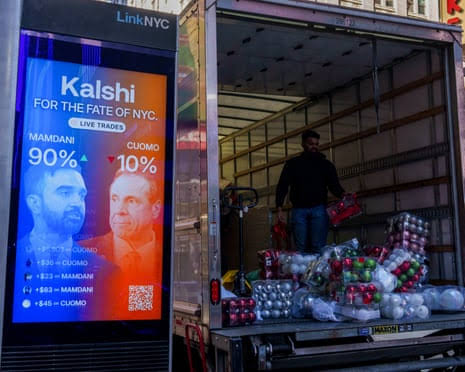
October 20, 2026 | Social media networks and online prediction markets are facing heightened regulatory scrutiny as governments and public institutions confront growing concerns about automated content moderation, election integrity, and the influence of digital platforms on public decision making. The questions are increasingly urgent: who should be responsible when misleading claims spread rapidly, how should platforms explain decisions made by automated systems, and what safeguards are necessary when online predictions can shape public perceptions of political events?
For ordinary users, these debates are not abstract policy disputes. A voter scrolling through a social feed may encounter an invented claim presented as breaking news. Someone checking the odds on a prediction platform may interpret a changing market price as evidence that a political outcome has become more likely. Both experiences can influence judgment, even when the information behind them is incomplete, distorted, or misunderstood. Regulators are therefore examining how digital services manage information, disclose risks, and respond when their systems affect elections and public trust.
Why Prediction Markets Have Attracted Greater Attention
Prediction markets allow participants to trade contracts linked to the likelihood of future events. Depending on the platform and applicable rules, those events may include election outcomes, economic indicators, policy decisions, or developments in public life. Prices can change as participants respond to new information, personal expectations, and the behavior of other traders. Supporters argue that these markets can aggregate scattered knowledge and offer a useful snapshot of collective expectations.
Yet a market price is not a guarantee of what will happen. It reflects the conditions of a particular market, including who participates, how much money is available, how the contract is defined, and what information traders believe. A price may be mistaken for a reliable forecast even when trading activity is limited or a market is vulnerable to manipulation. In a politically charged environment, that distinction matters.
Consider a voter who sees a candidate’s chances rising sharply on a popular platform. Without context, the movement may appear to confirm a narrative that the candidate is gaining unstoppable momentum. But the change could reflect a small number of trades, a new poll, a rumor, or a temporary reaction to an event. If the same movement is repeatedly shared across social networks, the original uncertainty can disappear from the conversation, leaving a misleading impression of certainty.
Regulatory questions become more complicated when prediction markets involve financial stakes. Authorities may need to determine whether a contract falls under existing derivatives or gambling laws, which agency has jurisdiction, how participants are protected, and whether trading rules adequately address fraud and manipulation. The legal treatment differs across countries and can depend on the design of the product rather than the label a platform uses to describe itself.
Election Integrity Is About More Than False Posts
Election integrity depends on the public’s ability to access accurate information about candidates, voting procedures, counting processes, and official results. Social media services can help election authorities distribute timely guidance, but the same networks can also carry fabricated documents, deceptive videos, impersonation accounts, and misleading claims about where or when people can vote.
Automated systems can identify some of these problems at a scale that would be impossible for human reviewers alone. They can flag repeated copies of known false claims, detect coordinated posting patterns, and prioritize content that may require urgent review. However, automation also creates risks. A system can miss a misleading post written in a less widely supported language, mistake satire for a threat, or remove legitimate reporting that documents harmful material for public awareness.
These errors have real consequences. Removing authentic information about an election can undermine public debate, while leaving coordinated deception untouched can discourage participation or create confusion. Smaller language communities and marginalized groups may face particular disadvantages if moderation systems are trained on limited data or fail to understand local political context. A system that performs well in one country cannot simply be assumed to work fairly everywhere.
Automated Content Moderation Faces Questions of Transparency
Social platforms rely on a mixture of automated detection, human review, user reports, and rules governing what people can publish. The balance varies by service and type of content. During elections, the volume of posts can increase sharply, placing pressure on systems expected to distinguish between legitimate disagreement, factual error, coordinated manipulation, and direct attempts to mislead voters.
Regulators are increasingly concerned with whether platforms can explain the principles behind important moderation decisions. Transparency does not necessarily require companies to publish every detail of their detection systems, since doing so could help malicious actors evade safeguards. It does require meaningful information about platform rules, the broad operation of automated tools, error correction, appeals, and the steps taken to assess risks during major public events.
For users, an understandable appeals process is especially important. A journalist whose account is restricted while reporting on election misinformation should have a reasonable way to challenge the decision. A person whose post is removed should be told which rule was applied and how to request a review. At the same time, platforms need procedures for addressing coordinated abuse without allowing appeals to become a simple mechanism for delaying legitimate enforcement.
Independent scrutiny can help reveal whether written policies match real outcomes. Public reporting on content removals, restored accounts, response times, and the performance of automated systems can help researchers identify recurring weaknesses. Meaningful assessment should also consider differences across languages and regions, rather than relying only on broad global averages that may conceal serious local problems.
Regulators Face Different Laws and Competing Responsibilities
There is no single global rulebook governing social media moderation and prediction markets. Governments are approaching these services through different legal traditions, regulatory institutions, and public priorities. Some focus on financial market integrity and consumer protection. Others concentrate on online safety, political advertising, privacy, or the responsibilities of large digital platforms. The challenge is to ensure that existing laws remain effective as technology changes without creating overlapping or contradictory obligations.
In the United States, oversight can involve financial regulators, election authorities, consumer protection agencies, and courts, depending on the activity in question. The legal treatment of a prediction contract may differ from that of an ordinary social media post. In other jurisdictions, digital services may face broader obligations to assess systemic risks, explain moderation practices, or respond to illegal content. These differences can complicate compliance for companies operating across national borders.
The Commodity Futures Trading Commission is a key United States authority for derivatives markets. Its role illustrates why prediction platforms that offer contracts tied to future events may raise questions beyond ordinary online publishing. Regulators must examine the substance of a product, the rules governing participation, and the risks posed to market integrity rather than assuming every platform fits neatly into one category.
International coordination can help address problems that cross borders. A misleading election video can be created in one country, amplified by accounts in several others, and viewed by voters thousands of miles away. A trading platform may serve users in multiple jurisdictions even when its legal structure is based in one location. Cooperation among regulators can help clarify responsibilities, share information about manipulation, and reduce opportunities for companies or bad actors to exploit gaps between national systems.
Protecting Free Expression While Reducing Harm
Stronger oversight also raises legitimate concerns about freedom of expression. Rules that are vague or excessively broad can encourage platforms to remove controversial but lawful speech rather than risk penalties. Governments could also misuse content regulation to suppress criticism, disadvantage political opponents, or pressure services into promoting official narratives. Safeguards against these outcomes are essential if regulation is to strengthen public trust rather than weaken it.
Effective policy should distinguish between disagreement and demonstrable deception, while providing clear procedures for reviewing difficult cases. Independent courts, transparent legal standards, meaningful appeals, and public accountability can help prevent enforcement from becoming arbitrary. Where a platform restricts content, the reason should be communicated clearly enough for affected users to understand and challenge the decision.
We should also recognize that not every inaccurate statement requires the same response. A mistaken personal opinion is different from a fabricated notice designed to send voters to the wrong polling location. A speculative market prediction is different from deliberate trading activity intended to create a false impression of public confidence. Rules that account for intent, reach, foreseeable harm, and available evidence are more likely to be proportionate than policies that treat all questionable information alike.
What Responsible Platforms Should Do Before Election Day
Although regulatory requirements vary, digital platforms can take practical steps to improve election safeguards and public accountability. Preparation should begin well before voting starts, when companies have more time to test systems, consult election experts, and identify weaknesses. Waiting until a misleading claim has reached millions of people leaves moderators and public authorities struggling to contain damage that could have been reduced earlier.
Responsible preparation should include clear election policies, reliable channels for official voting information, trained reviewers who understand local languages, and processes for escalating credible threats. Companies should test automated moderation tools for uneven performance and provide human review for consequential decisions. Prediction platforms should communicate the limits of market prices, maintain rules against manipulation, and explain how contracts are settled when outcomes are disputed or definitions are unclear.
Several practices deserve particular attention:
- Clear public explanations: Tell users what election related rules apply and why certain content or trading behavior may be restricted.
- Independent review: Allow qualified researchers and auditors to assess relevant risks while protecting private information and legitimate security measures.
- Accessible appeals: Give users a practical way to challenge mistaken moderation decisions and receive a timely response.
- Regional expertise: Invest in local language support and knowledge of electoral procedures, rather than depending entirely on systems developed for other countries.
- Reliable incident reporting: Publish meaningful information about major failures, corrective action, and the effectiveness of election safeguards.
These measures cannot eliminate every false claim or prevent every attempt at manipulation. They can, however, make platforms more accountable and help authorities respond before a problem spreads widely. Strong safeguards should be measured by their actual performance, not simply by the existence of a policy document or a public promise.
What Users Can Do to Judge Online Claims More Carefully
Regulation alone cannot resolve every problem in a crowded information environment. Users also benefit from practical habits that separate evidence from speculation. Before sharing a dramatic election claim, readers can check whether a credible news organization or election authority has independently confirmed it. Images and videos should be examined in context, since authentic material can be presented with a false date, location, or explanation.
Prediction market prices require similar caution. A market may provide one indication of what participating traders expect, but it should not be treated as a substitute for verified election results, representative polling, or official information. Readers should consider market liquidity, the wording of the contract, and whether the price has changed because of reliable evidence or a burst of speculation. A confident looking number can still be wrong.
Users should also be wary of posts that pressure them to react immediately, claim that a result is certain before votes have been counted, or present a market movement as proof of wrongdoing without supporting evidence. Pausing to verify a claim can reduce the spread of rumors and protect people from financial decisions based on misleading information.
The Road Ahead for Digital Accountability
The heightened scrutiny facing prediction markets and social networks reflects a broader question about the power of digital systems over public life. Platforms can help people exchange information, examine competing views, and interpret uncertain events. Yet their design choices can also determine which claims gain attention, how quickly harmful material spreads, and whether users understand the difference between a forecast and a confirmed fact.
Regulators must respond with rules that are enforceable, proportionate, and grounded in evidence. Platforms must demonstrate that their moderation systems work in practice, that financial products are governed by appropriate safeguards, and that people can challenge consequential decisions. Researchers, journalists, civil society groups, and election officials can contribute by examining outcomes independently and identifying weaknesses that companies may overlook.
The goal should not be to eliminate uncertainty from political debate or prevent people from discussing possible outcomes. Democratic societies depend on open debate, and predictions will always be imperfect. The goal is to reduce deception, improve transparency, protect lawful expression, and make powerful digital services answerable for foreseeable harms.
As governments examine the responsibilities of social media networks and prediction platforms, the strongest approach will combine clear law with credible independent oversight and informed public participation. Election integrity depends on much more than removing false posts or policing financial contracts. It requires an information environment in which people can question claims, inspect evidence, understand uncertainty, and make decisions without being deliberately misled. Building that environment is a shared responsibility, and its success will be measured by whether public trust is earned through accountable conduct rather than demanded through regulation alone.