Residential buildings are becoming an increasingly important part of the global transition toward cleaner energy, with homeowners, policymakers, and construction companies placing greater attention on energy efficient renovations. On November 7, 2026, international building policy discussions highlighted growing activity in residential energy efficiency retrofits across Europe and North America, particularly through the installation of smart heat pumps, rooftop solar panels, and integrated home energy systems. The developments reflect a wider effort to reduce household energy consumption, lower heating costs, and limit carbon emissions without requiring homeowners to replace their entire properties.
For millions of households, the transition toward a more efficient home begins with practical concerns. Heating bills continue to influence household budgets, older buildings often lose substantial amounts of energy, and conventional heating equipment can contribute significantly to residential emissions. Modern renovation programs aim to address these challenges through improvements that make homes more comfortable while reducing their dependence on fossil fuels. However, the speed of adoption still depends on installation costs, government support, electricity prices, and access to qualified professionals.
Residential Energy Retrofits Become a Major Climate Policy Priority
Existing residential buildings represent a considerable opportunity for reducing energy consumption. Many homes were constructed before modern insulation standards and energy performance requirements became common. Poorly insulated walls, inefficient windows, outdated heating systems, and uncontrolled ventilation can result in unnecessary energy use throughout the year.
Energy efficiency retrofits address these problems through improvements to the building itself and the equipment used to operate it. Unlike new construction, which allows developers to incorporate efficient technologies from the beginning, residential retrofits must work within existing structures. This makes planning particularly important because every property has different insulation conditions, heating requirements, electrical infrastructure, and renovation costs.
International policy organizations increasingly recognize building renovation as an essential part of long term climate strategies. The International Energy Agency has identified building efficiency, electrification, and improved heating technologies as important components of efforts to reduce emissions and strengthen energy security.
The growing attention to residential upgrades also reflects a practical economic consideration. A home that requires less energy to maintain a comfortable indoor temperature can reduce household exposure to fluctuating energy prices. Over time, improvements to insulation, heating equipment, and electricity generation may also contribute to more predictable operating expenses.
Smart Heat Pumps Lead the Move Toward Cleaner Home Heating
Heat pumps are becoming one of the most closely watched technologies in residential energy modernization. Unlike conventional boilers and furnaces that generate heat through fuel combustion, heat pumps transfer existing thermal energy from outdoor air, the ground, or another suitable source into a building. This process can provide heating with substantially less electricity than traditional electric resistance heating.
Modern systems can also provide cooling during warmer months, making reversible heat pumps particularly useful in regions experiencing both cold winters and increasingly hot summers. Their ability to serve multiple purposes makes them attractive to homeowners considering long term improvements to their heating and cooling equipment.
The technology has advanced considerably, with newer systems offering improved temperature controls, better performance in colder conditions, and connectivity with household energy management platforms. Smart controls can monitor indoor temperatures, adjust heating schedules, and respond to changing electricity prices where suitable tariffs are available.
How Smart Controls Improve Residential Energy Management
Connected heat pumps can communicate with thermostats, energy management systems, and sometimes household batteries. This allows homeowners to manage heating demand more carefully instead of operating equipment at a fixed setting throughout the day.
For example, a household with a time based electricity tariff may schedule some heating activity during periods when electricity is cheaper. A properly configured system can also use thermal storage by maintaining comfortable indoor temperatures when renewable electricity is readily available and reducing unnecessary operation during expensive peak periods.
These capabilities can offer several practical advantages:
- More precise temperature control: Connected thermostats can adjust heating according to household schedules and individual comfort preferences.
- Lower unnecessary consumption: Automated settings can reduce heating when rooms are unoccupied or when indoor temperatures are already comfortable.
- Renewable energy coordination: Smart controls can help households use available solar electricity to operate heating equipment.
- Performance monitoring: Digital monitoring can help identify unusual energy consumption and potential equipment problems.
Nevertheless, smart technology does not automatically guarantee lower energy bills. System performance depends on equipment selection, building insulation, installation quality, electricity prices, and household behavior. Professional assessment remains essential before replacing an existing heating system.
Solar Integration Strengthens the Case for Energy Efficient Homes
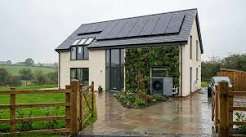
Residential solar installations are becoming another important part of the net zero housing discussion. Rooftop photovoltaic panels allow households to generate electricity directly from sunlight, potentially reducing the amount of power they need to purchase from the grid.
When solar panels operate alongside an electric heat pump, the two technologies can complement one another. Electricity generated during daylight hours can supply household appliances, charge a compatible battery, or support heating and cooling operations. This arrangement can improve the use of locally generated renewable electricity.
Battery storage adds another level of flexibility. Rather than using all available solar electricity immediately, homeowners can store some of the excess generation for later consumption. Depending on system capacity, electricity tariffs, weather conditions, and household demand, stored energy may help cover evening consumption and reduce reliance on grid electricity.
Why Combining Solar Panels and Heat Pumps Matters
Installing individual energy technologies can provide benefits, but coordinating them may produce a more effective household energy system. A solar installation generates electricity, a heat pump uses electricity efficiently for heating and cooling, and a battery can shift some energy consumption to different times of the day.
This combination is particularly relevant for homeowners planning a major renovation. Instead of making isolated equipment purchases, households can assess their future electricity needs and select compatible technologies.
However, solar and heat pump integration is not equally suitable for every property. Roof orientation, shading, available installation space, local weather, electrical capacity, and household consumption all influence the financial and technical results. Homeowners should compare expected annual generation with their actual energy requirements before committing to an installation.
Europe Advances Building Efficiency and Electrification Policies
European countries have continued to develop policies aimed at improving building energy performance and reducing dependence on fossil fuel heating. The European Union’s building efficiency framework places significant attention on renovating existing properties, improving energy standards, and encouraging cleaner heating technologies.
The European Commission’s broader electrification agenda also identifies heat pumps as an important technology for reducing fossil fuel consumption in buildings. Its 2026 policy direction includes an ambition to increase annual heat pump installations from approximately 2.4 million in 2025 to around 4 million by 2030.
However, progress differs considerably between individual countries. Electricity and natural gas prices, government incentives, construction standards, and the availability of experienced installers can influence adoption rates.
Some European markets have experienced strong interest in heat pumps, while others continue to face financial and practical obstacles. The United Kingdom, for example, has recorded slower growth in existing home installations than its longer term climate objectives require.
The country’s Climate Change Committee reported that approximately 52,000 heat pumps were installed in existing homes during 2025, representing an increase of 7 percent compared with 2024. The report also identified high electricity prices relative to gas, upfront equipment costs, and gaps in financial support as important barriers.
These figures illustrate why policy commitments must be supported by practical measures. Financial assistance, reliable installer networks, clear building regulations, and affordable electricity are necessary if residential electrification is to expand beyond households that can independently finance major renovations.
North America Explores New Opportunities for Home Energy Modernization
North America is also an important market for residential heat pumps and energy efficiency improvements. The United States and Canada have different climate conditions, building traditions, and energy policies, but both face opportunities to improve existing housing through better heating equipment, insulation, and renewable electricity generation.
In the United States, heat pumps have become increasingly established as an alternative to conventional heating equipment. More than 20 percent of American households now rely on heat pumps for space heating, according to the International Energy Agency’s 2026 Heat Pump Monitor.
However, the market has not experienced uninterrupted growth. US heat pump shipments declined by approximately 12 percent in 2025, reaching 3.64 million units. Economic conditions, financing concerns, and changing consumer demand influenced the market during that period.
The figures demonstrate that long term technology adoption does not always follow a straight upward path. Even when a heating system offers potential operating savings, homeowners may delay replacing functioning equipment because of installation expenses or uncertainty about future energy costs.
Older Homes Present Both Challenges and Opportunities
One of the largest opportunities in North America involves replacing aging air conditioning and heating systems with more efficient alternatives. Many existing properties already have electrical infrastructure and distribution systems that may support certain types of heat pump installations.
However, older homes can also require additional preparation. Insufficient insulation, air leakage, outdated electrical panels, and unsuitable ductwork may reduce system performance or increase installation expenses.
Canadian households face additional considerations because winter temperatures can fall considerably below freezing in many regions. Modern cold climate heat pumps are designed to operate under colder conditions, but equipment selection and backup heating arrangements must reflect the property’s location and heating requirements.
For homeowners, the most sensible approach is often to evaluate insulation, windows, heating equipment, and electrical capacity together rather than purchasing a new heating system without considering the condition of the building.
Financial Barriers Remain a Significant Obstacle
Despite the environmental and operational benefits of residential energy upgrades, affordability remains one of the biggest challenges. Heat pumps, solar panels, batteries, and insulation improvements can require substantial initial investment. For households with limited savings, the cost of a complete renovation may be difficult to manage even when the long term benefits appear attractive.
Government grants, rebates, low interest loans, and targeted assistance programs can help reduce these financial barriers. However, support arrangements differ between countries and sometimes change when governments revise their energy policies.
The International Energy Agency has highlighted the importance of stable policy frameworks, targeted financial incentives, and more accessible financing to encourage heat pump adoption. It has also identified the need to improve installer training and make reliable consumer information easier to obtain.
Another important consideration is the relationship between electricity and gas prices. A heat pump can use energy efficiently, but households may not achieve the expected financial savings if electricity remains substantially more expensive than natural gas on a comparable energy basis.
For this reason, governments must consider the wider energy pricing structure when developing residential electrification policies. Making efficient equipment available is only part of the solution. Households also need an affordable way to operate it.
Practical Steps Homeowners Can Take Before Starting a Retrofit
Homeowners interested in reducing energy consumption do not necessarily need to begin with an expensive technology purchase. A carefully planned sequence of improvements can help avoid unnecessary spending and produce better results.
Before beginning a renovation, property owners should consider the following priorities:
- Arrange an energy assessment: Identify where the property loses heat and which improvements offer the greatest potential benefits.
- Improve insulation: Address poorly insulated roofs, walls, floors, and windows where appropriate.
- Evaluate heating requirements: Consult a qualified professional about the size and type of heat pump suitable for the property.
- Review solar potential: Assess roof conditions, sunlight exposure, installation costs, and local electricity arrangements.
- Compare financial support: Check available government incentives, financing programs, and local renovation assistance.
- Consider future energy needs: Select compatible equipment that can work with batteries, smart controls, and other household technologies.
Taking these steps can help homeowners prioritize investments according to their actual needs rather than following technology trends without a clear financial or technical plan.
What the Net Zero Housing Transition Means for the Future
The growing attention to residential energy efficiency reflects a wider recognition that climate objectives depend partly on decisions made inside individual homes. Heating, cooling, insulation, and electricity consumption collectively influence energy demand and household emissions.
Smart heat pumps and rooftop solar systems offer promising opportunities, but their success depends on how effectively they are integrated into existing buildings and electricity networks. Governments must continue addressing affordability, installer shortages, technical standards, and the financial needs of lower income households.
There is also an opportunity for the construction and renovation industries. Rising demand for efficient heating equipment, insulation materials, solar installations, and home energy management systems could support skilled employment and encourage further technological development. Training programs will be particularly important as more households seek qualified professionals to assess and upgrade their properties.
For consumers, the transition should ultimately be measured by practical improvements rather than the number of technologies installed. A successful energy retrofit should provide a comfortable indoor environment, manageable operating costs, reliable equipment, and measurable reductions in unnecessary energy consumption.
Conclusion: Energy Efficient Homes Become Central to Global Climate Goals
The developments highlighted on November 7, 2026, reflect growing international attention to residential energy efficiency and the modernization of existing housing. Across Europe and North America, heat pumps, rooftop solar installations, smart controls, and improved insulation are becoming important parts of discussions about cleaner and more affordable homes.
Nevertheless, the transition remains uneven. High upfront costs, electricity pricing, building conditions, and inconsistent financial support continue to influence how quickly households can adopt these technologies. The experience of different markets shows that successful residential renovation requires more than ambitious climate targets. It requires accessible financing, dependable installation services, practical regulations, and clear information for consumers.
As governments and industry organizations continue developing their building efficiency strategies, the focus will increasingly shift toward making energy improvements affordable and achievable for ordinary households. The long term objective is straightforward: homes that use less energy, provide greater comfort, and contribute to a cleaner energy system without placing an unreasonable financial burden on the people who live in them.