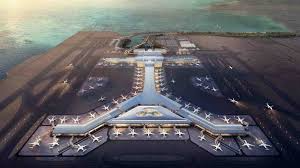
Qatar’s Hamad International Airport has quietly reshaped its role as a global hub by announcing a major expansion of flight operations on May 10, 2026, just weeks ahead of the peak summer travel season. The move is designed to absorb a surge of passengers heading to the Gulf, Europe, and Asia, and it will be felt by anyone passing through the sleek, light‑filled terminals on their way to a beach vacation, a family reunion, or a business meeting. For travelers already familiar with Hamad’s jewel‑box lounges, art installations, and efficient gates, the expanded schedule promises fewer holding patterns in the sky and fewer last‑minute schedule changes on the screen.
What the Expansion Actually Means for Travelers
The expansion is not just a handful of extra weekend flights; it reflects a strategic increase in the number of daily departures and arrivals, with additional slots allocated to key routes in Europe, South and Southeast Asia, and the Middle East. The airport’s planners expect to handle tens of thousands more seats per day by the start of June, pressing close to the edges of the existing runway and terminal capacity but still within a carefully managed window of safety and service. Passengers may see more early‑morning and late‑evening departures, more overlapping options for common city pairs, and more opportunities to find a connection that fits a family’s schedule.
For a family heading from Doha to London, or a business traveler catching a connection in Jakarta, the practical effect will be felt in the boarding‑pass app. Rather than a single daily flight with a rigid schedule, there will be multiple choices, with slightly different layovers, baggage allowances, and rest‑time options. For crews and ground staff, this expansion means tighter coordination, more frequent pushbacks, and busier gate‑change announcements, all of which can be taxing if not managed with care. The airport’s reputation for smooth transfers, however, gives many families and professionals pause to hope that the increase in volume does not come at the cost of comfort and reliability.
Design, comfort, and capacity in the same breath
Hamad International Airport has long prided itself on the balance between capacity and comfort. Its main terminal, with its soaring glass roof and desert‑inspired palette, was designed to feel calm even when crowded. The expansion announcement comes with assurances that the airport will not simply add flights as if they were extra cars on a highway; instead, it will fine‑tune the flow of people, luggage, and air traffic so that the human experience does not degrade as the number of seats rises.
Travelers who have walked through the airport’s art‑filled corridors, stopped at the indoor gardens, or relaxed in the family‑friendly play areas may notice subtler changes during peak season: more signs in additional languages, slightly longer queues at security and immigration, and more announcements for last‑minute gate changes. Behind the scenes, however, the airport is investing in better staffing, more efficient baggage‑handling systems, and real‑time data tools that can reroute passengers and optimize gate use when delays arise. The goal is to keep the airport’s signature blend of luxury and order intact, even under the pressure of more bodies and more bags.
Why Summer Travel Demands a Stronger Hub
Summer has long been the busiest time at Hamad International Airport. Families from the Gulf, the Middle East, and South Asia often time their trips to Europe, North America, and Southeast Asia around school holidays, while Europeans and Asians converge on the Gulf for cultural tourism, business conferences, and transit‑oriented vacations. The airport’s role as a connecting hub—linking flights between continents rather than just serving point‑to‑point routes—means that even a small increase in connections can ripple through the network, benefiting passengers who may not even set foot in Qatar.
The expansion is also a quiet signal of confidence in the broader travel recovery. After the turbulence of the early 2020s, when borders shifted, quarantine rules changed, and passenger numbers plummeted, Hamad’s management now bets that demand has stabilized into a new, higher baseline. The summer 2026 surge, they argue, will not be a one‑off spike but a sign of how deeply global travel has become embedded in people’s lives, from family‑roots visits to educational exchanges and work‑related itineraries.
Local and global benefits of the growth
For the people of Qatar, the expanded operations are not just about a quieter airport experience; they are about economic resilience. The aviation and tourism sectors anchor a large share of non‑energy economic activity in the country, providing jobs for thousands in security, retail, hospitality, and transport. The decision to grow capacity ahead of the summer season can be read as a commitment to sustaining that workforce and to drawing in more visitors who will spend money in local shops, restaurants, and hotels.
For international partners, the expansion offers a more predictable connecting point. Airlines that depend on Hamad as a hub for passengers transferring between continents gain more reliable slots, more consistent staffing, and better infrastructure for long‑haul operations. That stability can make the difference between a successful route network and one that stumbles under the weight of congestion or inefficiency. The airport’s management also emphasizes that the growth is being paired with sustainability initiatives—energy‑efficient lighting, water‑saving fixtures, and more robust recycling programs—to minimize the environmental footprint of each additional flight.
How the Airport Balances Comfort and Efficiency
One of the most delicate tasks in the expansion is preserving the airport’s reputation for comfort. Many travelers remember Hamad for its relatively short walks between gates, its multiple lounges, and its thoughtful layout that makes it easy to find a quiet place to rest. The challenge now is to add more flights and more people without turning the terminal into a crowded, echoing corridor.
To that end, the airport has announced plans to adjust its internal traffic flow, reconfigure seating areas, and improve wayfinding so that passengers can move through the space more quickly while still feeling guided and informed. The airport’s digital systems—flight‑status displays, mobile‑app alerts, and in‑terminal signage—are being tuned to handle the higher volume of information, reducing the number of last‑minute surprises that can cause stress and confusion. For families traveling with children, the airport also plans to expand dedicated family zones and nurse‑lounges, which have become a quiet but important part of the travel experience.
What to expect if you’re flying through Hamad this summer
For readers planning a trip through Hamad International Airport in the coming weeks, the expansion will likely be felt in the details rather than the headlines. There may be more flight options, which can make it easier to build a flexible schedule, but also a greater chance of hearing one’s gate change or one’s boarding time move slightly. The key will be staying connected—through the airport’s app, airline notifications, and in‑terminal screens—and arriving with a bit more buffer time, especially during peak hours.
Those who have traveled through the airport before may notice subtle shifts: more signage in multiple languages, slightly longer queues at security and immigration, and more staff patrolling the floor with headsets and rolling luggage. The airport’s expanded service offerings—more dining options, additional retail spaces, and upgraded lounges—will also help absorb the extra traffic, giving travelers more places to wait, eat, and recharge between flights.
Broader Implications for Global Air Travel
The decision by Hamad International Airport to expand its flight operations ahead of the summer season is more than a local story; it is a window into the evolving shape of global air travel. As demand recovers and stabilizes, airports are asked to balance a growing number of passengers with the need to keep the journey comfortable, safe, and predictable. The choices Hamad makes—about staffing, technology, layout, and sustainability—will be watched by other hubs that face similar pressures.
For travelers, the expansion is a reminder that even the busiest times of year can be navigated with preparation, patience, and a bit of flexibility. The airport’s growth reflects a broader truth: the world’s skies are fuller again, and the people in them are more connected than ever. For families reuniting after long separations, for professionals closing deals across time zones, and for students embarking on new chapters, the expanded operations at Hamad International Airport are less about concrete and steel and more about the quiet promise of a smoother journey.