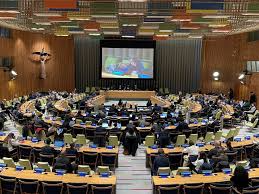
International Humanitarian Law Day is gaining new prominence in 2026, as high level discussions in Qatar and at the International Committee of the Red Cross highlight growing global support for a unified observance that would strengthen protections for civilians in modern armed conflicts. On May 9, 2026, delegates, legal experts, and humanitarian leaders gathered in Doha and Geneva to call for updated legal frameworks that recognize the realities of drone warfare, cyber attacks, urban fighting, and the blurred lines between combatant and civilian life. The day is no longer a symbolic footnote; it is becoming a practical rallying point for rethinking how the world safeguards human dignity in times of war.
Why the day is resonating now
The renewed push for a formalized International Humanitarian Law Day reflects a quiet but widespread unease about how conflicts are being waged today. Bombings that level entire city blocks, strikes that disrupt power grids and water supplies, and the use of explosive weapons in densely populated areas have made the rules of war feel distant from the lived experience of civilians. In this context, the call for a dedicated day of awareness and reflection is not just legal housekeeping; it is an attempt to reconnect the abstract language of treaties with the sensory realities of people caught in the crossfire.
For those who have fled homes under artillery fire, who have lost family members to unmarked airstrikes, or who have watched hospitals and schools targeted, the phrase “humanitarian law” can feel both essential and fragile. The global traction behind the observance is, in part, a response to the sense that the world’s conscience has not kept pace with the speed and scale of modern warfare.
Qatar talks and the push for updated rules
In Doha, the high level meetings brought together representatives from states, multilateral organizations, and international humanitarian groups. The conversations centered on how the Geneva Conventions and their Additional Protocols can be adapted to clarify limits on the use of autonomous weapons, cyber operations, and long range precision strikes that may still cause disproportionate harm to civilians. Delegates also discussed better accountability mechanisms for violations, including clearer pathways for investigations and referrals to international courts or tribunals.
Participants stressed that any updates cannot be drafted in isolation. They must be grounded in the experiences of people on the ground, including displaced families, medical workers, and local civil society groups. The goal is not to create a new treaty overnight, but to build a shared understanding that international humanitarian law is not a static archive; it must evolve as weapons and tactics evolve.
Key themes emerging from the Qatar discussions
- Clarifying the rules on the use of autonomous weapons and artificial intelligence in targeting.
- Strengthening protections for essential infrastructure such as hospitals, water systems, and power grids.
- Defining limits on cyber attacks that could indirectly cause mass civilian harm.
- Improving monitoring, reporting, and accountability for violations, including the role of digital evidence.
- Encouraging more states and armed groups to ratify and implement existing humanitarian law.
The Red Cross: a moral compass in a shifting landscape
The International Committee of the Red Cross has long served as a quiet but steady presence in conflicts around the world, often operating where governments and media cannot. In its meetings marking International Humanitarian Law Day, the organization has framed the observance as both a reminder and a warning. The reminder is that the rules exist, that they are respected by many parties, and that they have saved lives. The warning is that those same rules are being tested in ways that were barely imaginable when the original conventions were drafted.
Red Cross officials described field missions where medical teams treat patients in basement clinics, where ambulances struggle to reach the wounded because roads are destroyed or blocked by checkpoints, and where families are separated by front lines that shift with little notice. In these contexts, the Red Cross does not just invoke the law; it depends on it. The call for a global day of observance is an effort to make that dependence visible to the broader public, not just to negotiators and lawyers.
Human dignity at the heart of the debate
What unites the discussions in Qatar and the statements from the Red Cross is a focus on human dignity, not just legal technicalities. International humanitarian law is, at its core, about drawing lines that even warring parties must not cross: the line between civilian and combatant, the line between necessary military action and indiscriminate killing, the line between destruction and cruelty. The observance of International Humanitarian Law Day is an opportunity to reaffirm that those lines are not optional.
For civilians in conflict zones, these principles are not abstract. They are the difference between being allowed to evacuate before bombardment, between being able to bury the dead respectfully, and between having access to clean water and medical care. The emotional weight of the day lies in the stories behind the statistics: the child whose school is bombed, the elderly person left without insulin, the surgeon operating by the light of a phone. The global push for the observance is, in part, an effort to keep those stories at the center of the debate.
From symbolic gestures to concrete commitments
Establishing a unified global observance of International Humanitarian Law Day is more than a ceremonial gesture. It is a way of institutionalizing reflection, training, and public education. Some countries already hold national events, workshops, and simulations for armed forces and policymakers; the global initiative aims to align these efforts into a common calendar and shared messaging. The hope is that repeated, coordinated observances will make the rules more visible, more familiar, and less expendable when the next crisis begins.
For armed forces, the day can serve as a benchmark for doctrine, training, and operational planning. For universities and law schools, it offers a chance to bring students into the practice of applying the Geneva Conventions to real world scenarios. For journalists, artists, and filmmakers, it provides a framework for exploring how war is represented in media and culture. The reach of the day is not limited to the battlefield; it extends into the way societies think about and prepare for conflict.
Challenges in building global consensus
Even as the observance gains traction, the path to a truly unified day is not straightforward. States have different relationships with international humanitarian law, shaped by their own military doctrines, security concerns, and political calculations. Some view the rules as constraints; others see them as tools that can legitimize certain forms of intervention or intervention. Negotiating a common understanding of the day’s purpose and messaging will require diplomacy, patience, and a willingness to disagree without dismissing the underlying principles.
Non state armed groups pose another challenge. Many of them operate outside formal state structures and may not recognize the same legal frameworks. Yet they are central to how conflicts are fought on the ground. The discussions around International Humanitarian Law Day are beginning to include more dialogue with these groups, not to endorse them, but to make clear that the rules of humanity are not negotiable for anyone who seeks to claim a moral or political foothold.
Why civilians should care about this day
For many people who are not directly affected by war, the idea of International Humanitarian Law Day can feel distant. But the principles it represents touch everyone who lives in a world shaped by conflict, migration, and the movement of ideas and images. When diplomatic talks stall, when social media fills with graphic footage, and when political leaders talk about “doing whatever it takes,” the rules of humanitarian law are the quiet voice that says, “There are limits.”
Ordinary citizens have a role in sustaining that voice. They can push for transparency in military operations, support independent media and human rights groups, and hold their own governments accountable for adherence to international standards. The observance of the day offers a concrete way to engage with these issues without waiting for the next crisis to unfold.
The emotional and moral core of the movement
Behind the diplomatic language and legal jargon is an emotional core. The push for International Humanitarian Law Day is, in many ways, a collective effort to preserve a shared understanding of what it means to treat human beings humanely, even in the chaos of armed conflict. It is a recognition that the way wars are fought affects how generations remember them, how communities recover, and whether the cycle of retaliation can be broken.
For survivors, the day can feel like a small but meaningful acknowledgment that the world has not forgotten their pain. For families of the missing, for former detainees, and for those who have lived through the fear of bombardment, the observance can be a moment of recognition. The global traction behind the day suggests that the impulse to protect rather than destroy is not entirely eclipsed by the incentives to win at any cost.
What this could mean for the future of warfare
If International Humanitarian Law Day becomes a firmly established global observance, it may begin to shape how new conflicts are understood from the outset. Instead of treating the rules as a set of constraints that are invoked only after the fact, states and armed groups may begin to integrate them into planning, training, and public communication. The day could become a reference point for legal and moral reflection, not just for those who live in conflict zones, but for anyone with the power to influence how wars are conducted.
The hope, as many delegates have said in Qatar and Geneva, is that the day will not only be about remembrance, but also about prevention. By making the rules more visible and more deeply embedded in national and international decision making, the world may find ways to curb the worst excesses of modern warfare before they happen. The 2026 conversations are not a guarantee of peace, but they are a step toward a more deliberate, more humane way of living with the reality of conflict.
An invitation to engage with the rules of war
International Humanitarian Law Day is not a holiday in the traditional sense. It does not offer a break from the news cycle; it invites people to pay closer attention to it. For those who want to know more, the resources are already available, from the Red Cross’s explanatory guides to national human rights organizations that track violations and legal developments. The day’s growing traction is, in part, an invitation to move beyond the idea that the law of war is only for experts, and to see it as part of the shared moral vocabulary of the 21st century.
As the world grapples with the legacy of recent conflicts and the uncertain prospects of future ones, the renewed attention to International Humanitarian Law Day offers a chance to ask a simple but profound question: how do we want the world to behave in the worst of times? The global momentum behind the observance suggests that many people are no longer willing to accept the idea that the answer can be shaped purely by power and technology, without regard for the human lives caught in between.
Those interested in the principles and practice of international humanitarian law can explore the International Committee of the Red Cross’s resources on war and law and review the United Nations’ overview of international human rights and humanitarian law.