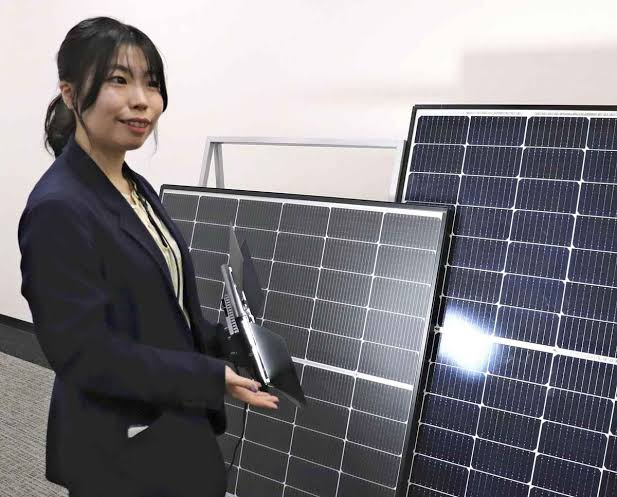
On July 13, 2026, Japanese researchers and manufacturers began commercial distribution of an ultra-thin solar film printed on newspaper paper that can be applied to building exteriors and roofs, potentially turning ordinary surfaces into low-cost electricity generators. The product arrives after years of lab work that blended flexible photovoltaics, printed electronics, and biodegradable substrates to create a lightweight, low-profile solar option aimed at homeowners, small businesses, and community buildings.
How newspaper-printed solar cells work
The new product uses organic and perovskite-based photovoltaic inks deposited by roll-to-roll printers onto responsibly sourced newspaper stock. Engineers treat the paper with hydrophobic coatings and thin transparent barrier layers to protect the active materials from moisture while keeping the overall weight extremely low. The result is a flexible sheet that can be adhered directly to common exterior materials such as wood, concrete, ceramic tiles, and metal roofs.
Sensors and conductive traces are printed alongside the photovoltaic layer so panels interconnect without bulky wiring. The manufacturer offers modular strips and larger panels ranging from roughly 0.25 square meters to 5 square meters. Each strip integrates simple microinverters, enabling direct connection to home distribution panels or off-grid battery systems. Output varies by product size and sunlight exposure but manufacturers project typical household installations will provide between 10 percent and 40 percent of average daily electricity needs in moderate climates.
Materials and durability
Key innovations include stabilized perovskite formulations that resist photo-degradation and flexible encapsulation methods that keep water vapor transmission rates low. The paper substrate is engineered for dimensional stability so it does not warp under sun or rain. Testing protocols used accelerated weather chambers to simulate five to ten years of exposure in various climates. Company engineers say field trials in coastal and humid inland locations show lower-than-expected degradation rates, with warranty offers beginning at five years and extended plans available for ten years.
Why this matters for homeowners and communities
Newspaper-printed solar cells address several persistent barriers to rooftop solar adoption. They are lightweight and thin which simplifies installation on older homes or structures with limited roof load capacity. Their low profile preserves the appearance of heritage buildings and visually sensitive neighborhoods where conventional panels might be resisted. Cost per installed watt for these printed systems is currently lower than conventional crystalline silicon arrays for small scale applications because printing cuts manufacturing and balance-of-system expenses.
For renters and low-income households the product can be a game changer because many printed sheets are designed for temporary adhesion and removal. Community organizations and municipal programs could deploy these films on community centers, bus shelters, and schools to expand renewable power without major construction. Rural households with limited access to installers can apply strips themselves or with minimal labor, reducing reliance on grid connections during outages.
Practical considerations for installation
- Surface preparation: Clean and dry surfaces maximize adhesion and longevity.
- Orientation and tilt: Best performance comes from south-facing exposures where sunlight is strongest, though the flexible sheets tolerate flat application on low-slope roofs.
- Electrical integration: Use licensed electricians for grid-tied connections, and confirm inverter compatibility when mixing printed strips with conventional panels.
- Maintenance: Periodic cleaning of dust and debris preserves output; replacement of damaged strips is straightforward because of modular design.
Environmental and safety profile
Manufacturers emphasize the paper substrate reduces embedded carbon compared with glass and aluminum framed panels. The inks use lower-temperature processing which cuts energy use in fabrication. End-of-life plans propose mechanical separation and chemical recycling streams for the active layers; pilot takeback programs will collect used sheets for recovery of metals and perovskite constituents. Independent analysts caution that safe recycling systems must scale in parallel with sales to avoid creating new waste streams.
Regulatory bodies are already evaluating safety. Japan has issued provisional guidelines for fire resistance, electrical isolation, and outdoor chemical stability. These rules aim to ensure printed installations meet building codes and do not increase risk in storms or during firefighting. International standards organizations are monitoring the technology for certification pathways that will facilitate export markets.
Market reaction and commercial outlook
Early demand in Japan has been strongest among older homeowners, preservation-minded districts, and small businesses seeking lower-cost renewable options. Solar installers report that the films work well as supplemental generation for daytime loads such as water heating, ventilation, and lighting. The company behind the first major commercial roll-out forecasts increasing efficiency and longer warranties over the next three years as formulations improve and pilots scale up.
Analysts expect the product to pressure the lower end of the rooftop solar market and to spur new business models such as subscription-based energy services for renters and managed microgrids for towns. That said mainstream, large-scale photovoltaic projects will continue to rely on high-efficiency silicon panels for utility generation because printed cells currently have lower conversion efficiency and shorter expected lifetimes than conventional modules.
International interest and partnerships
Several Asian and European building materials firms have opened talks for licensing and joint manufacturing. Nonprofit organizations working on energy access have expressed interest in using printed solar sheets for disaster relief and remote electrification because of the product’s light weight and transportability. The Japanese export ministry is assisting negotiation of certification standards to support safe cross-border sales.
Voices from the field
At a pilot installation in a Kyoto neighborhood an elderly homeowner described the panels as almost invisible when viewed from the street and appreciated a small but steady reduction in her monthly electricity bill. A municipal energy planner in a nearby prefecture said the low upfront cost and ease of installation made the films attractive for retrofitting public buildings where budgets for upgrades are limited.
Researchers who developed the inks stress responsible deployment. They advise public funding for recycling infrastructure and consumer education about realistic performance expectations under varying weather. Installers recommend verifying warranties and seeking installer certification when electrical integration is required.
Where to learn more
For technical background on perovskite photovoltaics and printed solar research consult peer reviewed materials science reviews hosted by major journals and university laboratories. The International Energy Agency provides context on how distributed solar contributes to broader energy transitions and grid planning at iea.org. For durability and standards work, updates from the Japan Photovoltaic Energy Association outline evolving certification requirements and best practices at jpea.gr.jp.
What to watch next
Key signals to follow in the coming 12 months include published third party durability studies, roll-out of municipal pilot programs, and the establishment of recycling collection networks. Improvements in ink stability and module encapsulation could raise warranties and broaden climate suitability. How regulators and waste managers respond to end-of-life recovery will shape the long-term sustainability case for newspaper-printed solar sheets.
Japan’s announcement does not replace conventional rooftop solar but it widens the toolkit for decarbonizing buildings by offering an accessible, lower-impact option for many property owners. If durability and recycling scale keep pace with sales the product could play a material role in distributed energy, particularly where weight, cost, and visual impact limit traditional installations.