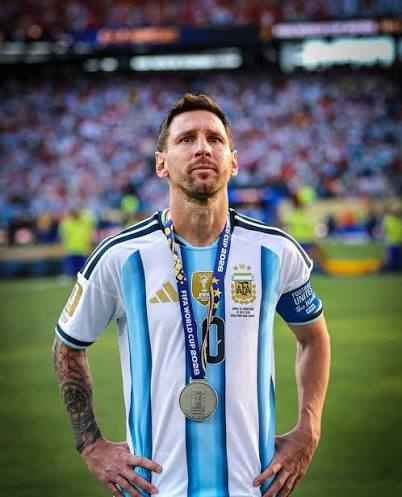
Two familiar names from global sport shaped the conversation on July 31, 2026, each in a very different way. Lionel Messi was back at Inter Miami training after Argentina’s World Cup campaign, while Ajinkya Rahane brought a graceful close to his international cricket career, ending a long chapter that had been defined by patience, poise, and quiet resilience.
Messi steps back into club routine
Messi’s return to Inter Miami carried the kind of simple image that still stops the sports world: a legend walking back into training, mate in hand, and settling once again into the rhythm of club football. After nearly ten days away in Argentina following the World Cup, he rejoined the squad in Fort Lauderdale, where the club shared images of his arrival and training session. That visual mattered because it marked not just a return to work, but a return to normalcy after a bruising international stretch.
For Inter Miami, Messi’s presence is more than symbolic. He is the gravitational center of the team, the player who changes how opponents defend and how supporters arrive at the stadium. His return gives the club a fresh dose of calm after the emotional drain of Argentina’s run, and it also signals the start of a careful balancing act between rest and readiness. Inter Miami coach Guillermo Hoyos has already stressed that there is no fixed return date for competitive action, a reminder that elite careers are managed as much by recovery as by talent.
A measured comeback matters
In the modern game, the temptation is always to rush stars back onto the field. Yet Messi’s situation underlines a more thoughtful approach. A World Cup campaign leaves no one untouched, not even a player as seasoned as he is, and the body often needs more time than the public realizes. Inter Miami appears aware of that reality, and the club’s patience may prove as important as any pass, finish, or tactical adjustment in the weeks ahead.
For supporters, the return also restores a sense of anticipation. Training footage, brief though it may be, offers a glimpse of what comes next. It tells fans that the next chapter is already being written, even if the exact date of Messi’s next match is still being determined. For a club built around his arrival, every step back onto the training pitch carries outsized meaning.
Rahane closes a distinguished international career
While Messi resumed his routine, Rahane chose a moment of finality. The veteran India batter announced his retirement from international cricket, ending a career that spanned more than a decade and left behind a record built less on noise than on dependability. His statement was heartfelt and direct, describing the timing as right to move on from the international stage and all formats of the game.
Rahane’s career deserves to be remembered for its craft. He was never the loudest figure in the room, but he was often one of the most trusted. A batsman of compact technique and strong temperament, he represented India in Tests, one day internationals, and T20 internationals, becoming a familiar face through years of transitions in the national side. His contributions were especially valued in pressure filled moments, where composure mattered as much as flair.
Among the defining images of his career will always be India’s famous Test series triumph in Australia in 2020 to 21, when he stood in as captain and helped guide the team through one of its most celebrated overseas victories. That period captured what Rahane brought to the sport: calm judgment, quiet authority, and the ability to steady a team when the pressure felt immense. For many fans, that is how he will be remembered first.
The weight of timing
Rahane’s retirement statement carried a recurring theme: timing. That word has long followed him through his batting, and it returned with special force in his farewell. There was no theatrical exit, no attempt to stretch the moment beyond its natural end. Instead, there was a sense of dignity that suited both the player and the career he built.
Such exits can be emotional because they ask fans to reckon with the passing of a generation. Rahane’s departure is not only about one player stepping away from international cricket. It is also about the gradual handing over of memory, leadership, and identity to those who come next. In that sense, his retirement is both personal and historical, a reminder that sport is always moving even when the people inside it wish time would pause.
What these stories say about sport
Messi’s return and Rahane’s retirement may seem unrelated, but together they capture a truth I find essential to covering sport honestly: every career is shaped by rhythm, and every great athlete eventually meets a moment of transition. One figure returns to the familiar demands of training, the other steps away from the international arena after years of service. Both actions are deeply human. Both ask for patience, memory, and perspective.
Fans often focus on the next match or the latest announcement, but the larger story lies in how athletes navigate the distance between one stage of life and the next. Messi’s comeback reminds us how carefully a modern superstar must be managed after global competition. Rahane’s retirement reminds us that a career can matter enormously even when it is built on restraint rather than spectacle. Their stories, taken together, show how sport remains one of the clearest mirrors of endurance, renewal, and farewell.
Looking ahead
For Inter Miami, the immediate question is when Messi will be ready to return to competitive action. The club has made clear that no one intends to hurry the process, and that caution may serve both player and team well. For Indian cricket, Rahane’s retirement invites reflection on a career that blended elegance with dependability and gave India several memorable performances across formats.
More broadly, July 31 offered a rare pairing of movement in opposite directions. One great returned to the field, another stepped away from it. That balance is part of what makes sport compelling. It does not only celebrate beginnings and peaks. It also respects returns, goodbyes, and the long human effort that connects them.
For readers who want to follow the broader world of football and cricket, the official platforms of major governing bodies remain the most reliable starting points, including FIFA for international football and the International Cricket Council for the global game. Those sources help frame the larger context around moments like these, when individual careers intersect with the larger calendar of world sport.