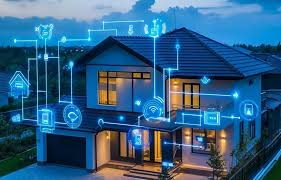
Design studios and residential developers worldwide reported a clear shift on May 23 2026 as premium smart home systems increasingly replace cloud dependent locks and neighborhood apps with local generative AI nodes and robotic labs that operate offline. I visited a waterfront estate where a compact server hums in a bespoke cabinet near the garage and watched homeowners explain why they prefer an intelligence they can see and touch rather than a distant service that lives in someone else servers.
What is changing inside luxury residences
The change is practical and philosophical. Previously smart locks voice assistants and community safety apps relied on internet connectivity and remote servers for storage and decision making. Today a growing cohort of high end buyers and architects specifies on premises AI nodes that run generative models locally for identity verification anomaly detection and automated response coordination. These nodes often pair with robotic labs that perform self testing maintenance and simulated threat rehearsals without sending sensitive data off site.
The result is a domestic technical stack that favors latency free decisions greater data control and resilience when networks fail. For homeowners the benefits feel tactile: a keypad that recognizes a fingerprint pattern processed entirely inside the house, a camera system that summarizes visits into natural language logs stored on local drives, and a compact robot that inspects door hardware and reports wear before a lock fails.
Design and sensory details
Inside the estates I visited the technology is woven into materials and spatial flow. Cabinets conceal modular compute racks with copper piping for passive cooling. Soft ambient lighting cues change color when the AI detects unusual motion patterns and a faint hum from robotic chargers becomes part of the household soundscape. Installers are careful to keep interfaces human centered so family members interact via simple voice prompts physical tokens or privacy first mobile apps that connect directly to the local node without internet intermediaries.
The overall sensory impression is of systems that assert their presence politely. The hardware and software are designed so the technology is felt rather than flaunted, a discreet intelligence that inhabits the home like another steward rather than an intrusive appliance.
Why wealthy buyers and designers prefer offline generative AI
Several motivations drive the trend. Privacy and data sovereignty top the list. High net worth households frequently host sensitive guests and store valuable items which raises stakes for any external service. Local AI nodes reduce exposure by minimizing cloud transfers and encrypting all records at rest within the property. Resilience is a second reason. Local processing keeps security operations functioning during broadband outages or deliberate network attacks. Third there is customization. On premises models can be fine tuned to property specific traits such as lighting profiles acoustic signatures and resident routines without sharing that tuning data with a third party.
Luxury developers also view these nodes as a design amenity. They market them as part of a holistic living proposition that weaves security comfort and sustainability into a single offering which appeals to buyers seeking both convenience and control.
Robotic labs and automated maintenance
Robotic labs are another distinguishing element. Compact mobile robots routinely patrol properties to check structural seals verify sensor calibration and exercise mechanical locks. They run diagnostic suites and can apply firmware updates locally after receiving an authenticated instruction from the household owner. The labs use simulated scenarios to test system responses for false positives and failure modes which reduces the risk of cascading errors in real incidents.
These routines also produce a continuous diagnostics log that residents and trusted technicians can review. That transparency helps demystify complex systems and supports quicker remediation when components degrade.
Security trade offs and new threats
Local AI nodes reduce certain attack vectors but introduce others. A self contained node can become a single point of compromise if physical access is gained. Manufacturers have responded with multi factor tamper proofs biometric safes and hardware security modules. Another risk is supply chain integrity for on premises models. If pre installed model weights or firmware contain vulnerabilities those weaknesses persist offline unless patched. The industry response includes secure update channels that use signed packages and staged rollouts verified by independent auditors.
There is also an adversarial angle where attackers probe locally trained models with crafted inputs to elicit undesired behaviors. Security teams now run adversarial robustness tests as part of commissioning and require incident response playbooks that operate without external aid.
Privacy law implications and neighborhood dynamics
Local nodes complicate regulatory boundaries. Data that never leaves a property may fall under different privacy regimes than cloud stored data creating legal gray areas for liability and disclosure. Municipalities are examining how to treat surveillance data retained locally, especially when systems incidentally capture public spaces such as sidewalks and driveways.
Neighborhood apps that once coordinated watch groups are losing ground in upscale enclaves where residents distrust centralized sharing of footage and logs. That shift alters communal safety practices and can strain collective response to local threats if households do not maintain compatible emergency protocols.
Costs accessibility and industry response
At present this technology trend concentrates among high end buyers because on premises generative models compute intensively and require specialized installation. However vendors are racing to lower price barriers by offering modular appliance versions and subscription tiers for model maintenance and security audits. Open source projects and community labs are also emerging to democratize safe offline generative tooling but those efforts face challenges related to hardware costs and ongoing support.
Integration companies are developing standards for secure on premises deployments and independent testing bodies provide certifications for privacy practices and adversarial robustness that aim to reassure buyers.
What homeowners should consider
If you are considering an on premises AI security node evaluate the following points carefully.
- Physical security measures and tamper detection for local servers and robots.
- Update and patching procedures including cryptographic verification of firmware and models.
- Data governance policies that define retention access and procedures for incident disclosure.
- Interoperability with emergency services and neighbor networks for coordinated response.
- Third party audits and certifications attesting to privacy and adversarial resilience.
A balance between autonomy and accountability
The shift away from cloud based smart locks and community apps toward local generative AI represents a broader recalibration about where intelligence should live and who should control it. For luxury homeowners the move offers privacy resilience and bespoke behavior that match lifestyle expectations. Yet it also demands rigorous attention to maintenance security and legal responsibilities that accompany powerful local systems.
As prices fall and standards emerge architects developers and policymakers will shape whether this trend remains a niche feature of the wealthy or becomes a mainstream option that redefines expectations for residential privacy and safety.
For technical guidance on secure on premises deployments consult authoritative resources such as the National Institute of Standards and Technology and industry consortiums that publish best practices for edge AI security.
NIST guidance on secure systems provides frameworks relevant to hardware and software assurance and IEEE standards cover interoperability and safety considerations that vendors and integrators are beginning to adopt.