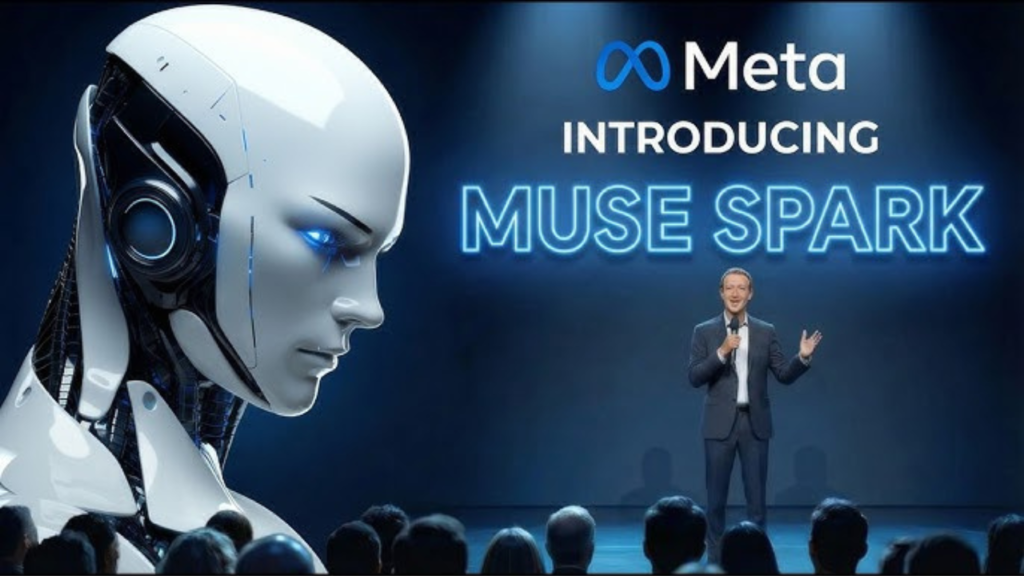
We are witnessing a pivotal moment in the evolution of artificial intelligence as Meta introduces Muse Spark, a next generation AI model designed to shift the way people interact with technology. Announced in mid April 2026, the launch signals a broader move toward what the company calls proactive AI, systems that do more than respond, actively assisting users in real time across daily life. The debut has already sparked conversation among developers, investors, and everyday users who sense a turning point in how digital tools may soon anticipate needs rather than simply react to them.
A Strategic Reset in the Global AI Race
Muse Spark represents the first major output from Meta’s ambitious Superintelligence Labs, a division created to compete directly with leading AI players. After facing setbacks with earlier models, the company rebuilt its AI infrastructure from the ground up, investing heavily in talent, computing power, and long term research.
According to reporting from Reuters, Meta’s renewed push is part of a broader industry effort to close performance gaps with top competitors while delivering commercially viable AI products. Muse Spark is described as a multimodal system capable of processing text, images, and complex reasoning tasks. It has been integrated into the Meta AI assistant, which is expected to roll out across platforms such as WhatsApp, Instagram, Facebook, and Messenger.
What Sets Muse Spark Apart
Unlike earlier chat based tools, Muse Spark is designed to operate with a deeper level of contextual awareness. We see this reflected in features that allow the system to remember user preferences, analyze visual input, and assist with multi step tasks. Early demonstrations suggest the model can interpret images, offer health related insights, and guide users through decision making processes with greater nuance.
The emphasis on multimodal capability marks a clear shift in design philosophy. Instead of relying solely on written prompts, users can interact through voice, images, and ongoing conversations. This aligns with a growing expectation that AI should function more like a collaborative partner than a static tool.
The Rise of Proactive AI Assistants
The concept of proactive AI sits at the heart of Meta’s strategy. Rather than waiting for commands, these systems aim to anticipate needs based on patterns, preferences, and situational context. Imagine an assistant that not only answers questions but suggests actions, organizes tasks, and adapts in real time.
We can already see early examples of this approach. Muse Spark introduces different operational modes that allow it to switch between quick responses and deeper reasoning. This flexibility reflects an effort to mirror human thinking patterns, offering immediate help when needed and more thoughtful analysis for complex problems.
Insights shared by Built In highlight how Muse Spark balances speed with advanced reasoning capabilities, a combination that could redefine user expectations for AI performance. The model is intentionally designed to be compact yet powerful, serving as a foundation for future iterations that may expand its capabilities even further.
Integration Across Everyday Platforms
One of the most significant aspects of the launch is how seamlessly Muse Spark is being integrated into existing digital ecosystems. Rather than introducing a standalone product, Meta is embedding the technology into platforms already used by billions of people worldwide.
This approach lowers the barrier to adoption. Users will not need to download new applications or learn entirely new interfaces. Instead, the AI will appear within familiar environments, gradually reshaping how people communicate, shop, and manage daily tasks.
For example, the model’s shopping features are expected to provide personalized recommendations based on user behavior and content trends. Its communication tools may assist in drafting messages, summarizing conversations, or even translating languages in real time.
Investor Confidence and Market Reaction
The release of Muse Spark has also influenced financial markets, with analysts noting a renewed sense of confidence in Meta’s long term AI strategy. Early reactions suggest that investors view the model as a meaningful step toward closing the gap with industry leaders.
Recent coverage indicates that Meta’s stock experienced notable gains following the announcement, reflecting optimism about the company’s ability to monetize its AI investments. However, questions remain about how quickly these technological advancements can translate into sustainable revenue streams.
We observe a familiar pattern in the tech sector, where innovation drives excitement but long term success depends on practical application. The real test for Muse Spark will lie in its ability to engage users consistently and deliver measurable value across different use cases.
Ethical Questions and User Trust
As with any major advancement in artificial intelligence, the introduction of Muse Spark raises important ethical considerations. The idea of proactive AI prompts questions about privacy, data usage, and the boundaries of machine decision making.
When an AI system anticipates needs, it relies on extensive data analysis. This creates concerns about how personal information is collected, stored, and utilized. Regulators in multiple regions are already examining the implications of AI driven technologies, particularly those integrated into widely used platforms.
We also see ongoing debates about transparency and accountability. Users may benefit from more intuitive systems, but they also require clear understanding of how decisions are made. Building trust will be essential for widespread adoption, especially as AI becomes more deeply embedded in everyday life.
The Human Element in AI Development
Despite its advanced capabilities, Muse Spark reflects a broader truth about artificial intelligence. Technology remains shaped by human intention, values, and oversight. Developers must balance innovation with responsibility, ensuring that progress does not come at the expense of user wellbeing.
This balance is particularly important as AI systems begin to influence areas such as health guidance, financial decisions, and personal communication. The line between assistance and autonomy becomes increasingly complex, requiring thoughtful design and ongoing evaluation.
What Comes Next for Meta and the AI Industry
The launch of Muse Spark signals more than just a new product. It represents a strategic shift in how major technology companies approach artificial intelligence. The focus is moving toward systems that are not only powerful but also deeply integrated, intuitive, and adaptive.
Meta has already indicated that Muse Spark is just the beginning. Future models are expected to build on its foundation, introducing more advanced reasoning, broader functionality, and enhanced personalization. This iterative approach mirrors the rapid pace of innovation seen across the industry.
We anticipate increased competition as other companies accelerate their own AI development efforts. The race is no longer solely about performance benchmarks. It is about creating systems that fit naturally into human lives, offering genuine value without overwhelming users.
A Turning Point in Everyday Technology
The introduction of Muse Spark invites a larger reflection on how technology is evolving. We are moving toward a world where digital tools are not just passive instruments but active participants in daily routines. This shift carries both promise and responsibility.
For users, the potential benefits are clear. Greater efficiency, personalized assistance, and more intuitive interactions could simplify many aspects of life. For developers and policymakers, the challenge lies in ensuring that these systems remain ethical, transparent, and aligned with human needs.
As we follow the trajectory of Muse Spark and similar innovations, one thing becomes evident. Artificial intelligence is entering a new phase, one defined by collaboration rather than command. The success of this transition will depend on how well technology serves people, not just how advanced it becomes.