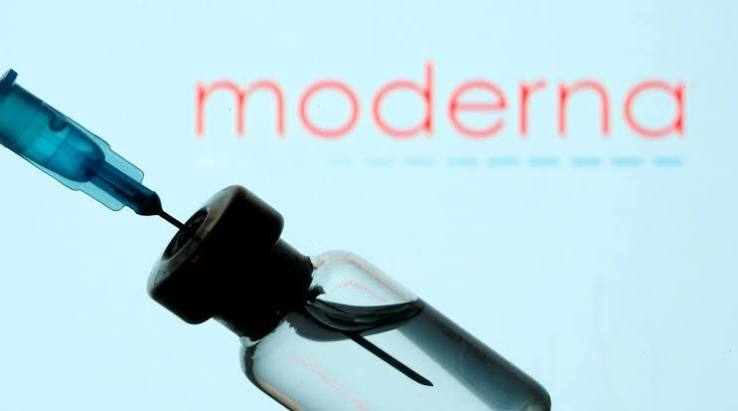
Moderna shares surged roughly 177% in a historic trading session after the company and Merck reported positive late stage results for a personalized mRNA cancer vaccine designed to reduce the risk of melanoma returning or spreading. The announcement marked a major moment for Moderna beyond its COVID vaccine business and renewed global attention on personalized cancer treatment. The experimental therapy, called intismeran autogene, is being tested alongside Merck’s Keytruda, with results showing statistically significant improvements in recurrence free survival and distant metastasis free survival. :contentReference[oaicite:0]{index=0}
A Major Turning Point for Moderna and Personalized Cancer Treatment
The scale of the market reaction was extraordinary. Moderna’s shares rose by about 177% during the August 19 trading session, marking the company’s largest single day increase and adding tens of billions of dollars to its market value. Merck also benefited from the announcement, with its shares climbing sharply as investors assessed the potential commercial importance of the treatment. :contentReference[oaicite:1]{index=1}
For us, however, the most important part of the story is not the stock market. It is what the clinical result could mean for patients who undergo surgery for high risk melanoma and remain concerned that the disease could return. The companies reported that their personalized mRNA therapy, when combined with Keytruda, met the main goal of the Phase Three INTerpath 001 trial and also achieved a key secondary goal related to preventing distant spread of cancer. :contentReference[oaicite:2]{index=2}
The complete clinical dataset has not yet been publicly disclosed, and the companies plan to present additional findings at a medical meeting. That distinction matters. A successful trial announcement is a major milestone, but it is not the same as regulatory approval or proof that every patient will benefit.
How the Personalized mRNA Vaccine Works
Traditional cancer treatments generally target characteristics shared by many patients. Personalized cancer vaccines take a different approach. The treatment being developed by Moderna and Merck is designed using information from an individual patient’s tumor.
The tumor is analyzed to identify mutations that could produce targets known as neoantigens. The patient’s vaccine is then manufactured to encode selected targets, with the aim of teaching the immune system to recognize cells carrying those cancer specific features.
According to detailed information released by Merck earlier this year, intismeran autogene is designed to encode as many as 34 tumor specific neoantigens. The intention is to stimulate a T cell response directed toward characteristics of the patient’s own cancer rather than relying solely on a generalized immune response. :contentReference[oaicite:3]{index=3}
This is what makes the treatment especially significant. The concept moves away from viewing cancer as a single disease with one universal target and toward treatment strategies that can be tailored to the biological characteristics of an individual’s tumor.
The Phase Three Trial Included More Than 1,100 Patients
The INTerpath 001 study enrolled 1,137 patients across 26 countries. Participants had melanoma that had been surgically removed but remained at substantial risk of recurrence. The trial compared the combination of intismeran autogene and Keytruda with Keytruda alone. :contentReference[oaicite:4]{index=4}
The study population included patients with resected stage IIB through stage IV melanoma. These patients represent a group for whom preventing recurrence and distant spread is particularly important because melanoma can become much harder to treat after it moves beyond its original location.
The companies said the combination met the trial’s primary endpoint of recurrence free survival. It also met the key secondary endpoint of distant metastasis free survival. Detailed hazard ratios and the full set of efficacy measurements from the Phase Three study have not yet been released publicly. :contentReference[oaicite:5]{index=5}
What Recurrence Free Survival Means
Recurrence free survival measures how long patients remain without their cancer returning or another defined disease event occurring. For someone who has already undergone surgery, this measurement can be especially meaningful because the immediate goal may be preventing the cancer from coming back.
Distant metastasis free survival focuses on whether the disease spreads to distant parts of the body. That is an important measure in melanoma because metastatic disease can become considerably more difficult to manage.
The combination’s success on both measures gives the results greater significance than an improvement in only one measure. Still, researchers will want to examine the full data, including overall survival, long term safety, subgroup outcomes, and the durability of the benefit.
Keytruda Is Already an Important Part of the Treatment
The experimental vaccine is not being tested as a replacement for Keytruda. Instead, it is being evaluated in combination with the established immunotherapy.
Keytruda, also known as pembrolizumab, is an immune checkpoint inhibitor that helps the immune system attack cancer by blocking the PD 1 pathway. The personalized vaccine is intended to provide the immune system with additional tumor specific targets.
The combination therefore represents two complementary ideas. Keytruda can help release an existing immune response from one form of suppression, while the individualized vaccine is intended to direct immune cells toward specific characteristics of the patient’s tumor.
The strategy has been building for several years. Earlier Phase Two results already suggested substantial reductions in the risk of recurrence and distant metastasis when intismeran was combined with Keytruda. Five year follow up data presented at the 2026 ASCO Annual Meeting showed a 49% reduction in the risk of recurrence or death and a 59% reduction in the risk of distant metastasis or death compared with Keytruda alone. :contentReference[oaicite:6]{index=6}
Why the Results Matter Beyond Melanoma
The implications extend beyond skin cancer. Moderna is investigating whether the same personalized mRNA approach can be applied to other tumor types, including additional solid cancers.
If the technology can repeatedly demonstrate meaningful clinical benefits, personalized neoantigen vaccines could become a broader category of cancer treatment rather than a single melanoma product.
That possibility is one reason investors reacted so strongly. Moderna’s success could provide evidence that the mRNA technology that became widely known through infectious disease vaccines can also be used to address much more individualized biological problems.
For the pharmaceutical industry, this could encourage additional investment in tumor sequencing, computational biology, personalized vaccine manufacturing, and immune oncology. The result could be a larger ecosystem focused on treatments designed around the molecular characteristics of individual cancers.
The Stock Market Reaction Shows How Much Was at Stake
Moderna entered the announcement under considerable pressure to demonstrate that its future could extend beyond COVID vaccines. The company’s pandemic era success generated enormous revenue, but demand for COVID vaccination declined as the pandemic emergency faded.
The melanoma result offered investors something different: evidence of a potentially valuable oncology platform. Moderna’s shares closed at about $174.38 after the historic rally, although the company remained well below its 2021 peak. :contentReference[oaicite:7]{index=7}
Markets have also shown signs of caution. After the extraordinary rise, Moderna shares fell in premarket trading on August 20 as investors took profits and analysts questioned whether the valuation implied by the rally was sustainable. :contentReference[oaicite:8]{index=8}
That volatility is a reminder that a successful clinical trial does not automatically translate into guaranteed commercial success. Drug approval, manufacturing capacity, pricing, reimbursement, physician adoption, and long term clinical evidence will all influence the eventual value of the therapy.
The Treatment Still Needs Regulatory Review
Patients should not interpret the latest announcement as meaning that the personalized melanoma vaccine is already an approved treatment. The therapy remains investigational, and regulatory authorities will need to evaluate the evidence before any approval decision can be made.
The companies are engaging with regulators regarding the next steps. If the regulatory process proceeds successfully, the therapy could eventually become one of the first individualized mRNA based cancer treatments to reach routine clinical use.
Additional evidence will remain important. The Phase Three trial is continuing to evaluate overall survival and other outcomes, while researchers and regulators will need access to detailed data rather than only headline results.
Manufacturing a Cancer Vaccine for Each Patient Is a Major Challenge
Personalization creates an opportunity, but it also creates logistical complexity. A conventional medicine can often be manufactured in large batches because the same product is supplied to thousands or millions of patients.
A personalized cancer vaccine is different. The manufacturing process must begin with information from the individual patient’s tumor and eventually produce a treatment tailored to that person.
That means the success of personalized oncology will depend not only on biology but also on speed, quality control, manufacturing capacity, data processing, and supply chain coordination.
For patients with cancer, time matters. A personalized therapy must be produced and delivered efficiently enough to fit within a realistic treatment schedule. The pharmaceutical industry will therefore be watching closely to see whether individualized manufacturing can operate at commercial scale without making treatment prohibitively expensive.
Patients Could Eventually See a More Individual Approach to Cancer Care
The deeper significance of this development is the possibility of changing how cancer treatment is selected. Instead of relying primarily on the location and stage of a tumor, future treatment decisions could increasingly incorporate the unique genetic characteristics of each patient’s cancer.
That does not mean conventional chemotherapy, surgery, radiation, or immunotherapy will disappear. Cancer is too diverse for a single treatment model to replace everything else. Personalized vaccines may instead become another tool within a broader treatment strategy.
For a patient sitting in an oncology clinic, the idea can feel both technical and deeply personal. A treatment designed from the biological fingerprint of their own tumor represents a very different concept from receiving the same medicine prescribed to many other people.
Why Caution Still Matters After a Landmark Result
Excitement is justified, but scientific caution remains essential. The companies have announced statistically significant and clinically meaningful results, yet the complete Phase Three dataset has not been released. Independent researchers will need to examine the detailed evidence, and regulators will assess whether the benefits outweigh the risks.
Safety is another essential consideration. The companies reported no new safety concerns in the latest announcement, and the safety profile was described as consistent with previous experience with the combination. :contentReference[oaicite:9]{index=9}
Long term follow up will also help determine how durable the benefit is and whether improvements in recurrence and distant spread ultimately translate into longer overall survival.
A Potential Milestone for mRNA Cancer Medicine
We should view Moderna’s melanoma result as an important milestone rather than the conclusion of the story. The trial provides some of the strongest evidence yet that individualized mRNA therapy can produce meaningful clinical benefits in a large late stage cancer study.
For Moderna, the result offers a possible new chapter after years of dependence on its pandemic vaccine business. For Merck, it provides another potential way to extend the impact of Keytruda through combination therapy. For cancer researchers, it offers evidence that personalized neoantigen strategies can move from an ambitious scientific concept toward practical medicine.
Most importantly, the development could eventually give some melanoma patients another option for reducing the risk that their cancer will return or spread after surgery.
The road from a successful Phase Three trial to an approved, affordable, widely available treatment is long. Yet the latest results have already crossed an important scientific threshold. Personalized mRNA cancer therapy is no longer only a promising laboratory idea. It has now produced a positive late stage clinical result in a major melanoma trial, giving researchers, physicians, patients, and investors a compelling reason to watch what happens next.
Further information about the clinical development program and previously reported melanoma data is available through Merck’s published clinical update, while future regulatory and medical review will determine whether this breakthrough ultimately becomes part of standard melanoma care. :contentReference[oaicite:10]{index=10}