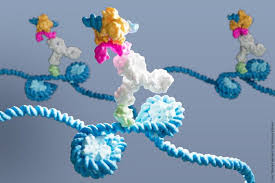
On June 4, 2026 researchers at Weill Cornell Medicine published a paper in Cell describing D&D-seq a platform agnostic genomic mapping technique that traces how proteins interact with DNA and how mutations emerge and spread within individual cells. The method pairs molecular precision with broad compatibility so laboratories using different sequencing instruments can adopt it quickly. For clinicians researchers and patients the advance promises clearer maps of gene regulation cancer evolution and the molecular choreography behind development and disease.
What D&D-seq does and why it matters
D&D-seq stands for DNA and DNA bound protein sequencing and it answers two interlocking questions that matter for biology and medicine. First it identifies where regulatory proteins bind along the genome which controls whether genes are active or silent. Second it captures the sequence context and mutational changes at those exact binding sites. By linking protein binding footprints to the precise underlying DNA sequence the technique reveals how mutations alter regulatory architecture and how those changes can drive disease processes.
The novelty is not just sensitivity but integration. Existing assays often require separate workflows to map protein binding and to read sequence variants which makes it hard to determine whether a particular mutation sits inside a functional regulatory element. D&D-seq unifies those measurements so scientists can say with confidence that a variant disrupts or creates a protein binding site inside the very molecule that was assayed.
How the technique works in practical terms
The protocol builds on established chromatin profiling approaches but adds a modular tagging and capture system that preserves protein bound fragments and their exact genomic context through library preparation and sequencing. Because the chemistry is designed to be agnostic to sequencing platforms labs using short read or long read instruments can implement D&D-seq without changing core hardware. That flexibility reduces technical barriers and accelerates cross lab replication.
Key steps include selective labeling of protein associated DNA fragmentation that maintains binding footprints and a sequencing library preparation that retains information about both the protein footprint and the nucleotide sequence across the fragment. The downstream analysis pipeline aligns binding signatures with variant calls enabling high resolution maps of protein DNA interactions in cells sampled from tissues or cultured models.
Applications across research and medicine
The potential uses are broad and immediate. In cancer biology D&D-seq can show whether somatic mutations in noncoding regions alter transcription factor binding thereby reprogramming gene expression in ways that promote tumor growth. For developmental biology the method makes it possible to follow how regulatory interactions change as cells differentiate so researchers can chart the cascade of molecular events that build tissues. In immunology the technique can map how epigenetic states and sequence variants influence immune cell activation and memory.
Clinically the method could refine diagnostics by pinpointing regulatory lesions that escape detection with standard sequencing. It could also aid drug discovery by identifying protein DNA interfaces that are functionally altered in disease and therefore candidate targets for therapeutic intervention.
Early findings and validation
In the Cell article the Weill Cornell team demonstrated D&D-seq in human cell lines and primary tissue samples. They validated the technique against orthogonal assays showing concordant binding sites while revealing additional variant level detail that previous methods missed. The authors presented case studies in which mutations within enhancer elements changed transcription factor occupancy and correlated with altered gene expression signatures consistent with disease phenotypes.
Importantly the team released an analysis toolkit and benchmarking data so other groups can evaluate performance on their own instruments. That transparency increases confidence in reproducibility and invites collaborative refinement of the method across diverse biological systems.
Why platform agnosticism is important
Sequencing centers vary widely in their instrument fleets and budget constraints. A method tied to a single platform often limits adoption and slows cross study comparisons. By designing D&D-seq to work with multiple sequencing technologies the authors lowered the friction for adoption and created a pathway for more rapid accumulation of comparable datasets. That design choice matters for building community resources and for ensuring findings translate into robust biological insight rather than tool specific artifacts.
Challenges and limitations to address
D&D-seq, while powerful, is not a universal solution. High quality sample preparation remains essential because protein DNA complexes are sensitive to handling and degradation. In tissues with low cellularity or extensive crosslinking obtaining sufficient signal can be difficult. Computationally the integrated datasets are larger and more complex requiring tailored bioinformatics pipelines and computational resources to align binding footprints with confident variant calls.
The method also captures a snapshot in time. Dynamic interactions that change rapidly may require longitudinal sampling or complementary live cell approaches to fully resolve causal sequences of events. Finally scaling to population level studies will require streamlined workflows cost reductions and expanded lab capacity to process many samples reproducibly.
Reactions from the scientific community
Experts welcomed the advance with cautious enthusiasm. A genomicist I spoke with described the technique as a long awaited bridge between regulatory genomics and variant interpretation that could clarify many currently ambiguous signals in noncoding DNA. Others advised careful benchmarking across tissue types and more head to head comparisons with existing methods to define sensitivity specificities and limits of detection in practical settings.
The availability of open source analysis tools and benchmarking data from the authors drew praise because they reduce barriers for adoption and create a common baseline for improvements contributed by the community.
Next steps and translational potential
Researchers will likely test D&D-seq in disease cohorts where noncoding mutations are suspected drivers such as certain cancers developmental disorders and complex trait loci. Translational teams may pursue pilot clinical workflows that integrate D&D-seq into diagnostic pipelines for cases where conventional exome analysis fails to explain a phenotype. Drug discovery efforts could use the maps to prioritize regulatory elements for functional validation and consider small molecules or oligonucleotides that modulate protein DNA interactions.
Funding agencies and consortia may fund larger scale projects that apply D&D-seq across tissue atlases enabling comparison of regulatory landscapes across cell types and disease states. Those datasets could feed machine learning models that predict the functional impact of sequence variation with greater accuracy.
Where readers can find the original study and resources
The Cell publication provides the full methods supplemental data and code links necessary for labs to reproduce and extend the work. For methodological context on chromatin profiling and variant calling readers may consult resources from the National Human Genome Research Institute and community standards hosted by the ENCODE project which outline best practices for genomic assays and data sharing.
What I take away from the advance
D&D-seq offers a practical and elegant solution to a longstanding problem in genomics by linking protein occupancy with sequence variation at resolution useful for both basic research and clinical translation. The technique will not answer every question immediately but it lowers a major barrier to interpreting noncoding variants and mapping regulatory disruptions in disease. If adopted broadly it could change how we trace the molecular steps from a single mutation to altered cellular behavior and ultimately to disease. That pathway from observation to understanding is the essential bridge that will let us turn genomic maps into better diagnostics therapies and, for many patients, clearer explanations for why their cells behave the way they do.