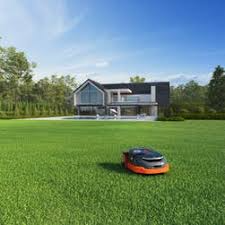
The lawn care industry is entering a new phase, and NexLawn’s latest award wins show just how fast that shift is happening. On July 4, 2026, the company’s smart robotic mowers earned major recognition at both the iF and Red Dot Design Awards, a signal that autonomous property maintenance is moving from novelty to mainstream expectation.
Why these awards matter
Design awards in consumer technology are not just about looks. They often reflect how well a product solves a real problem, how clearly it fits into daily life, and how much trust it can earn from users who want convenience without sacrificing performance. NexLawn’s wins suggest that smart gardening is no longer being judged only on engineering claims, but on whether the experience feels intuitive, reliable, and genuinely useful.
That matters because residential lawn care has long been one of the more labor intensive household tasks. Mowing may seem ordinary, yet it still demands time, heat tolerant endurance, equipment upkeep, and a degree of regularity that many homeowners struggle to maintain. Autonomous mowers promise to change that relationship by making grass care feel less like a weekend chore and more like a background service.
A sign of changing habits
The recognition of NexLawn’s robotic mowers comes at a time when homeowners are increasingly open to devices that handle repetitive outdoor work. Robot vacuums changed the way people think about indoor cleaning, and now robotic lawn equipment is trying to do something similar outside the front door. The appeal is obvious: save time, reduce manual effort, and keep a property looking consistently cared for.
Still, the move toward autonomous landscaping is about more than convenience. It reflects a broader cultural shift in how people manage their homes. Consumers are now more willing to let machines take over tasks that used to require planning, physical effort, and direct supervision, especially when the devices can operate safely and quietly in the background.
What impressed judges
The iF and Red Dot awards tend to reward products that combine visual clarity with practical design. In the case of smart robotic mowers, that likely means judges saw a product that was not only technically sophisticated but also approachable enough for ordinary homeowners to use without a steep learning curve. A good robotic mower must look modern, move confidently, and communicate its function instantly.
That simplicity is part of the challenge. Outdoor automation has to deal with uneven terrain, weather exposure, sensor reliability, and user expectations that can be unforgiving. A mower that wins design honors likely does so because it makes those complexities disappear from the user experience, which is exactly what good industrial design should do.
The residential appeal
For homeowners, the attraction is practical and emotional at once. A neatly trimmed lawn can signal order, care, and pride in a property. When a machine can maintain that look without constant effort, it gives people back time while preserving a sense of control over the home environment.
That time saving can matter just as much as the appearance. Parents, older adults, busy professionals, and people with limited mobility may all see robotic mowing as a meaningful way to reduce strain while keeping up with routine maintenance.
Autonomy and the modern yard
NexLawn’s success points to a future in which the backyard is managed more like a smart system than a manual workspace. Sensors, scheduling, mapping, and remote oversight are becoming central to how homeowners think about outdoor maintenance. The mower is no longer a standalone tool. It is part of a connected property ecosystem.
That evolution has broader implications for the home technology market. As devices become more autonomous, design decisions matter even more because they determine whether people trust the machine enough to leave it running on its own. Good robotics is not just about capability. It is about confidence, and that confidence often begins with clear design.
Why the market is responding
Consumer demand for automation usually rises when a product solves a chore that is frequent, predictable, and difficult to postpone. Lawn care fits that pattern well. Grass keeps growing, weather does not wait, and missing a mow often means extra work later. A robotic system that can handle that cycle consistently has a strong value proposition.
There is also a lifestyle element. People increasingly want homes that feel less demanding to maintain. Smart lawn care fits neatly into that desire by making the outside of the home as manageable as the inside has become with connected appliances, voice controls, and scheduling tools.
Design as a competitive edge
For a product like NexLawn’s mower, industrial design can determine whether the technology feels premium or experimental. Clean lines, intuitive interfaces, and a form factor that communicates trust all help make a robotic mower feel like a reliable household appliance rather than a gadget. That distinction is crucial in a category where buyers are often cautious and comparisons are immediate.
Recognition from respected design juries can also help normalize the category itself. When products win major awards, they gain legitimacy in the eyes of consumers who may still be deciding whether robotic lawn care is ready for their own homes. Award recognition can act as a bridge between technical innovation and everyday adoption.
What homeowners will want to know
Before buying a robotic mower, most homeowners will care about battery life, cutting quality, safety features, mapping precision, and how the machine handles weather or uneven ground. Design awards do not answer every technical question, but they do suggest that the product is competing on more than raw functionality. It is being judged as a complete user experience.
That is important because residential automation succeeds when it disappears into daily life. The best smart devices do not demand attention constantly. They work, they stay out of the way, and they save time without creating new burdens.
The human side of automation
There is something quietly meaningful about a product that reduces a recurring household burden. Mowing a lawn may not be glamorous, but it is one of those tasks that can shape how people feel about their home every week. A machine that handles that duty well can create a small but real sense of relief.
At the same time, the rise of autonomous gardening also changes the sound and rhythm of neighborhoods. The familiar hum of a weekend mower may gradually give way to quieter, more regular maintenance performed by devices that work on schedules rather than human availability. That shift may feel subtle now, but it points to a broader redesign of domestic labor.
What comes next for smart gardening
NexLawn’s award sweep is likely to accelerate interest in robotic outdoor equipment more broadly. Competitors will pay attention, consumers will compare features more closely, and retailers may see stronger demand for products that promise a simpler path to lawn upkeep. In categories like this, design recognition often helps separate serious contenders from short lived trends.
The larger story is that property maintenance is becoming less manual and more automated, one device at a time. NexLawn’s recognition at the iF and Red Dot Awards suggests that the market is ready to reward products that make that transition feel not only possible, but elegant and practical.
For homeowners watching the category evolve, the key takeaway is clear. Smart gardening is no longer just about cutting grass. It is about reshaping how people live with their outdoor spaces, and NexLawn’s latest wins show that the industry is taking that future seriously.