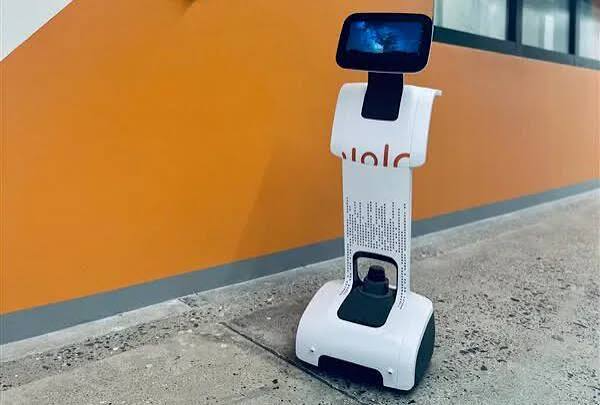
Data centers are becoming some of the most demanding industrial environments on the planet, and technology companies are beginning to ask whether robots can take over some of the maintenance work inside them. As computing facilities grow larger and more densely packed with servers, advanced robotics are being tested for tasks such as inspection, equipment handling, monitoring, and routine hardware maintenance. At the same time, competition in commercial and industrial robotics is intensifying across major technology hubs, creating a race to determine which machines can operate safely and reliably alongside human workers.
Why Data Center Maintenance Is Becoming a Robotics Opportunity
A modern data center may contain thousands of servers, networking components, storage systems, cooling units, power systems, cables, and sensors. These facilities operate continuously, often with little tolerance for equipment failure. A damaged component or overheating system can affect applications used by businesses and consumers around the world.
Maintenance teams therefore work under considerable pressure. Technicians may need to inspect equipment, replace components, move heavy hardware, identify unusual conditions, and respond to alerts while keeping disruption to a minimum. As facilities expand, the physical distance workers must travel inside a site can also become substantial.
Robotics offers a potential solution for some of these repetitive or physically demanding tasks. A machine capable of navigating server aisles, identifying a particular piece of equipment, collecting diagnostic information, and assisting with a hardware replacement could reduce the amount of routine work technicians have to perform manually.
Autonomous Machines Could Change the Maintenance Routine
The concept sounds straightforward, but operating a robot inside a live data center is far more complicated than demonstrating a machine in a controlled laboratory. Data centers contain narrow aisles, complex cable arrangements, reflective surfaces, changing lighting conditions, sensitive equipment, and people moving through shared spaces.
An autonomous maintenance robot must understand its surroundings and make decisions without damaging the infrastructure it has been sent to service. It may need to identify a particular server among hundreds of nearly identical machines, position itself accurately, manipulate a component, and confirm that the task was completed correctly.
That requires a combination of computer vision, sensors, robotic manipulation, navigation software, machine learning, and carefully designed safety systems. The machine also needs to communicate with the facility’s management software so that its physical actions correspond with the actual status of the equipment.
Tasks That Could Benefit From Robotics
- Routine visual inspection of server racks and equipment
- Temperature and environmental monitoring
- Detection of unusual physical conditions
- Movement of hardware and replacement components
- Inventory checks inside large facilities
- Assistance with repetitive maintenance procedures
- Inspection of difficult to reach areas
Human Technicians Are Not Disappearing
There is a natural concern whenever automation enters a workplace: what happens to the people who currently perform the work? In data center operations, the most realistic outcome is likely to involve collaboration rather than complete replacement.
Robots can perform repetitive physical activities, but experienced technicians remain essential when unusual failures occur. A machine may identify a damaged component, for example, while a human engineer determines why the failure happened and whether replacing the component is enough to restore reliable operation.
Human workers also bring judgment that remains difficult to reproduce in unpredictable environments. Maintenance decisions can involve business priorities, safety considerations, equipment history, and unexpected physical conditions. Robotics can provide additional capability without eliminating the need for skilled technical staff.
We may therefore see data center jobs gradually change. Technicians could spend less time walking through long rows of equipment for routine checks and more time supervising automated systems, analyzing failures, managing complex repairs, and maintaining robotic equipment themselves.
Artificial Intelligence Is Giving Robots More Independence
The growth of artificial intelligence is closely connected to advances in robotics. Traditional automated machinery generally follows predefined instructions. Newer systems can use computer vision and machine learning to interpret environments and respond to situations that were not explicitly programmed in advance.
For a data center, that capability can be particularly valuable. A robot may need to recognize equipment labels, distinguish between different hardware components, detect a loose cable, or identify an object obstructing its path.
AI can also help robots interpret large amounts of sensor information. Cameras, microphones, thermal sensors, depth sensors, and other systems can provide continuous information about the physical environment. Software can combine those signals to identify conditions that deserve human attention.
Safety Is the Central Challenge
Autonomous robotics inside critical infrastructure cannot be treated like a consumer gadget. A small navigation mistake can potentially damage expensive equipment or interrupt an important service. For that reason, safety systems will be central to commercial deployment.
Robots need reliable methods for detecting people and obstacles. They must be able to stop when conditions become uncertain and operate within clearly defined physical boundaries. Maintenance tools also need safeguards that prevent accidental contact with sensitive components.
Companies developing these systems will have to demonstrate not only that their robots can complete tasks, but that they can fail safely. That distinction could determine how quickly autonomous maintenance moves from pilot programs into everyday operations.
The National Institute of Standards and Technology robotics research provides useful context on the broader technical challenges surrounding robotic systems, including perception, mobility, manipulation, and safe interaction with people.
Data Centers Could Become a Major Robotics Market
The opportunity extends beyond maintenance robots themselves. A larger ecosystem could develop around autonomous data center operations, including robotic inspection systems, specialized manipulation equipment, navigation software, sensors, charging infrastructure, fleet management platforms, and maintenance analytics.
Large facilities are particularly attractive because their environments can be structured and repetitive. Server racks tend to follow organized layouts, maintenance procedures can be standardized, and digital management systems already contain extensive information about equipment locations and operating conditions.
Those characteristics make data centers potentially suitable environments for robotics. A robot does not need to understand an entire city to succeed inside a facility. It needs to understand a carefully mapped environment and perform a defined set of tasks reliably.
Global Robotics Competition Is Intensifying
The data center opportunity is arriving at a time when international competition in robotics is becoming increasingly intense. Technology hubs across North America, Europe, and Asia are investing in industrial automation, warehouse robotics, humanoid machines, autonomous vehicles, and advanced manufacturing systems.
Different regions bring different strengths to the competition. Some companies have deep expertise in artificial intelligence and software, while others have decades of experience manufacturing industrial robots and precision machinery. Semiconductor production, battery technology, sensors, motors, and supply chain capabilities also influence how quickly sophisticated robots can be produced at scale.
This competition matters because the same technologies developed for data center maintenance can have applications far beyond computing facilities. A robot that can safely manipulate equipment in a server room could potentially perform related tasks in factories, warehouses, laboratories, telecommunications facilities, or other industrial environments.
Industrial Robotics Is Moving Toward More Flexible Machines
Traditional industrial robots have generally excelled at repetitive tasks in highly controlled environments. Modern robotics research is pushing toward machines that can operate in environments where conditions change and tasks require greater flexibility.
That shift is especially visible in efforts to develop mobile robots and general purpose machines capable of combining movement, perception, and physical manipulation. The goal is not simply to create a faster robotic arm. It is to build machines that can navigate, identify objects, make decisions, and interact with physical environments.
The International Federation of Robotics tracks developments in industrial and service robotics and provides a broader view of how automation is spreading across different sectors and markets.
What Companies Should Consider Before Deploying Autonomous Robots
Organizations considering robotic maintenance should begin with clearly defined use cases rather than attempting to automate every physical task. A successful deployment may start with inspection or inventory work before moving toward more complicated hardware manipulation.
Businesses also need to consider integration. A robot operating independently from existing data center management systems may create more work rather than less. The strongest deployments are likely to connect physical robotics with equipment databases, maintenance schedules, security systems, environmental monitoring, and human technician workflows.
Several questions deserve careful consideration:
- Which maintenance tasks are repetitive enough to justify automation?
- What happens when a robot encounters an unexpected situation?
- How will human technicians supervise autonomous operations?
- Can the robotic system integrate with existing facility management software?
- How will the company secure robotic devices against unauthorized access?
- What maintenance will the robots themselves require?
The Economics Will Determine How Quickly Adoption Grows
Technical capability alone will not guarantee widespread adoption. Data center operators will ultimately need to determine whether autonomous systems provide a convincing financial benefit.
A robot may require significant investment in hardware, software, integration, training, maintenance, and facility modifications. The business case becomes stronger when the system can operate for long periods, reduce routine labor requirements, improve inspection coverage, prevent costly equipment failures, or help technicians respond faster to problems.
Reliability will be especially important. A machine that works impressively during a demonstration but frequently requires human intervention may have limited value in a production environment. Operators will likely demand measurable improvements before deploying autonomous systems throughout critical facilities.
A More Automated Data Center Is Coming Into View
The rise of robotics in data center maintenance represents a broader change in how we think about physical infrastructure. Computing may be digital at the software level, but servers, cooling equipment, power systems, cables, and storage hardware still occupy physical spaces that require human attention.
Robotics can create a bridge between those digital and physical worlds. Artificial intelligence can identify problems, software can schedule maintenance, and autonomous machines can potentially carry out parts of the physical response.
We are still at an early stage, and widespread autonomous maintenance will depend on safety, reliability, economics, and regulatory considerations. Yet the direction is increasingly clear. As data centers become larger and more essential to cloud computing and artificial intelligence services, operators have a growing incentive to find better ways to inspect and maintain them.
The most important development may not be a robot working completely alone. It may be a new operating model in which machines handle repetitive physical work while skilled people remain responsible for judgment, supervision, complex repairs, and strategic decisions. If that balance can be achieved safely, autonomous robotics could become an important part of the infrastructure supporting the next generation of computing.