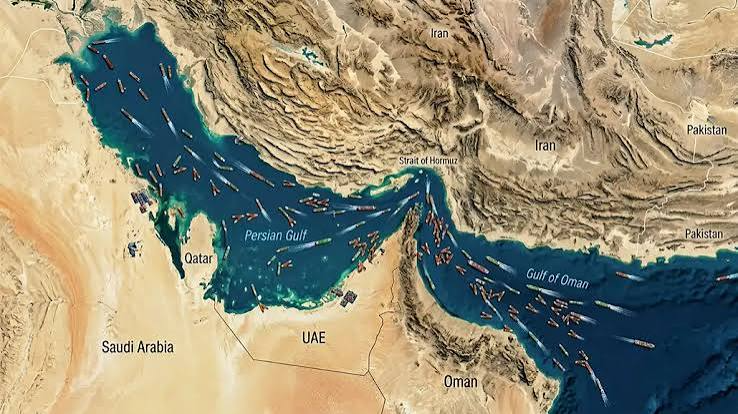
The closure of the Strait of Hormuz has jolted global energy markets and added a new layer of uncertainty to commercial real estate forecasts for the second half of 2026. With Brent crude climbing sharply after the latest Middle East escalation, investors, landlords, tenants, and developers are now facing the familiar but unwelcome chain reaction that begins at the oil pump and ends in rent rolls, construction budgets, and financing assumptions.
[cnbc](https://www.cnbc.com/2026/07/12/oil-price-strait-hormuz-iran-trump-tanker.html)
Why the strait matters
The Strait of Hormuz is not just a narrow waterway on a map. It is one of the world’s most important energy choke points, carrying roughly a fifth of global crude oil and liquefied natural gas flows under normal conditions. When traffic through that route slows or stops, the shock is felt almost immediately across shipping, refining, freight, and industrial activity.
[straitstimes](https://www.straitstimes.com/business/companies-markets/oil-jumps-more-than-3-after-us-iran-exchange-strikes-dispute-hormuz-status)
That is exactly what markets are reacting to now. Oil prices have risen on fresh fears that shipping through the strait will remain restricted, with Brent crude moving higher as traders price in supply disruption and a war premium. Even when such spikes later ease, the psychological effect on capital markets can linger far longer than the headlines themselves.
[blogs.worldbank](https://blogs.worldbank.org/en/opendata/strait-of-hormuz-disruption-sends-oil-prices-surging)
Energy prices and inflation
Higher crude prices feed directly into transport costs, electricity bills in some regions, and the cost of moving goods from ports to warehouses to retail shelves. That inflationary pressure is especially dangerous at a time when central banks remain sensitive to any sign that price growth could reaccelerate.
[eia](https://www.eia.gov/outlooks/steo/report/global_oil.php)
Energy economists have repeatedly warned that disruption in the Strait of Hormuz can send a powerful shock through the global system because it hits both supply and expectations at once. The market is not simply reacting to barrels lost today. It is also pricing the possibility that those barrels might stay offline longer than expected, keeping crude elevated and making every downstream expense more expensive to plan around.
[eia](https://www.eia.gov/outlooks/steo/report/global_oil.php)
What this means for businesses
For operators, the first squeeze often shows up in utilities, freight, insurance, and service contracts. For consumers, it can show up more slowly through higher transportation costs, pricier goods, and tighter household budgets. For commercial real estate, it can mean tenants become more cautious about expansion, retailers face thinner margins, and industrial users reassess how much they can absorb in logistics expenses.
[straitstimes](https://www.straitstimes.com/business/companies-markets/oil-jumps-more-than-3-after-us-iran-exchange-strikes-dispute-hormuz-status)
The real estate impact
Commercial real estate forecasts are clouding because energy costs affect nearly every part of the property cycle. Construction materials become more expensive to transport, building operations cost more to run, and tenants with energy intensive businesses see margins compress. That matters for office landlords, logistics developers, shopping center owners, and industrial investors alike.
[unctad](https://unctad.org/publication/strait-hormuz-disruptions-implications-global-trade-and-development)
In practical terms, a higher oil price can delay projects, reduce cap rate appetite, and push underwriters to use more conservative assumptions for rent growth and operating expenses. If inflation rises again, borrowing costs may stay elevated for longer, which would further pressure valuations and transaction volume.
[blogs.worldbank](https://blogs.worldbank.org/en/opendata/strait-of-hormuz-disruption-sends-oil-prices-surging)
Most exposed property types
Industrial real estate is often considered resilient because it benefits from supply chain activity, but it is not immune when diesel, shipping, and cross border freight become more expensive. Retail properties can be hit if consumers cut spending on discretionary goods. Hospitality and mixed use assets also face pressure when travel costs rise and businesses trim budgets.
[straitstimes](https://www.straitstimes.com/business/companies-markets/oil-jumps-more-than-3-after-us-iran-exchange-strikes-dispute-hormuz-status)
Office markets may feel the effect more indirectly through tenant caution and slower decision making. Developers, meanwhile, must deal with higher costs for everything from concrete delivery to rooftop equipment and backup systems. Even projects already under construction can suffer margin erosion if lenders and contractors revise pricing assumptions midstream.
[unctad](https://unctad.org/publication/strait-hormuz-disruptions-implications-global-trade-and-development)
Markets are pricing in risk
Oil traders are already treating the closure as a major supply event. Brent crude has surged in recent sessions, while reports from energy analysts point to reduced traffic through the strait and a growing war premium in prices. The U.S. Energy Information Administration has also highlighted the sensitivity of global oil markets to Hormuz related disruptions and the possibility of major price moves if supply remains constrained.
[cnbc](https://www.cnbc.com/2026/07/12/oil-price-strait-hormuz-iran-trump-tanker.html)
That same volatility spills into property markets through inflation expectations. When energy prices jump, investors often shift toward safer assets, demand higher returns, and question whether current valuations reflect a more expensive financing environment. For real estate, that can mean slower deal flow and wider spreads between what sellers want and what buyers are willing to pay.
[blogs.worldbank](https://blogs.worldbank.org/en/opendata/strait-of-hormuz-disruption-sends-oil-prices-surging)
How landlords may respond
Property owners are unlikely to wait for the macro picture to settle before acting. Many will review utility hedging, accelerate energy efficiency upgrades, and revisit capital plans to reduce exposure to fuel driven cost swings. Some landlords may push harder on operating expense recovery clauses, while others will try to preserve tenant relationships by absorbing some of the short term shock.
[blogs.worldbank](https://blogs.worldbank.org/en/opendata/strait-of-hormuz-disruption-sends-oil-prices-surging)
Buildings with lower energy intensity may gain an edge. Occupiers looking to manage total occupancy cost will be more attentive to lighting systems, HVAC efficiency, on site generation, and demand management. In a high energy price environment, tenants tend to favor assets that can prove they are cheaper to run over time, not just cheaper to lease on paper.
[unctad](https://unctad.org/publication/strait-hormuz-disruptions-implications-global-trade-and-development)
Practical steps for property teams
- Stress test budgets for higher utility and transport costs.
- Review vendor contracts for fuel surcharges and escalation clauses.
- Prioritize energy efficiency projects with fast payback periods.
- Reassess rent projections using conservative inflation assumptions.
Global spillovers
The ripple effects are not limited to the Middle East. Energy importers in Europe and Asia are especially exposed because higher oil and gas costs can widen trade deficits and weaken currencies, which in turn raises the local cost of imported construction materials and equipment. That matters for international investors evaluating cross border property portfolios.
[straitstimes](https://www.straitstimes.com/business/companies-markets/oil-jumps-more-than-3-after-us-iran-exchange-strikes-dispute-hormuz-status)
In the United States, the impact may be less direct but still significant. Higher fuel prices can pressure consumer spending and keep the broader inflation story unsettled, which affects Treasury yields, debt costs, and the willingness of institutional buyers to commit capital to long duration property assets.
[cnbc](https://www.cnbc.com/2026/07/12/oil-price-strait-hormuz-iran-trump-tanker.html)
What could happen next
The outlook now depends on whether shipping through the Strait of Hormuz can resume safely and consistently. If the disruption lasts, Brent crude could remain elevated long enough to alter late 2026 real estate forecasts more deeply than many investors were assuming just weeks ago. If flows normalize quickly, some of the panic premium may fade, but the market is unlikely to forget how abruptly the shock arrived.
[eia](https://www.eia.gov/outlooks/steo/report/global_oil.php)
For now, the lesson is blunt. Geopolitics is back at the center of energy pricing, and energy pricing remains a powerful driver of property performance. Commercial real estate may not feel the blast of the Strait of Hormuz closure all at once, but it will feel the heat through costs, margins, financing, and sentiment.
[unctad](https://unctad.org/publication/strait-hormuz-disruptions-implications-global-trade-and-development)
Readers looking for broader energy context can follow the latest global oil market analysis from the U.S. Energy Information Administration and trade and development implications from UNCTAD, both of which track how disruptions in the Strait of Hormuz reverberate through global markets.
[eia](https://www.eia.gov/outlooks/steo/report/global_oil.php)