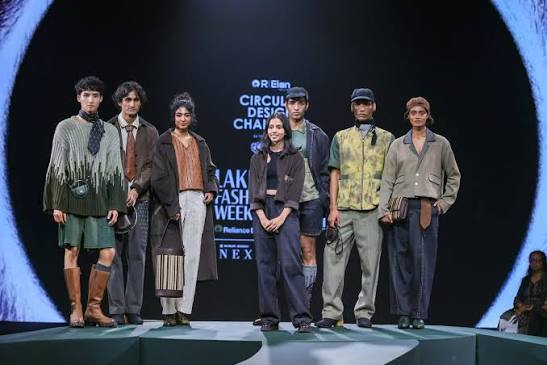
Fashion has long celebrated the beauty of new materials, striking silhouettes, and seasonal reinvention. Now, sustainability is becoming an increasingly important part of the conversation about what clothing should look like and how it should be made. On October 27, 2026, a report describing sustainable textiles at major international fashion weeks highlighted collections featuring circular economy principles, zero waste pattern cutting, and biofabricated materials. The summary does not identify specific designers, fashion shows, or independent market data, so the scale of the reported shift cannot yet be verified. Nevertheless, these themes reflect a significant challenge facing the fashion industry: creating desirable clothing while reducing waste and dependence on resource intensive production.
For designers, the task extends beyond choosing organic cotton or recycled polyester. It involves reconsidering every stage of a garment’s life, from the origin of its fibers to the way its pieces are cut, stitched, worn, repaired, and eventually reused. For consumers, it raises a more personal question. Can clothing remain expressive, beautiful, and affordable while becoming less damaging to the environment?
Why Sustainable Fashion Is Gaining Attention
The fashion industry relies on complex international supply chains that connect fiber producers, textile mills, dyeing facilities, garment factories, shipping companies, retailers, and consumers. Each stage can carry environmental costs, including energy consumption, water use, chemical pollution, and discarded material. The scale of these effects varies considerably depending on the fiber, manufacturing process, electricity supply, garment quality, and length of use.
Fast changing trends can add to the pressure. When consumers are encouraged to buy frequently and discard clothing quickly, garments that remain wearable may become unwanted long before their useful life ends. Unsold stock, cutting room scraps, damaged merchandise, and discarded textiles create further challenges because many fabrics contain mixed fibers, dyes, coatings, and trims that make recycling difficult.
Sustainable fashion seeks to address these problems through better material selection, more efficient manufacturing, longer garment lifespans, and systems that keep valuable textiles in circulation. These approaches are increasingly relevant to designers who want to reduce waste without abandoning creativity or the commercial realities of the fashion business.
Fashion weeks offer a visible platform for exploring these ideas. A runway presentation can introduce new materials, demonstrate unusual construction techniques, and influence conversations among buyers, journalists, manufacturers, and consumers. However, a sustainable theme on a runway does not automatically prove that an entire collection has a lower environmental impact. Materials, production methods, durability, transport, and end of life options all matter.
Circular Fashion Reimagines the Life of a Garment
The circular economy offers an alternative to the traditional pattern of extracting resources, manufacturing products, and discarding them after use. In clothing, circular design aims to keep garments and materials useful for as long as possible. This can involve designing durable products, repairing damaged items, reselling preowned clothing, remaking existing garments, and recycling fibers when reuse is no longer practical.
For designers, circularity can begin before a fabric is cut. A garment designed with accessible seams, replaceable components, and materials that are easier to separate may be simpler to repair or recycle. A jacket with replaceable buttons and a repairable lining, for example, can remain useful longer than a garment that is difficult to mend when a small component fails.
Brands can also explore take back programs that collect used clothing for resale, repair, or material recovery. Such programs are most effective when companies explain what happens to returned items and provide evidence that collected textiles are actually reused or processed appropriately. Collection alone does not guarantee recycling, and some materials cannot be recovered economically with existing technology.
Designing for durability rather than a single season
Circular fashion also challenges the assumption that clothing must become irrelevant when a trend changes. A well constructed coat, a versatile dress, or a carefully tailored pair of trousers can remain valuable for years when the fit, fabric, and design suit the wearer. Timeless styling is not a universal requirement, since personal expression and experimentation remain central to fashion, but durability can coexist with bold creative choices.
Brands can support longer use by offering repair services, publishing care instructions, and making replacement components available. Consumers can contribute by washing garments according to their care labels, repairing minor damage, storing clothing appropriately, and passing on items they no longer wear. These everyday decisions may appear modest, yet they help extend the period during which the resources invested in a garment provide value.
Zero Waste Pattern Cutting Reduces Textile Offcuts
Zero waste fashion focuses on reducing or eliminating fabric discarded during garment construction. Conventional pattern cutting often leaves irregular scraps between pattern pieces, especially when designers work with shapes that do not fit neatly together. Zero waste methods treat the fabric layout as part of the design itself, encouraging pattern makers to plan how pieces can fit together with little or no leftover material.
This approach can influence the appearance of a collection. Designers may use geometric shapes, adjustable construction, modular components, or unconventional silhouettes to make more complete use of a length of fabric. Instead of viewing pattern cutting as a purely technical step, they approach it as a creative process that links visual design with material efficiency.
Zero waste construction also requires careful planning. A pattern that uses every part of a fabric roll may still produce a garment that is difficult to wear, repair, or recycle. Designers must balance material efficiency with comfort, fit, durability, and manufacturing practicality. Production teams may need new training, revised cutting procedures, and additional sampling before a method can be used at commercial scale.
For manufacturers, reducing offcuts can lower the amount of purchased fabric that becomes unusable waste. It can also improve the use of expensive or limited materials. The actual benefit depends on the production process and what would otherwise happen to leftover fabric. Scraps that already enter an effective reuse system have a different environmental profile from scraps that are sent to disposal.
Biofabricated Textiles Bring New Material Possibilities
Biofabrication is another area attracting attention from researchers, material developers, and fashion designers. The term covers methods that use biological systems, such as microorganisms or cultivated cells, to produce materials or components. Depending on the technology, the resulting materials may offer alternatives to selected conventional fibers, leather like products, or textile coatings.
Researchers are exploring materials derived from bacterial cellulose, fungal mycelium, and other biological processes. These materials can have distinctive textures and physical properties, creating opportunities for experimental garments, accessories, and surface treatments. Their appearance may range from smooth and flexible to structured or suede like, depending on the production method and finishing process.
However, biofabricated does not automatically mean environmentally harmless. Some materials require substantial energy, nutrients, water, chemical treatment, or protective coatings. Others may rely on binders or blended components that complicate recycling or biodegradation. Durability, scalability, cost, and consistency also remain important considerations for many emerging technologies.
From laboratory experiments to commercial clothing
Moving a new textile from a research setting to a large production run can take considerable time. Designers and manufacturers must determine whether the material can withstand repeated movement, friction, cleaning, moisture, and normal wear. They must also assess whether the supply chain can produce consistent quality at a price that customers and businesses can afford.
Claims about compostability or biodegradability require particular care. A material may break down under specific industrial conditions but persist in a home compost bin, a landfill, or the natural environment. Coatings, dyes, stitching, and blended fibers can change the outcome. Clear testing and disposal instructions are essential if consumers are expected to understand the environmental value of a product.
The most promising materials will not necessarily replace every conventional textile. Different applications have different requirements. A fabric suitable for an occasional fashion accessory may not meet the demands of sportswear, protective clothing, or a frequently washed everyday garment. Responsible material innovation begins by matching the material to the intended use.
What Fashion Brands Need to Prove About Sustainability
As sustainability becomes a more prominent selling point, the fashion industry faces growing pressure to distinguish measurable progress from attractive language. Terms such as eco friendly, conscious, circular, and sustainable can mean different things when companies do not explain the methods behind their claims. A garment made from recycled fibers may reduce demand for virgin material, but the full impact depends on its production, useful life, and eventual disposal.
Credible sustainability reporting should identify what has changed, how results were measured, and which parts of the supply chain are included. Relevant information may cover the percentage of recycled or certified fibers, factory energy use, water consumption, chemical management, waste reduction, and the availability of repair or resale services.
The United Nations Environment Programme’s work on sustainable lifestyles provides broader context for understanding how consumption choices relate to resource use and environmental responsibility. For fashion businesses, the central lesson is that responsible production and longer product use must be considered together rather than treated as separate marketing messages.
Independent assessment can also help. Life cycle assessment examines environmental impacts across defined stages of a product’s life, although its results depend on the boundaries, assumptions, and data used. Comparing two fabrics fairly requires more than examining their raw ingredients. Production energy, durability, cleaning, transport, and disposal may change the result.
Can Sustainable Fashion Remain Affordable?
One of the greatest challenges is making responsible clothing accessible beyond luxury fashion. Experimental textiles, small production runs, specialized equipment, and careful construction can increase costs. Some consumers may be willing to pay more for durable garments or traceable materials, while others must prioritize immediate affordability.
That difference matters. Sustainability strategies that rely entirely on expensive products risk excluding households with limited budgets. A practical transition should include affordable repair services, secondhand markets, clothing swaps, durable everyday basics, and accessible information that helps people care for the clothes they already own.
Fashion companies can also explore made to order production, improved demand forecasting, and smaller initial manufacturing runs to reduce unsold inventory. These methods require careful planning and may not suit every business model, but they can help align production with actual demand rather than relying on excessive stock and frequent clearance sales.
Governments and industry groups can support progress through clearer environmental claims, improved textile collection systems, worker protections, research funding, and infrastructure for reuse and recycling. A sustainable fashion economy must consider social conditions as well as environmental performance. Lower material waste is not a complete measure of responsibility if garment workers face unsafe conditions or unfair treatment.
How Consumers Can Make More Informed Clothing Choices
Consumers do not need to become textile scientists to make thoughtful decisions. A few practical questions can reveal whether a purchase is likely to provide lasting value and whether a brand offers meaningful information about its products.
- Check construction and care requirements: Look for secure seams, useful care instructions, and materials suited to how often the garment will be worn.
- Look beyond sustainability labels: Check whether a brand explains its fiber content, manufacturing practices, certifications, and environmental claims.
- Consider secondhand options: Preowned clothing can extend the life of existing garments and reduce the need for new production when it replaces a new purchase.
- Repair before replacing: A missing button, loose seam, or small tear does not always mean a garment has reached the end of its useful life.
- Buy with a clear purpose: Choose clothing that fits existing wardrobe needs and is likely to be worn repeatedly rather than purchased solely for a short lived trend.
Consumers should also be cautious about assuming that a natural fiber is always better than a synthetic one or that recycled material is automatically the best choice. Cotton, wool, polyester, and newer biofabricated materials each have different strengths and environmental tradeoffs. The most responsible choice depends on the garment’s purpose, how long it lasts, how it is produced, and what happens when it is no longer needed.
What the Sustainable Fashion Shift Could Mean for the Industry
If the reported emphasis on circular design, zero waste patterns, and biofabricated textiles continues to spread, fashion businesses may need to rethink how they develop collections and measure success. Material innovation will remain important, but so will the less visible work of redesigning supply chains, training pattern makers, improving inventory management, and building systems for repair and reuse.
Fashion weeks can help bring these ideas into public view, yet runway visibility is only an early step. The broader test is whether new methods move into commercial production, reach consumers at realistic prices, and deliver measurable benefits beyond a single presentation. Without named shows, designers, or supporting market statistics in the supplied report summary, it would be premature to conclude that entire international collections have adopted circular principles or that the industry has reached a defined turning point.
Still, the direction of the conversation is meaningful. Clothing is both a form of personal expression and a product of material, labor, and energy. A more responsible fashion system would allow creativity to flourish while treating those resources with greater care. Circular design can help keep garments in use, zero waste pattern cutting can reduce avoidable offcuts, and biofabrication may expand the range of materials available to future designers.
The next phase of sustainable fashion will depend on evidence as much as imagination. Designers must demonstrate that new ideas work beyond the runway, manufacturers need systems that support reliable production, and consumers deserve honest information about what they are buying. If these groups make progress together, sustainability can become more than a seasonal theme. It can become a lasting part of how clothing is designed, made, valued, and worn.