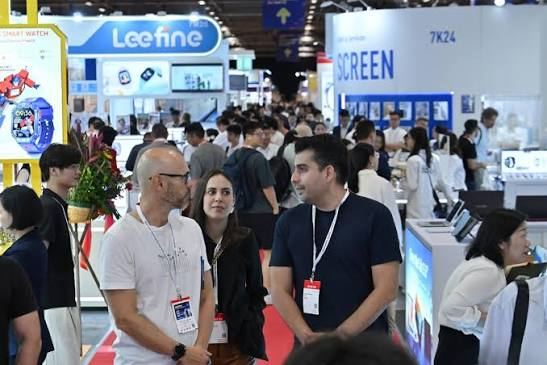
Tencent and other major technology companies drew attention to the expanding role of artificial intelligence, connected devices, and integrated digital services at a trade showcase in Hong Kong on October 18, 2026. The event highlighted technology designed for international commercial buyers seeking practical ways to connect software, hardware, and intelligent applications across their businesses. As companies look beyond individual products toward complete digital ecosystems, the showcase reflected a wider shift in how technology is developed, marketed, and adopted across global markets.
Hong Kong Connects Technology Suppliers With International Buyers
Hong Kong remains an important meeting point for international trade, particularly for businesses seeking access to suppliers, manufacturing networks, and technology markets across Asia. Trade showcases give buyers an opportunity to examine products, discuss commercial requirements, compare potential partners, and assess whether emerging technologies can solve specific operational problems.
For international buyers, the value of such an event extends beyond viewing new devices. A retailer may be searching for connected products that improve customer service, while a distributor may want technology that can be integrated into an existing product range. Enterprise customers may instead be interested in artificial intelligence tools that reduce repetitive work, improve information management, or connect services across multiple departments.
The reported focus on ecosystem applications and device integration reflects these varied requirements. Rather than purchasing isolated technologies, businesses increasingly need solutions that communicate with existing systems, support reliable data exchange, and remain manageable as operations expand. A product that works well on its own may offer limited commercial value if it cannot connect easily with the rest of a customer’s technology environment.
We should therefore view the commercial significance of technology exhibitions through the decisions they help buyers make. Product demonstrations can reveal potential uses, but discussions about compatibility, pricing, technical support, security, and long term maintenance are often what determine whether a promising concept becomes a viable business investment.
Tencent and the Growing Importance of AI Ecosystems
Tencent is a major Chinese technology company with businesses spanning digital communications, entertainment, cloud services, and artificial intelligence. Its broad technology portfolio places it within a competitive market where companies are working to connect intelligent software with applications and devices that people already use.
An AI ecosystem can include language models, cloud computing services, developer tools, business applications, connected devices, and systems that allow information to move between different products. When these components work together effectively, organizations may be able to automate routine tasks, offer more responsive customer support, analyze business information, and deliver services through several digital channels.
For example, a commercial business could use AI to help organize customer inquiries, summarize internal documents, identify patterns in sales data, or assist employees in locating relevant information. Connected devices might provide additional information from stores, offices, warehouses, or industrial settings. Integrating these capabilities can make information easier to use, provided that the systems are reliable and properly governed.
The reported showcase highlighted AI ecosystem products, but specific product announcements, technical specifications, and commercial agreements were not detailed in the available event summary. It would therefore be premature to attribute a particular launch or partnership to Tencent without further confirmation. The broader industry direction, however, is clear: technology providers are competing to offer connected experiences rather than isolated software features.
Why Device Integration Matters to Commercial Buyers
Device integration has become a significant consideration as businesses use a growing range of connected products. Smartphones, tablets, computers, sensors, cameras, payment terminals, and industrial equipment can generate information that supports daily operations. When these devices operate through disconnected systems, employees may need to repeat tasks, transfer information manually, or switch between applications to complete simple activities.
Integrated systems can reduce some of these obstacles. A connected retail environment, for instance, may link inventory information with sales systems and customer service tools. A logistics operation might combine tracking devices with warehouse software to help staff monitor shipments and identify delays. In offices, connected hardware and collaboration applications can make it easier for employees to share information across teams.
Artificial intelligence can add another layer by helping users interpret information generated across these systems. Depending on the application, AI tools may identify unusual activity, summarize records, suggest responses, or help employees search large collections of documents. These functions can be useful when they address a clearly defined business need and operate within appropriate security controls.
Compatibility remains a commercial priority
Buyers should examine whether a proposed solution supports their existing hardware, software, data formats, and network requirements. They should also ask how the system handles updates, what happens when connectivity is interrupted, and whether the supplier provides technical documentation and dependable support.
Integration claims can sound attractive during a product demonstration, but practical testing is essential. A business should evaluate how the technology performs under ordinary working conditions, whether employees can use it without extensive retraining, and how much additional infrastructure is required. Clear answers to these questions help purchasing teams distinguish a genuinely useful solution from a product that introduces new operational complexity.
Artificial Intelligence Moves Toward Practical Business Applications
Interest in artificial intelligence has expanded beyond research laboratories and specialist software companies. Businesses across retail, finance, manufacturing, logistics, education, and customer service are investigating how AI can support routine decisions and improve access to information. The central commercial question is shifting from what a model can demonstrate to what it can reliably accomplish in a real working environment.
For international buyers, practical applications may include multilingual customer assistance, document processing, product discovery, demand forecasting, and internal knowledge management. Companies serving customers across different countries may also investigate language tools that help staff communicate with users in their preferred languages. These applications can be especially valuable when they reduce delays without sacrificing accuracy or personal service.
However, businesses should assess performance against measurable outcomes. A customer service tool might be judged by response times, customer satisfaction, and the number of inquiries resolved correctly. An inventory system could be assessed by forecasting accuracy, stock availability, and waste reduction. Defining these measures before deployment makes it easier to determine whether an AI investment is delivering meaningful value.
AI systems also have limitations. They can generate incorrect information, misunderstand context, or perform inconsistently when presented with unfamiliar inputs. Sensitive decisions may require human review, particularly when mistakes could affect financial outcomes, employment, privacy, or customer rights. Companies should establish clear procedures for checking outputs and correcting errors rather than assuming that automated results are always reliable.
Global Commercial Buyers Face New Technology Purchasing Decisions
For distributors, importers, retailers, and enterprise procurement teams, technology showcases provide an opportunity to compare suppliers and assess emerging commercial opportunities. Yet the process of selecting a product involves more than identifying the most advanced demonstration. Buyers must consider total ownership costs, regulatory requirements, product availability, warranty conditions, delivery schedules, and the supplier’s ability to provide support in the markets where the technology will be sold or used.
AI products can introduce additional questions. Buyers may need to understand where data is processed, whether information is retained by the provider, how access permissions are managed, and whether the system can meet local privacy obligations. Businesses operating across several jurisdictions should check applicable laws before moving customer or employee information between systems or countries.
Commercial buyers should also examine the supplier’s development plans. A device that depends on a cloud service may become less useful if the service changes, becomes unavailable, or no longer supports the product. Clear information about software updates, product life cycles, technical assistance, and service continuity can reduce the risk of costly disruptions.
For smaller businesses, these considerations can be particularly important because they often have limited budgets and fewer staff available to manage complex technology deployments. Starting with a focused pilot project can help establish whether a product is suitable before a larger purchase is made. It also gives employees time to identify practical problems and learn how the system fits into their daily work.
Competition Is Shifting Toward Connected Digital Services
The emphasis on ecosystem products reflects a wider competitive shift across the technology sector. Companies are seeking to build relationships with customers through combinations of devices, software, cloud services, digital platforms, and developer tools. A connected portfolio can make products more convenient to use and give customers access to a broader range of services within a familiar environment.
For technology providers, ecosystems can encourage repeat business and create opportunities to serve customers as their needs develop. For buyers, the same arrangements can simplify operations, but they can also create dependence on a single supplier. If products work best only within one company’s environment, switching to another provider may require substantial expense or technical changes.
Businesses should therefore balance the convenience of integration against the importance of flexibility. Open interfaces, documented data export options, interoperability standards, and clear contractual terms can help customers retain control over their systems. Procurement teams should ask whether information can be transferred to another service and what costs would arise if they needed to change suppliers.
Competition in AI also depends on trust. Customers are more likely to adopt connected products when they understand how information is collected, how automated decisions are made, and how problems can be reported. Technology companies that combine useful capabilities with transparent policies and dependable support may be better positioned to build lasting commercial relationships.
Security and Privacy Must Keep Pace With Innovation
Connecting more devices and applications can expand the amount of information moving through a business. That information may include customer records, payment details, internal communications, operational data, and records of employee activity. Without appropriate safeguards, a weakness in one connected component can create risks for other parts of the system.
Businesses evaluating AI and device integration should examine authentication controls, access permissions, software update procedures, data encryption, backup arrangements, and incident response plans. They should also determine which employees or suppliers can access sensitive information and whether that access can be restricted according to specific responsibilities.
Privacy deserves particular attention when AI systems process personal information. Organizations should collect only the data needed for a legitimate purpose, explain relevant uses to affected people, and review how suppliers store or process that information. Contracts should make responsibilities clear, especially when data is handled by external service providers.
International buyers should also check whether products meet relevant safety, cybersecurity, telecommunications, and data protection requirements in their intended markets. Compliance can vary by country and product category, so a solution suitable for one market may require additional testing or documentation before it can be sold elsewhere.
Hong Kong’s Role in International Technology Trade
Hong Kong’s position as a commercial center gives technology suppliers access to international buyers seeking products and business relationships across Asia and beyond. Trade events can help participants compare emerging technologies, identify potential distributors, and discuss how products might be adapted for different markets.
For suppliers, international expansion requires an understanding of local customer expectations, language needs, technical standards, and after sales service. A product that performs well in its domestic market may need changes to its software, documentation, connectivity options, or support arrangements before it can succeed internationally.
Buyers also benefit from evaluating products in the context of their own markets. Demand for connected devices and AI applications can vary according to infrastructure, purchasing power, regulation, and business practices. Commercial success depends not only on technological capability but also on whether a product solves a problem customers are willing and able to pay to address.
The Hong Kong Trade Development Council provides information and services supporting trade connections and business development. Resources of this kind can help companies researching suppliers and international markets understand the broader commercial environment in which technology products compete.
What the Showcase Signals for the Future of AI Commerce
The Tencent focused trade showcase on October 18 highlighted the growing intersection of artificial intelligence, connected devices, and integrated digital services. Although the available event details do not establish specific product launches or signed commercial agreements, the themes reflect questions facing technology companies and their customers worldwide.
For businesses considering new AI solutions, the next step is to move beyond general interest and evaluate practical use cases. They should identify a clear operational problem, test potential products against measurable objectives, assess security and privacy risks, and calculate the full cost of implementation. Employees who will use the technology should be involved early so that training and workflow changes reflect real working conditions.
For technology providers, international buyers are likely to look for more than impressive demonstrations. Reliable performance, straightforward integration, transparent data practices, long term support, and clear commercial terms can determine whether a product gains lasting adoption. Companies that address these concerns can help customers make informed decisions while building stronger relationships across international markets.
As artificial intelligence becomes more closely connected with everyday devices and business systems, the commercial opportunity will depend on making complex technology useful, secure, and accessible. Hong Kong’s role as a meeting point for global trade offers a setting for those conversations. The broader challenge for the industry is to ensure that connected AI products deliver dependable benefits in real workplaces, not simply compelling demonstrations on an exhibition floor.