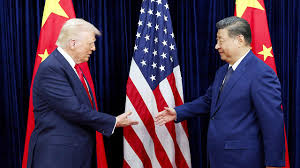
After two days of high stakes diplomacy in Beijing, President Donald Trump and President Xi Jinping announced a suite of agreements designed to steady economic relations, reduce market volatility, and create mechanisms for strategic stability. The summit yielded commitments on tariffs, investment screening, supply chain cooperation, and crisis communication protocols that leaders framed as pragmatic steps to lower risks for businesses, workers, and global markets.
What was agreed and why it matters
The joint statement released late on May 18 outlines several practical measures intended to restore predictability to US China relations. Key understandings include phased tariff adjustments tied to enforceable benchmarks, a bilateral task force on critical supply chains for semiconductors and rare earth materials, expanded frameworks for mutual investment protection, and a new hot line and protocol for military encounters to prevent escalation. Taken together, these provisions aim to reduce uncertainty that has driven market swings and disrupted multinational planning.
For investors and corporate leaders the immediate effect will likely be clearer planning horizons. For workers and consumers the benefits are more diffuse but real. Reduced tariff pressures can lower input costs and soften price pressures for goods, while supply chain cooperation may encourage some reshoring and regional diversification without wholesale decoupling. For policymakers the agreements create regularized channels for managing crises before they become geopolitical shocks.
How the talks unfolded on the ground
The summit staged a carefully choreographed sequence of meetings that blended formal negotiations with moments designed to signal mutual respect. Delegations spent the first day on economic text and enforcement language. By the second day negotiators shifted to defense and crisis management, drawing on military and diplomatic back channels to draft language for hot line operation and rules of engagement at sea and in the air. The leaders met twice privately, once over a luncheon where each delivered remarks to camera and then during a longer working session that produced the final political cover for the technical teams.
Inside the conference pavilion the air held the soft hum of translators and the rustle of briefing binders. Staffers from trade ministries and defense establishments remained at the table late into the night drafting annexes that detailed verification mechanisms and dispute resolution pathways. That attention to implementation reflects lessons learned from prior agreements that stumbled because of vague enforcement tools.
Economic provisions in detail
The economic package balances short term relief with longer term structural cooperation. Highlights include
- Phased tariff adjustments tied to measurable indicators such as targeted purchase volumes, intellectual property enforcement improvements, and nondiscriminatory treatment for foreign firms.
- A bilateral investment agreement that expands protections for national champions while streamlining screens so legitimate cross border deals can proceed with predefined timelines.
- A joint supply chain task force focused on semiconductors, batteries, and rare earth elements to coordinate stockpiles, certification standards, and emergency sourcing plans.
These measures are designed to dampen trade tensions without requiring either country to surrender core industrial policy priorities. Markets reacted to the announcement with falling volatility and moderate gains in equities tied to industrial and technology sectors that had been most exposed to tariffs and export controls.
Security and strategic stability measures
The security component centers on crisis avoidance. The leaders agreed to operationalize a military hot line, adopt clearer rules for close encounters between naval and air forces, and hold regular dialogues at senior levels focused on risk reduction. They also committed to reciprocal notifications and consultation when sensitive military activities occur near each other to reduce miscalculation.
These provisions have a clear precedent in Cold War era naval agreements and mirror frameworks that have reduced incidents between major powers in the past. Analysts note that predictable communication channels are among the most effective ways to prevent inadvertent escalation, especially when both sides retain significant conventional and nuclear capability.
Domestic and international reactions
Reactions split along predictable lines. Business groups and some congressional leaders praised the summit for returning stability to trade relations and for providing clearer rules for investment and supply chain planning. Labor organizations expressed guarded optimism while pressing for enforceable labor and environmental standards tied to any tariff adjustments.
Critics argued the agreements do not go far enough on human rights and strategic competition. Several lawmakers called for continued vigilance on technology transfer, export controls, and surveillance exports. International partners welcomed the reduction in tension but signaled they will scrutinize implementation and expect consultations that consider allied security concerns.
Implementation and verification challenges
Implementation will be the true test. The text includes monitoring committees and scheduled review points, but much hinges on transparency and timely data sharing. Effective verification for purchase commitments or intellectual property enforcement requires robust independent mechanisms and willingness to invoke dispute resolution when benchmarks are missed.
Both governments have incentives to meet early milestones to sustain political momentum. Yet each side will face domestic constituencies that demand tough scrutiny. The next six months will be critical as technical teams translate political promises into regulatory changes, procurement signals, and enforcement actions. Observers will watch trade flows, tariff schedules, and committee reports for real signs of progress.
Global economic implications
Lowered tensions between the two largest economies reduce a major source of uncertainty for global growth. Commodity markets are likely to stabilize, and investment flows that had been diverted into safe havens may resume toward higher risk higher return projects. Regional supply chain adjustments may slow as some companies postpone large scale relocation decisions while awaiting clearer rules.
Nevertheless, the agreements do not erase competition in advanced technologies or geopolitical rivalry in strategic regions. What they do is create space for more predictable competition and more structured management of crises. That distinction matters for central banks, multinational firms, and developing markets that are sensitive to shifts in capital and trade patterns.
Where this heads next
Both governments framed the summit as a reset rather than a reconciliation. Formal reviews are scheduled in three and nine months with technical annexes that are meant to be living documents. Successful early implementation could pave the way for deeper cooperation on climate technology, health security, and multilateral trade reforms. Failure to comply could harden positions and revive tariff or export control escalation.
The durability of the pact will depend on whether both capitals can satisfy domestic political pressures while honoring the transparency and enforcement mechanisms they agreed to. For citizens, workers, and businesses the most immediate test will be whether prices, hiring plans, and investment decisions begin to reflect the added stability leaders promised.
Further reading and official text
For the full joint statement and technical annexes consult official releases from the White House and the Chinese Ministry of Foreign Affairs. Coverage and expert analysis appear at major research centers such as the Council on Foreign Relations and economic data from the World Bank can help frame the macroeconomic context as implementation unfolds.
Would you like a focused explainer on how the supply chain task force could affect semiconductor manufacturing or a breakdown of the tariff benchmarks and verification mechanisms?