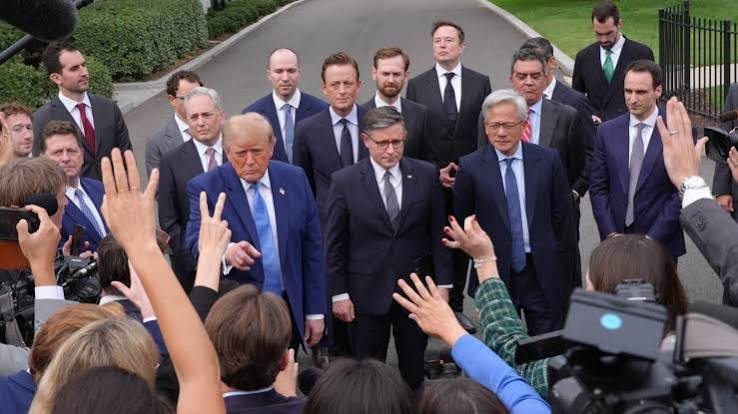
Washington has created a specialized federal body known as the Super Intelligence Force to coordinate national artificial intelligence policy, assess systemic risks, and strengthen the United States position in international technology competition. The October 5, 2026 announcement places artificial intelligence closer to the center of national policy, reflecting growing concern that advanced AI systems could influence economic security, government operations, scientific research, cybersecurity, and the balance of technological power between nations.
Washington Puts Advanced AI Coordination at the Center of Federal Policy
The creation of a dedicated federal AI task force signals a recognition that artificial intelligence can no longer be managed as a narrow technology issue. AI now touches nearly every major area of public policy, from national security and critical infrastructure to healthcare, education, financial services, manufacturing, and scientific discovery.
For years, responsibility for technology policy has been distributed across different government agencies. That structure can make sense when individual technologies affect specific sectors. Advanced AI presents a different challenge because the same system can be used for commercial research, government services, cybersecurity operations, scientific modeling, or potentially sensitive national security applications.
We see the new Super Intelligence Force as an attempt to bring those concerns into a more coordinated federal framework. Its responsibilities are expected to include evaluating systemic risks, aligning national AI policy, and monitoring the international race to develop increasingly capable artificial intelligence.
Why a Federal AI Task Force Matters
The stakes surrounding advanced AI are unusually broad. A powerful system can improve productivity and scientific research while also creating new risks if deployed without adequate safeguards. That dual nature makes government oversight difficult because policymakers must encourage innovation without allowing serious vulnerabilities to spread unchecked.
A centralized federal body could help government agencies compare information and establish common priorities. Instead of each agency developing its own understanding of AI risks, a specialized task force can potentially provide a shared view of issues involving model capabilities, cybersecurity, infrastructure, economic disruption, and national security.
The task becomes especially important as AI systems become more capable of handling complex reasoning, generating software, analyzing enormous datasets, and supporting scientific and industrial work. The difference between an experimental AI system and a tool capable of affecting major institutions can become difficult to define.
Three Major Responsibilities Stand Out
The new federal body has three broad areas of responsibility that could shape the next phase of US AI policy.
- Coordinating national artificial intelligence policy across federal institutions.
- Evaluating systemic risks created by increasingly capable AI systems.
- Monitoring international technological competitiveness and the strategic position of the United States.
Together, those responsibilities show that Washington is treating artificial intelligence as both an economic opportunity and a national strategic concern.
AI Risk Is Becoming a Government Wide Issue
One of the most difficult questions for policymakers is determining what qualifies as a systemic AI risk. The term can cover a wide range of problems, from failures in critical automated systems to large scale cybersecurity incidents and disruptions to financial or communications networks.
There are also concerns about how rapidly organizations could adopt AI without fully understanding its limitations. A system that performs extremely well in controlled testing may behave differently when exposed to complicated real world conditions, incomplete information, malicious users, or unexpected situations.
The federal task force will therefore face a difficult balancing act. Excessive caution could slow legitimate research and business development. Too little oversight could allow problems to grow before regulators have the tools or information needed to respond.
For ordinary Americans, these policy debates may sound distant, but their effects can eventually appear in familiar places. AI is increasingly involved in customer service, employment decisions, fraud detection, medical research, transportation, education, and workplace software. Decisions made in Washington can influence how those systems are tested, deployed, monitored, and held accountable.
The International AI Race Is Raising the Stakes
The creation of the Super Intelligence Force also reflects the international dimension of artificial intelligence. The United States is competing with other major technology powers for leadership in advanced computing, semiconductor production, AI research, data infrastructure, and high performance computing.
That competition is not simply about which country produces the most impressive AI model. Leadership can affect access to investment, skilled workers, computing capacity, scientific talent, intellectual property, and strategic technologies.
Advanced AI may also influence military planning, intelligence analysis, cybersecurity, logistics, manufacturing, and scientific research. As a result, governments increasingly view AI capability as part of national competitiveness rather than merely a commercial advantage.
The National Institute of Standards and Technology has already played a major role in developing frameworks for responsible AI and risk management in the United States. A new federal coordination body could build on this broader policy environment by connecting technical risk assessment with national strategy and international competition.
American Businesses Are Likely to Watch Closely
Companies developing artificial intelligence will have a strong interest in how the new task force defines risk and coordinates federal policy. Large technology companies are investing billions of dollars in computing infrastructure and AI research, while smaller companies are building specialized tools for healthcare, finance, manufacturing, education, and professional services.
Clear federal coordination could give businesses greater certainty about the direction of US AI policy. Companies need to know what standards may apply to advanced systems, what information regulators may require, and how national security concerns could affect technology development or international partnerships.
At the same time, businesses may be concerned about rules that become too complicated or unpredictable. Smaller AI companies generally have fewer resources to handle extensive compliance requirements than large technology corporations. Policymakers therefore face the challenge of creating safeguards that protect the public without making innovation accessible only to the biggest firms.
Workers Are Part of the AI Policy Conversation Too
The national discussion around AI is not limited to laboratories and government offices. Workers are already experiencing changes in how companies organize jobs, evaluate performance, and automate repetitive tasks.
Some workers may benefit from AI tools that reduce administrative workloads and help them complete difficult tasks more quickly. Others may worry that automation could reduce demand for certain occupations or change the skills employers expect.
A serious national AI strategy therefore has to consider workforce development alongside technological progress. Training programs, education policy, worker protections, and access to new technical skills can determine whether AI produces broad economic benefits or concentrates those benefits among a relatively small group of companies and highly specialized workers.
AI Governance Will Need Public Trust
Creating a federal task force is only the beginning. The effectiveness of the Super Intelligence Force will depend on how clearly it defines its authority, how transparently it communicates risk assessments, and how effectively it works with existing agencies.
Public trust will also matter. People are more likely to accept new technology when they understand who is responsible when something goes wrong. If an AI system affects an important decision, citizens need meaningful ways to question outcomes and seek human review when appropriate.
The White House Office of Science and Technology Policy has long been involved in federal technology policy, illustrating how many parts of the government already have responsibilities connected to scientific and technological development. Coordination among these institutions will be essential if the new force is to avoid duplicating existing work.
What Comes Next for the Super Intelligence Force
The most important measure of the new body will be what it does after its creation. A successful task force would need more than ambitious language. It would need reliable technical expertise, access to relevant information, cooperation among agencies, and a clear process for responding when new AI risks emerge.
Several questions are likely to shape the next stage of the initiative:
- How will systemic AI risks be identified and measured?
- How will federal agencies share information about emerging AI threats?
- What standards could apply to highly capable artificial intelligence systems?
- How will the United States protect innovation while addressing serious security concerns?
- How will American AI leadership be maintained as international competition intensifies?
The answers could have consequences far beyond Washington. They may influence how companies develop AI products, how universities conduct research, how workers prepare for changing careers, and how other governments approach their own artificial intelligence policies.
A New Chapter in US Artificial Intelligence Policy
The creation of the Super Intelligence Force marks a significant shift in the way Washington is approaching artificial intelligence. The technology is increasingly being treated not only as a promising commercial sector but as infrastructure with implications for economic security, public safety, national defense, and international influence.
We should expect the debate to become more complicated as AI capabilities continue to develop. Policymakers will face pressure from technology companies seeking room to innovate, security officials focused on potential threats, workers concerned about automation, and citizens demanding responsible use of powerful systems.
The central challenge will be finding a workable balance. The United States wants to remain a leader in artificial intelligence, but leadership without responsible governance can create risks that eventually undermine the benefits of innovation. Strong oversight without room for research can create a different problem by allowing competitors to move faster.
For that reason, the Super Intelligence Force could become an important part of the US technology policy structure if it succeeds in connecting innovation, risk management, economic policy, and international strategy. The creation of the body is a statement of intent. Its lasting importance will depend on whether Washington can turn that intent into practical decisions that protect the public while keeping American artificial intelligence research and industry competitive.