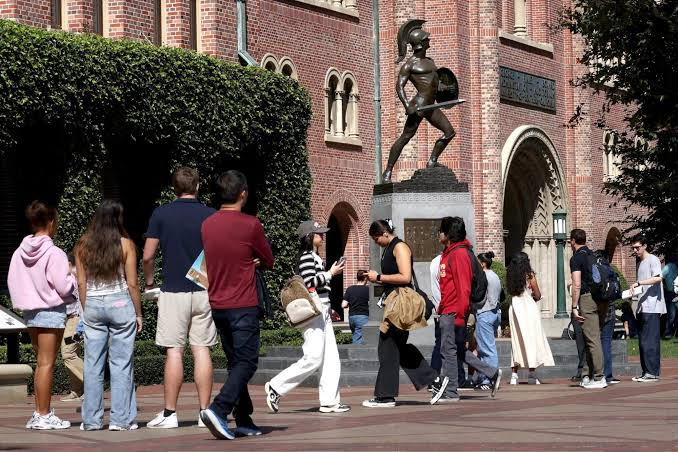
International student enrollment at colleges and universities across the United States is experiencing another significant decline, raising concerns about the country’s ability to attract global talent, maintain its competitive position in higher education, and support the communities that depend on international student spending. New findings released on November 16, 2026, reveal that international student enrollment fell by 9 percent during the Fall 2026 semester, while the number of newly enrolled international students dropped by 15 percent. The findings, based on research involving hundreds of American higher education institutions, point to a combination of stricter visa procedures, travel restrictions, rising education costs, and growing competition from universities in other countries.
For thousands of prospective students, studying in the United States has traditionally represented an opportunity to access internationally recognized academic programs, develop professional skills, and build connections that can shape their careers. However, uncertainty surrounding immigration policies and the increasing financial burden of an American education are changing how students evaluate their options. The latest enrollment figures suggest that these concerns are no longer limited to individual applicants. They are affecting universities, local economies, employers, and the wider international education sector.
New Report Reveals a Significant Decline in International Enrollment
The latest enrollment findings come from the Institute of International Education’s Fall 2026 Snapshot on International Student Enrollment, which collected responses from 809 American colleges and universities. The research provides an early assessment of international education trends for the 2026 to 2027 academic year and highlights a continuing decline in the number of students arriving from overseas.
According to the survey, total international student enrollment declined by 9 percent compared with the previous academic year. New international student enrollment experienced an even sharper reduction of 15 percent, indicating that fewer students are beginning their studies at American institutions.
The decline extends across several categories of international education. Undergraduate enrollment decreased by 3 percent, while graduate enrollment experienced a much larger decline of 15 percent. The number of international graduates participating in Optional Practical Training, commonly known as OPT, also declined by 6 percent.
These figures are particularly concerning because international graduate students contribute significantly to American universities through tuition payments, research activities, teaching responsibilities, and participation in specialized academic programs. A reduction in graduate enrollment can therefore affect both institutional finances and the research capabilities of universities.
The findings also follow an already difficult enrollment period. New international student enrollment declined by 18 percent in Fall 2025, demonstrating that the latest downturn is part of a continuing pattern rather than an isolated development.
Visa Restrictions Create Additional Challenges for International Applicants
Visa processing difficulties have emerged as one of the most frequently reported reasons behind declining international enrollment. Students who receive admission offers from American universities must still navigate a complicated immigration process before they can begin attending classes.
For many applicants, the process involves securing an appointment, completing documentation, attending an interview, and waiting for a final decision. Delays can create serious problems, particularly when university semesters have fixed starting dates and students must arrange accommodation, transportation, and tuition payments in advance.
The Institute of International Education survey found that 88 percent of responding institutions identified problems with the visa application process as a contributing factor to declining international enrollment. Another 70 percent cited travel restrictions affecting prospective students.
These obstacles can discourage applicants even before they submit their university applications. Students who are uncertain whether they can obtain a visa on time may decide that pursuing an education in another country offers a more predictable route.
Visa restrictions affecting nationals of certain countries have added another layer of uncertainty. Changes to immigration requirements and additional screening procedures have made international applicants more cautious about committing substantial financial resources to an American education.
For families planning years ahead, uncertainty can be especially difficult. A student may receive an admission offer, arrange financial support, and prepare to leave home, only to discover that visa delays or changing entry requirements could prevent the planned journey.
Rising Tuition and Living Expenses Make US Universities Less Affordable
Immigration policies are not the only factor influencing international student decisions. The financial cost of studying in the United States remains a major concern, particularly for students who must pay international tuition rates without access to substantial scholarships or financial assistance.
American universities offer a wide range of academic opportunities, but tuition, accommodation, transportation, health insurance, textbooks, and everyday expenses can create a considerable financial commitment. For international families, currency exchange rates and differences in household income can make these costs even more difficult to manage.
The latest IIE survey found that 45 percent of participating institutions identified education and living expenses as contributing factors in the decline.
Students are increasingly comparing the total cost of education across several destinations rather than focusing exclusively on university rankings. Countries offering competitive tuition fees, accessible scholarship programs, and clearer postgraduation employment pathways can become attractive alternatives.
Financial uncertainty can also affect students who have already received admission offers. A family that initially considers an American university affordable may reconsider when accommodation costs increase or the availability of financial assistance becomes uncertain.
For universities, these developments create additional pressure to communicate the full cost of attendance and provide realistic information about scholarships, financial planning, and available student support services.
International Competition Is Changing Student Destination Choices
The United States remains one of the world’s leading destinations for international higher education. Its universities are known for research facilities, academic diversity, specialized graduate programs, and connections with major employers. Nevertheless, international students have more options than ever when selecting where to study.
Universities in countries such as Canada, the United Kingdom, Australia, and Germany continue competing for international applicants. These destinations have invested in international recruitment, English language programs, research opportunities, and student support services.
The latest American enrollment survey found that 60 percent of participating institutions identified competition from other countries as a contributing factor to declining international student numbers.
This competition matters because students are making decisions based on several connected considerations. Academic quality remains important, but applicants also evaluate visa requirements, employment opportunities, personal safety, living expenses, and the possibility of remaining in a country after graduation.
When another destination offers a more predictable immigration process or a clearer route into the workforce, students may choose it even when their preferred academic program is located in the United States.
For American universities, maintaining international appeal will require more than promoting prestigious degrees. Institutions must also demonstrate that international students can realistically complete their education, access appropriate support, and pursue legitimate career opportunities after graduation.
Optional Practical Training Uncertainty Raises Concerns About Graduate Careers
One of the most important issues affecting international student recruitment is the future of Optional Practical Training. The program allows eligible international students in F 1 status to gain temporary practical work experience related to their academic studies after completing their education. Eligible students in qualifying science, technology, engineering, and mathematics fields may also apply for an additional period of practical training under the STEM OPT extension.
For many international applicants, the opportunity to gain professional experience in the United States is an important part of choosing an American university. It allows graduates to apply academic knowledge in professional settings, develop workplace experience, and establish relationships with potential employers.
However, uncertainty surrounding proposed restrictions and the administration of the program has created concerns among universities and prospective students.
NAFSA has warned that limiting practical training opportunities could make American institutions less attractive to international applicants. In the latest survey, 95 percent of participating institutions indicated that prospective international students would probably consider other countries if OPT opportunities were restricted.
The decline in OPT participation is also significant because it represents a change in a program that had experienced growth over several years. A sustained reduction could affect employers that depend on international graduates, particularly in technology, engineering, healthcare research, and other specialized industries.
International Student Declines Could Cost the US Economy Billions
The consequences of declining international enrollment extend beyond university campuses. International students contribute to local economies through tuition payments, housing, transportation, food, retail purchases, and other everyday expenses.
NAFSA, the Association of International Educators, has published an economic assessment developed with JB International that examines the financial consequences of falling international student enrollment.
Its latest Fall 2026 analysis estimates that the decline will result in approximately $2.4 billion in lost economic contributions and more than 31,000 fewer jobs supported across the United States.
These losses can affect communities that depend on university activity. Local restaurants, apartment operators, transportation providers, grocery stores, and small businesses benefit when international students live and study nearby.
Universities may also experience financial pressure because international students frequently pay higher tuition rates than domestic students. Reduced enrollment can affect institutional budgets, scholarship availability, research funding, and the ability to maintain certain academic programs.
The economic effects are not distributed equally. States with large international student populations and major research universities face particularly substantial potential losses.
NAFSA’s analysis identifies California and New York among the states facing some of the largest projected financial impacts. Texas, Massachusetts, Illinois, and Pennsylvania are also expected to experience significant losses.
These figures illustrate why international education is not simply an academic issue. It is connected to employment, regional development, innovation, and the competitiveness of the American economy.
Universities Consider New Strategies to Attract International Students
Despite the challenges, American universities are not abandoning international recruitment. The IIE survey found that 81 percent of participating institutions considered international student recruitment a priority. Additionally, 75 percent reported stable or increased funding for international recruitment activities.
Universities recognize that international students contribute more than tuition revenue. They bring different academic perspectives, cultural experiences, research interests, and professional connections to campus communities.
Many institutions are responding by strengthening relationships with international schools, expanding communication with admitted students, and providing additional guidance about immigration procedures and financial planning.
Recruitment strategies are also becoming more focused on individual student needs. Universities can improve their international appeal by offering transparent tuition information, accessible scholarship opportunities, responsive admissions services, and clear explanations of academic and career pathways.
Institutions may also need to diversify their recruitment efforts rather than depending heavily on a small number of countries. Building relationships across different regions can help universities maintain more stable international enrollment when immigration or economic conditions change in particular markets.
NAFSA Calls for More Predictable Student Visa and Immigration Policies
NAFSA has called for policy changes that would make the United States a more accessible and predictable destination for international education. Its recommendations include improving visa appointment availability and processing for F and M international students and J exchange visitors.
The organization has also advocated exemptions for international students and exchange visitors from travel restrictions affecting nationals of 39 countries, while maintaining the background checks and security screening required for visa approval.
Protecting access to Optional Practical Training and preserving the Duration of Status policy are additional priorities identified by the organization.
These recommendations reflect concerns that immigration uncertainty can influence student decisions long before an individual applies for a visa. Universities may be able to offer excellent academic programs, but they cannot guarantee that students will arrive on time or remain eligible for their intended educational and professional activities when policies are unpredictable.
For policymakers, the challenge is to balance national security and immigration administration with the educational and economic value of international students. Clear requirements, consistent processing procedures, and reliable communication could help reduce uncertainty without removing necessary screening measures.
What International Students Should Consider Before Applying
For prospective international students, the latest enrollment figures highlight the importance of careful preparation before choosing an American university. Applicants should evaluate both academic opportunities and the practical requirements associated with studying abroad.
Before committing to an institution, students should consider several important factors:
- Visa requirements: Review current student visa rules, appointment availability, documentation requirements, and official government announcements before making travel arrangements.
- Total education costs: Calculate tuition, accommodation, insurance, transportation, food, and other living expenses rather than relying exclusively on advertised tuition rates.
- Scholarship opportunities: Contact university financial aid offices to confirm eligibility, application deadlines, and the conditions attached to financial assistance.
- Career opportunities: Research available internships, practical training options, and employment regulations that apply to international graduates.
- Alternative destinations: Compare universities in several countries to identify programs that meet academic, financial, and personal requirements.
Applicants should use official university admissions offices and government immigration websites when verifying requirements. Policies can change, and information shared through unofficial social media accounts may not reflect current regulations.
The Future of International Education in the United States
The latest decline in international student enrollment presents a significant challenge for American higher education. The United States continues to offer internationally respected universities, extensive research opportunities, and connections with global industries. However, these strengths must compete with concerns about affordability, immigration uncertainty, and the availability of postgraduation career opportunities.
The findings also demonstrate that international education is a shared responsibility. Universities must provide transparent information and meaningful support, policymakers must establish clear and consistent procedures, and employers must understand the contribution international graduates can make to the workforce.
For students, the decision to study abroad involves years of preparation, substantial financial commitments, and often difficult conversations with family members about leaving home. When visa uncertainty and rising costs make that decision harder, the consequences extend well beyond enrollment statistics.
The full impact of the Fall 2026 decline will become clearer as more comprehensive enrollment information becomes available. For now, the findings from NAFSA and the Institute of International Education offer a strong warning: maintaining the United States as a leading destination for international students will require policies and institutional practices that make education accessible, affordable, and predictable.
The future of American higher education depends partly on its ability to welcome talented students from around the world. Rebuilding confidence among international applicants could help universities protect their academic communities, support local economies, and maintain the country’s position in global research and innovation.
Readers can explore the latest NAFSA international student enrollment and economic impact findings and the Institute of International Education’s Open Doors research for additional information about international student mobility, enrollment patterns, and the economic contribution of overseas students.