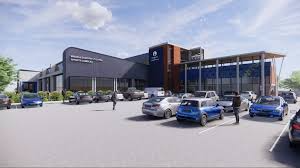
Wits University unveiled a R300 million integrated training clinical practice and research complex on May 30 2026 that promises to reshape how sport science global health and medical education intersect. The facility brings together athletes clinicians researchers and students under one roof with cutting edge laboratories rehabilitation clinics and simulation suites designed for real time collaboration and hands on learning.
What the complex includes and why it matters
The new complex occupies a central campus site with light filled training halls motion capture studios physiology labs and bespoke clinical spaces for sports medicine and rehabilitation. Equipment ranges from force plates and high speed cameras to hyperbaric units and advanced imaging links that enable clinicians to consult across departments and with partner hospitals. There are dedicated classrooms simulation wards and a public outreach clinic where communities can access preventive screening and basic care.
We see this investment as more than a bricks and mortar project. It signals a strategic pivot toward integrated practice where research informs patient care and teaching happens alongside real world clinical exposure. For students the complex shortens the gap between theory and practice. For researchers it offers longitudinal data streams that pair performance metrics with clinical outcomes. For communities it promises better access to diagnostics injury prevention and rehabilitative services.
How sport science meets medical training
Sport science has grown far beyond coaching protocols and fitness regimens. The complex embeds biomechanics nutrition physiology and digital health into a clinical framework so that elite athlete care and population health initiatives inform each other. We watched athletes and students move through shared spaces where gait analysis labs sit adjacent to primary care clinics and where a physiotherapist can immediately test a hypothesis generated by a biomechanics researcher.
The synergy has practical benefits. Faster diagnosis of movement disorders improved concussion management and recovery pathways tailored to both elite athletes and older adults are just some examples. By aligning performance science with clinical education Wits aims to produce graduates who can speak the languages of both sport and health systems.
Training that feels like real practice
Simulation suites replicate emergency room scenarios surgical assistance and multidisciplinary case rounds. The sensory detail is striking. In one session a student responds to a staged ankle injury under theatrical lighting with real time vitals displayed on monitors while an instructor shadows from a control room. The realism accelerates clinical confidence and fosters teamwork across disciplines that often operate in silos in conventional programs.
Research capacity and global partnerships
The complex creates a hub for longitudinal cohort studies intervention trials and applied technology testing. Researchers told us they will be able to follow athletes and patients across training treatment and recovery phases using standardized measurements. That continuity is essential for rigorous outcome studies and for translating findings into clinical protocols.
Wits faculty also emphasized the complex will expand international collaboration. Shared data platforms and virtual consultation links make it easier to partner with hospitals and universities abroad for comparative studies and capacity building. For context on collaborative health research models see work at the World Health Organization which outlines frameworks for multi institution projects and data governance.
Community outreach and health equity
Crucially the project includes a community clinic and public programming focused on prevention early detection and rehabilitation. The clinic will offer affordable screenings musculoskeletal assessments and exercise therapy with referral pathways into the university hospital system when needed. For communities that have historically lacked access to sport specific care or rehabilitative medicine this model can reduce barriers and shorten wait times for specialized treatment.
We heard from local residents who described the sound of new construction fading into campus life as tangible hope. For families dealing with chronic pain or post injury recovery the promise of nearby multidisciplinary care is practical and emotional. The facility is positioned to address health inequities by offering training that prioritizes culturally informed care and by routing research toward community defined needs.
Jobs skills and economic impact
Beyond the direct health benefits the complex will create employment for clinical staff researchers technicians and administrative personnel. It will also generate opportunities for contractors suppliers and local service businesses. Wits anticipates the complex will contribute to skills development through internships apprenticeships and certificate programs targeted at allied health professions where shortages are acute.
Funding governance and sustainability considerations
The R300 million project relies on a mix of university funds private donors and public contributions. Observers will watch governance arrangements closely to ensure research independence and equitable access. Sustainable operation requires ongoing funding for maintenance staffing and technology upgrades. Wits officials say plans include an endowment model supplemented by service revenues from clinical work educational programs and research grants.
Environmental sustainability was factored into the design with energy efficient systems water recycling and green spaces that improve patient and student wellbeing. Those features reduce operating costs and support public expectations for responsible institutional development.
Voices from campus and beyond
Students we spoke with described the complex as a learning laboratory that feels immediate and consequential. Faculty highlighted how co located disciplines break down academic barriers and accelerate translational work. Community leaders expressed cautious optimism while urging that outreach programming prioritize underserved neighborhoods.
International academics noted the facility positions Wits as a visible node in global networks of sport medicine and health research. For readers seeking more on global health partnerships and capacity building the Brookings Institution publishes accessible analysis on scaling health research and university led initiatives.
What success will look like
Success will be visible in multiple dimensions. Clinically it will show up as faster diagnoses improved rehabilitation outcomes and measurable reductions in preventable injury. Academically it will appear as interdisciplinary publications intervention trials and graduates who enter the workforce with applied competencies. Socially it will manifest in community health metrics improved access and demonstrable pathways from outreach into specialized care.
We will also watch for how the complex navigates the challenge of balancing revenue generating services with its public mission. Equitable pricing structures robust scholarship programs and transparent reporting on community impact will be essential benchmarks.
Final reflection
Wits University has opened more than a building. It has created an ecosystem where sport science clinical practice and medical education can flow into one another. The R300 million investment sets a high bar and offers a practical model for other institutions seeking to merge research teaching and service. The real test will be whether the complex sustains inclusive access generates reproducible evidence and trains professionals who can bridge the gaps between performance and population health.
For those interested in technical standards for collaborative health research and data governance the World Health Organization hosts guidance on multi institution projects and ethical data sharing that will be relevant as research scales.